Will LDF Overcome Challenges from UDF and BJP in Kerala's Third-Term Quest?
Synopsis
As Kerala's political landscape shifts, the LDF's bid for a third consecutive term faces mounting challenges from the UDF and a resurgent BJP. With local elections hinting at changing tides, how will this affect the 2026 Assembly elections? Dive into the intricacies of Kerala's evolving political scene.
Key Takeaways
LDF aims for a historic third term in Kerala.
UDF shows signs of revival in local body elections.
BJP's breakthrough reflects changing political dynamics.
Anti-incumbency sentiments may impact Congress's prospects.
The political landscape is evolving as elections approach.
New Delhi, Jan 31 (NationPress) Kerala stands as the final significant stronghold of the communist movement, with the Left Democratic Front (LDF) aiming for a third consecutive victory in the upcoming Assembly elections scheduled for April-May this year, aspiring to set a new electoral milestone. The LDF has already carved its name in history by maintaining its hold on power for two consecutive terms in 2016 and 2021, marking a first for any alliance in the state since 1977.
The LDF is led by the Communist Party of India (Marxist), while the Congress leads the Opposition, known as the United Democratic Front (UDF). In the 2021 Assembly elections, the ruling coalition secured 99 seats, which was eight more than in 2016. Conversely, the UDF bagged 41 seats, a decline of six from the previous election, despite an increase in its vote share.
The National Democratic Alliance (NDA) witnessed a dip in its vote share during the 2021 elections, losing the only Assembly seat it had won in 2016 at Nemom. However, political dynamics in the state have begun to evolve. In the 2024 Lok Sabha elections, the Congress-led UDF claimed 18 out of Kerala's 20 seats, one less than in 2019, with Congress itself winning 14 seats.
A noteworthy event was the BJP's triumph in the Thrissur parliamentary constituency in 2024, marking its first-ever Lok Sabha win from Kerala. The LDF only managed to secure one seat, with the CPI(M) holding on to Alathur.
As the 2026 Assembly elections loom on the horizon, early predictions offer a mixed outlook. Some surveys conducted around mid-2025 suggested that the LDF could potentially return for a third term, albeit with a diminished majority, while others indicated a slight lead for the UDF.
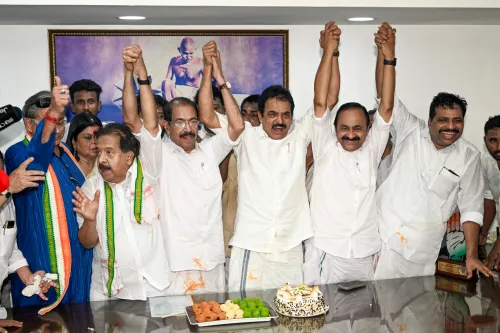
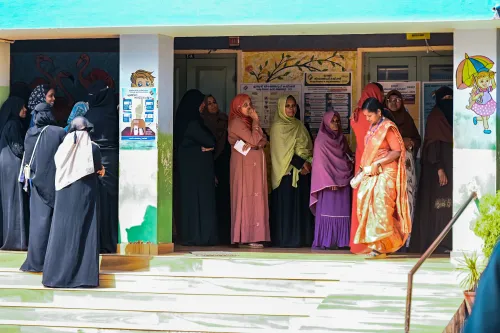
The local body elections held in December highlighted these shifting dynamics. The UDF demonstrated signs of resurgence by penetrating traditional Left strongholds in rural areas, while the BJP emerged as a possible third force following a significant breakthrough in Thiruvananthapuram.
Many analysts regard the local body results as indicative of the 2026 Assembly elections. For the NDA, the gains after its Lok Sabha success signal increasing urban support and the potential to disrupt Kerala’s predominantly bipolar political landscape. The BJP's win in the Thiruvananthapuram corporation is particularly crucial, bearing implications for campaign strategies in urban constituencies.
In the last three Lok Sabha elections, Thiruvananthapuram has seen the BJP relegating Left candidates to third place, while Congress leader Shashi Tharoor has held the seat since 2009. In 2024, BJP candidate Rajeev Chandrasekhar lost by a mere 16,000 votes, with his vote share increasing by over 4.2 percentage points, largely at the expense of Tharoor.
Despite the UDF's apparent rise, the Congress is grappling with its own hurdles, including multiple contenders for the chief minister’s position. Developments in neighboring Karnataka, where a leadership struggle continues between Chief Minister Siddaramaiah and Deputy Chief Minister D.K. Shivakumar, have added to the party's unease in Kerala.
Shashi Tharoor, after engaging with Congress president Mallikarjun Kharge and Lok Sabha Leader of the Opposition Rahul Gandhi, has publicly dismissed his candidacy for the chief minister’s role. Last year, he shared findings from an independent survey that highlighted strong anti-incumbency sentiments, naming him as the preferred chief ministerial candidate among 28.3 percent of respondents.
While the political winds may be shifting in favor of the Congress-led front, the turbulent currents of Kerala's backwaters suggest that the journey to 2026 will be challenging for any contender.
Point of View
The evolving political dynamics in Kerala illustrate a complex interplay of power between the LDF, UDF, and BJP. Observers should closely monitor these developments, as they may significantly influence broader national trends. The upcoming elections will not only shape Kerala's governance but could also signal shifts in political sentiment across India.
NationPress
29 Sept 2026
Frequently Asked Questions
What is the significance of the 2026 Assembly elections in Kerala?
The 2026 Assembly elections are crucial as they will determine whether the LDF can maintain its power for a third consecutive term, amidst growing challenges from the UDF and BJP.
How did the local body elections impact the political landscape in Kerala?
The local body elections revealed shifting voter sentiments, with the UDF making strides in traditional Left strongholds and the BJP emerging as a potential third force.
Who leads the Left Democratic Front in Kerala?
The Left Democratic Front is primarily led by the Communist Party of India (Marxist).
What were the outcomes of the 2024 Lok Sabha elections in Kerala?
In the 2024 Lok Sabha elections, the Congress-led UDF won 18 out of 20 seats, while the BJP secured its first Lok Sabha seat from Kerala.
What challenges does the Congress face in Kerala?
The Congress is dealing with multiple aspirants for the chief minister’s position and the repercussions of leadership struggles in neighboring Karnataka.