Pralhad Joshi marks 80 years of India's Independence

Synopsis
Union Consumer Affairs Minister Pralhad Joshi marked India's 80th Independence Day on 15 August 2026 with a bilingual English-Kannada message honouring freedom fighters, invoking the journey from Partition to a resurgent India, and calling on citizens to build a strong, self-reliant nation.
Key Takeaways
Pralhad Joshi , Union Minister of Consumer Affairs and New and Renewable Energy, posted an Independence Day tribute on 15 August 2026 .
The post marked 80 years of Indian independence from British colonial rule, first achieved on 15 August 1947 .
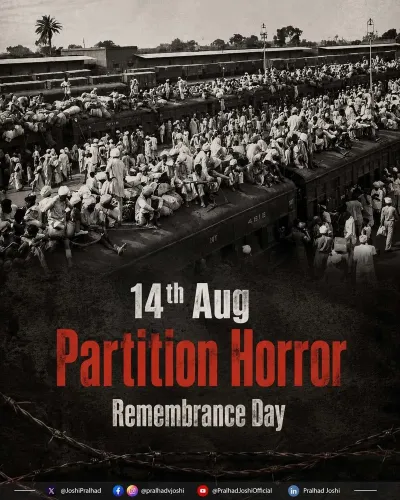
Joshi invoked the Partition of 1947 as a starting point, framing India's post-independence journey as a transformation of challenges into achievements.
The message was bilingual — English and Kannada — reflecting Joshi's roots as a senior BJP leader from Karnataka .
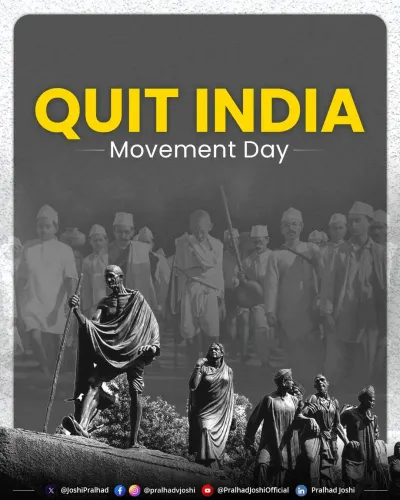
He paid tribute to 'countless freedom fighters and brave soldiers' who sacrificed their lives for India's liberation.
The post called on citizens to uphold unity and patriotism while working toward a 'strong, self-reliant and developed India.'
Eight decades after the Tricolour was unfurled for the first time, Union Consumer Affairs Minister Pralhad Joshi invoked the long arc from the trauma of Partition to a 'confident, capable and resurgent India' — reminding citizens that the flag today stands not just for freedom won, but for strength built. The message, posted on 15 August 2026, carried greetings in both English and Kannada, reaching Joshi's home state of Karnataka alongside a national audience.
Joshi's post declared: 'From the ashes of Partition to a confident, capable and resurgent India, generations have transformed challenges into opportunities and aspirations into achievements.' He added that the Tricolour 'does not merely represent the freedom we won, it represents the strength we have built and the future we are shaping.'
A salute to the freedom struggle, in two languages
Switching to Kannada, Joshi paid tribute to the 'countless freedom fighters and brave soldiers who dedicated their lives and sacrificed everything for the liberation of Mother India' (ಭಾರತಾಂಬೆಯ ಸ್ವಾತಂತ್ರ್ಯಕ್ಕಾಗಿ ತಮ್ಮ ಬದುಕನ್ನೇ ಮುಡಿಪಾಗಿಟ್ಟು). He closed with a call to uphold the values of independence, unity, and patriotism while building a 'strong, self-reliant and developed India.'
The bilingual post reflects Joshi's standing as a senior BJP leader from Karnataka — a state where Kannada identity and national pride intersect closely in public discourse. The Independence Day tribute follows the established tradition of Union Ministers issuing ceremonial messages on 15 August each year, honouring both the 1947 independence from British colonial rule and the sacrifices of the freedom movement.
As India marks 80 years of self-rule, the Tricolour flies as a symbol of a republic that has navigated partition, poverty, and geopolitical turbulence — and keeps moving forward. Jai Hind.
Point of View
A state the party has invested in heavily. At 80 years, such messages carry added ceremonial weight, and the framing of the Tricolour as a symbol of 'strength built' rather than merely 'freedom won' aligns with the ruling dispensation's broader effort to shift Independence Day discourse from colonial-era memory toward contemporary national ambition. The tribute is routine in form but pointed in its messaging architecture.
NationPress
15 Aug 2026
Frequently Asked Questions
What did Pralhad Joshi say on Independence Day 2026?
Union Minister Pralhad Joshi posted a bilingual English-Kannada message on 15 August 2026, honouring freedom fighters, invoking India's journey from the Partition of 1947, and calling on citizens to build a strong, self-reliant India.
Why did Pralhad Joshi write in Kannada on Independence Day?
Joshi is a senior BJP leader from Karnataka, and writing in Kannada alongside English is a common practice for him to connect with his home state's audience on national occasions.
When is India's Independence Day?
India celebrates Independence Day on 15 August each year, marking the country's freedom from British colonial rule on 15 August 1947.
What is the significance of 80 years of Indian independence?
80 years of independence marks eight decades since India gained freedom from British rule in 1947, a milestone that prompts reflection on the nation's journey from the trauma of Partition to its emergence as a major global economy and democracy.
Who is Pralhad Joshi?
Pralhad Joshi is a senior BJP leader from Karnataka and serves as Union Minister of Consumer Affairs, Food and Public Distribution, and Minister of New and Renewable Energy in the Indian cabinet.