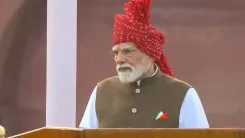
Puri Hails Vande Mataram at Red Fort on Independence Day
Synopsis
Union Petroleum Minister Hardeep Singh Puri marked India's Independence Day by hailing what he called a historic performance of Vande Mataram from the Red Fort ramparts, invoking the national song's 150-year journey from colonial Bengal to the Republic's central ceremonial stage.
Key Takeaways
Hardeep Singh Puri posted on 15 August 2026 marking India's Independence Day with a tribute to Vande Mataram .
Puri described the performance of Vande Mataram from the Red Fort as a 'historic and deeply stirring moment.' Vande Mataram was composed by Bankim Chandra Chatterjee in the 1870s and adopted as India's national song on 24 January 1950 .
The Red Fort has been the venue for the Prime Minister's annual Independence Day address since 1947 .
Puri noted the song's 150-year legacy of uniting and inspiring Indians.
On India's Independence Day, 15 August 2026, Union Petroleum Minister Hardeep Singh Puri marked the occasion with a deeply felt tribute to Vande Mataram — the song that once electrified a freedom movement and, he says, rang out from the ramparts of the Red Fort in a moment he called historic.
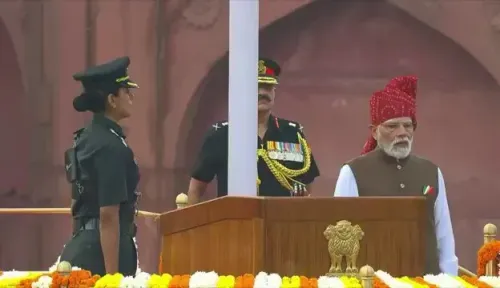
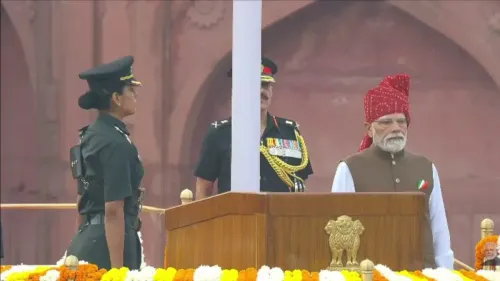
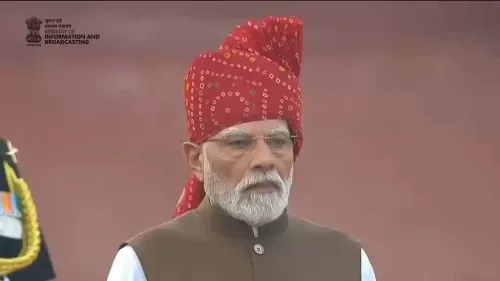
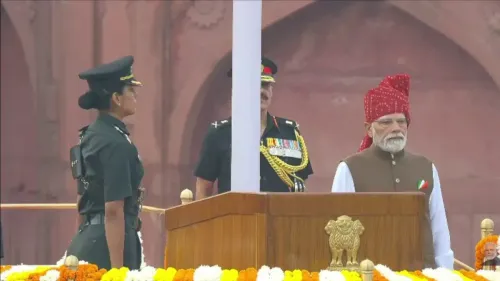
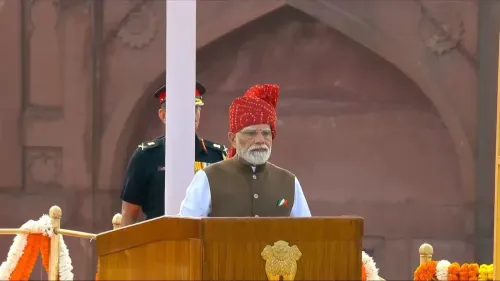
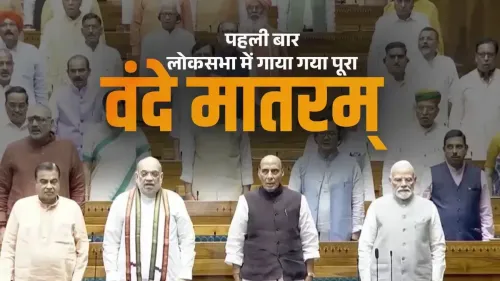
Puri wrote: 'A song of freedom! In a truly historic and deeply stirring moment on our 80th Independence Day, Vande Mataram resounded for the first time from the ramparts of the Red Fort.' He framed it as 'a powerful tribute to the timeless spirit of our freedom struggle and to the countless patriots who sacrificed everything for Bharat.'
A Song Born in the 1870s, Still Carrying Weight
Vande Mataram — 'I bow to thee, Mother' — was composed by Bankim Chandra Chatterjee in the 1870s, decades before Independence was even a political possibility. It became the anthem of the nationalist movement, sung at protests, in prisons, and on the scaffold. The Constituent Assembly formally adopted it as India's national song on 24 January 1950, giving constitutional standing to a lyric that had already been paid for in blood.
Puri noted that '150 years on, Vande Mataram continues to unite, inspire and awaken pride in every Indian heart' — a line that points to the song's unusual arc: born in colonial Bengal, it outlasted empire and remains a live wire in Indian public life.
The Red Fort as National Stage
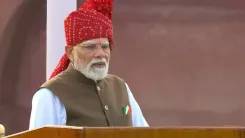
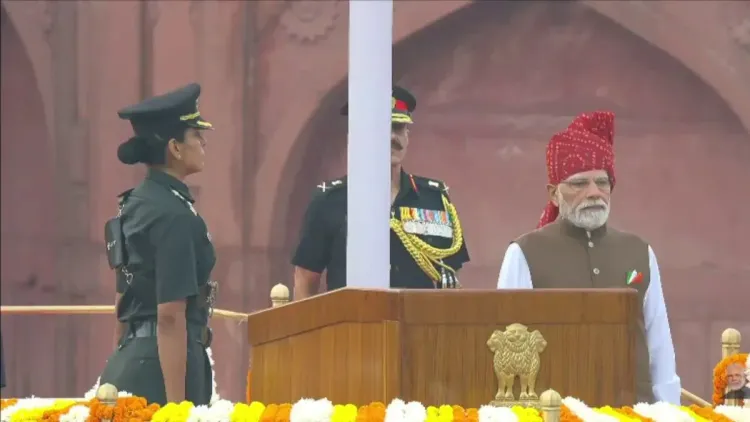
The Red Fort, the 17th-century Mughal monument in Old Delhi, has served as the symbolic heart of India's Independence Day since 1947. Every year, the Prime Minister addresses the nation from its ramparts — the same battlements from which the British tricolour once flew. The site carries layered history: Mughal grandeur, colonial administration, and post-Independence nationhood all converge in its sandstone walls. For a freedom song to be performed there carries unmistakable resonance, whatever one's political reading.
Independence Day commemorations have long leaned on cultural symbols from the freedom struggle — speeches, tableaux, songs — to renew the emotional contract between the Republic and its citizens. The Red Fort address remains the year's single most-watched act of national ceremony.
Point of View
And amplifying its performance at the Republic's premier national platform signals an effort to cement its place at the centre of mainstream national identity. For the ruling party, Independence Day is not just commemoration — it is an annual opportunity to define what the nation remembers and what it celebrates. Whether the performance at the Red Fort was indeed a first is unverified, but the political messaging around it is clear.
NationPress
15 Aug 2026
Frequently Asked Questions
What is Vande Mataram and why is it significant?
Vande Mataram is India's national song, composed by Bankim Chandra Chatterjee in the 1870s . It became a rallying cry of the Indian independence movement and was formally adopted by the Constituent Assembly on 24 January 1950 . It holds the same constitutional status as the national anthem, Jana Gana Mana .
What did Hardeep Singh Puri say about Vande Mataram on Independence Day 2026?
Union Petroleum Minister Hardeep Singh Puri posted on 15 August 2026 calling the performance of Vande Mataram from the Red Fort 'a truly historic and deeply stirring moment,' and described it as a tribute to the patriots of the freedom struggle.
Why is the Red Fort important for India's Independence Day?
The Red Fort in Old Delhi has been the venue for the Prime Minister's Independence Day address since 1947 . It is India's most iconic ceremonial platform and carries deep historical significance as a symbol of national sovereignty.
How old is Vande Mataram as a song?
Vande Mataram was composed in the 1870s , making it approximately 150 years old — a point Minister Puri explicitly highlighted in his Independence Day post.
Who is Hardeep Singh Puri?
Hardeep Singh Puri is India's Union Minister of Petroleum and Natural Gas , a senior leader of the BJP , and a former career diplomat who served as India's Permanent Representative to the United Nations, among other senior postings.