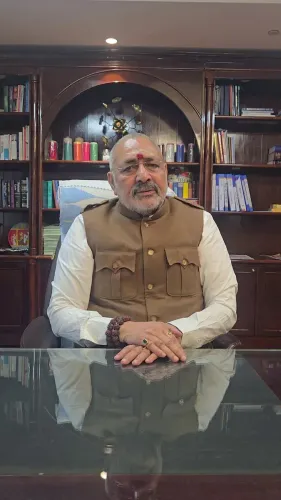
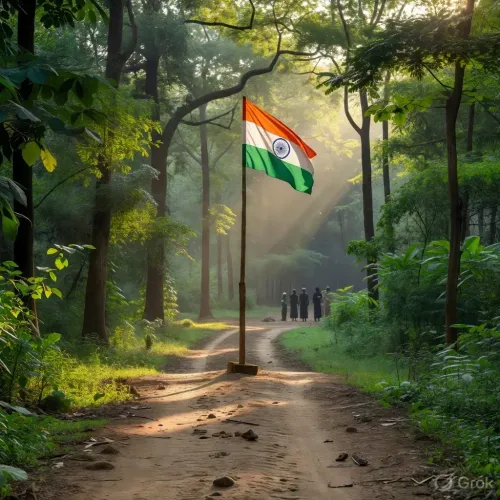
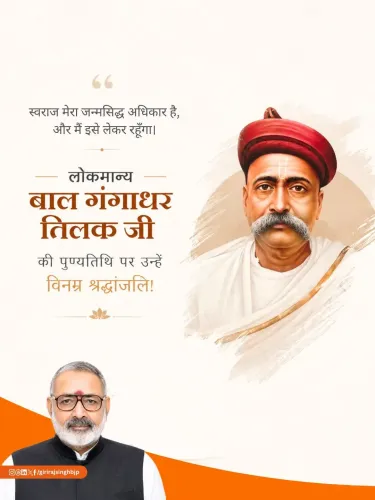
Giriraj Singh: Naxal zones now fly the tricolour of development
Synopsis
On Independence Day 2026, Union Textiles Minister Giriraj Singh declared that regions once torn by Naxal violence now carry the tricolour of development and trust, citing the Modi government's 2014 commitment to eliminate Left-Wing Extremism as the turning point.
Key Takeaways
Giriraj Singh posted on Independence Day, 15 August 2026 , marking the BJP's anti-Naxal commitment made in 2014 .
He stated that areas once defined by violence now reflect development, trust, and effort — symbolised by the tricolour.
The Maoist insurgency across the Red Corridor claimed thousands of security personnel's lives over decades.
Operation Green Hunt , launched around 2009 under UPA, was the first large-scale coordinated security response.
Official data since 2014 has shown a declining number of LWE-affected districts and violent incidents.
Key states to watch for further Naxal-free declarations include Chhattisgarh , Jharkhand , and Odisha .
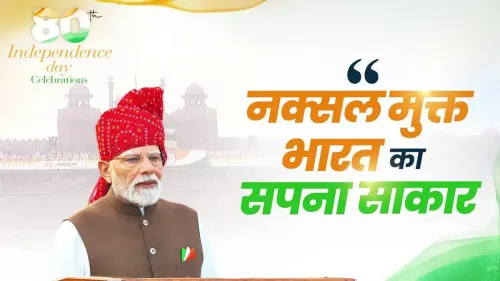
Where bullets once echoed through the forests of central India, Union Textiles Minister Giriraj Singh says the tricolour of development, trust, and effort now flies — marking what the BJP frames as a decade-long transformation of the country's most violent conflict zones. Posting on Independence Day, 15 August 2026, Singh invoked the pledge made in 2014 to free India from Naxalism and declared it is now taking shape on the ground.
In his post, Singh wrote: 'जहां कभी गोलियां गूंजती थीं, वहां अब विकास, विश्वास और प्रयास का तिरंगा लहरा रहा है' — 'Where bullets once rang out, the tricolour of development, trust, and effort now flies.' He recalled that for decades, Left-Wing Extremism had kept large parts of the country gripped by fear, violence, and destruction, and that thousands of security personnel had paid the ultimate price protecting citizens.
From the Red Corridor to a decade of security pushback
The Maoist insurgency, active for decades across the so-called Red Corridor — stretching through Chhattisgarh, Jharkhand, Odisha, and parts of Maharashtra and Andhra Pradesh — was once described by senior officials as the country's gravest internal security threat. Central Armed Police Forces, particularly the CRPF, bore the heaviest cost, with hundreds of personnel killed in ambushes and improvised explosive device attacks over the years.
A major security campaign, Operation Green Hunt, was launched around 2009 under the previous UPA government, signalling that the state was willing to mount an aggressive, coordinated response. The Modi government, which took office in 2014, elevated the elimination of Left-Wing Extremism to a stated national priority, combining security operations with accelerated infrastructure and welfare delivery in affected districts.
The 2014 pledge and what official data has shown since
Over the decade since 2014, official data has pointed to a progressive decline in violent incidents and a shrinking number of districts classified as LWE-affected. The government has periodically announced that specific districts have been removed from its LWE-sensitive list — a metric it uses to track the insurgency's geographic retreat.
Singh's Independence Day post fits a pattern of consistent messaging from the ruling dispensation: framing the anti-Naxal effort not merely as a security success but as a civilisational shift — from a landscape of fear to one of roads, schools, and state presence. Other ministers have made similar statements, positioning development delivery in former conflict zones as proof that the 2014 mandate is being fulfilled.
The districts to watch next are those in Chhattisgarh and Jharkhand where security forces have reported the most significant recent gains — any formal declaration of additional Naxal-free districts, or fresh central budget outlays for infrastructure there, will be the real measure of whether the tricolour Singh describes is flying over policy or over the ground itself.
Point of View
Making it harder to contest on either front alone. It also signals that with the insurgency's geographic footprint shrinking, the government is shifting from crisis management to legacy-building in former conflict zones. The districts that remain on the LWE-sensitive list will be the real test of whether this narrative holds through the next electoral cycle.
NationPress
29 Sept 2026
Frequently Asked Questions
What did Giriraj Singh say about Naxalism on Independence Day 2026?
Giriraj Singh posted that regions once torn by Naxal violence now carry the tricolour of development, trust, and effort, citing the BJP's 2014 pledge to free India from Left-Wing Extremism as the turning point.
What is the Red Corridor in India?
The Red Corridor refers to the belt of states — including Chhattisgarh, Jharkhand, Odisha, and parts of Maharashtra and Andhra Pradesh — where the Maoist insurgency was most active, characterised by decades of violence against security forces and civilians.
What was Operation Green Hunt?
Operation Green Hunt was a major coordinated anti-Naxal security campaign launched around 2009 under the UPA government, involving Central Armed Police Forces to counter the Maoist insurgency across the Red Corridor.
Has Naxal violence actually decreased since 2014?
Official government data has shown a progressive decline in violent incidents and a shrinking number of LWE-affected districts since 2014, though ground-level conditions vary by state and district.
Which states are still affected by Left-Wing Extremism in India?
Chhattisgarh, Jharkhand, and Odisha remain the primary states where Left-Wing Extremism activity persists, and they are the focus of both security operations and central government development programmes.