Putin hails India's 'remarkable success' on its 80th Independence Day
Synopsis
Putin's Independence Day message to India was more than diplomatic courtesy — it was a pointed reaffirmation of the Russia-India axis at a moment of global realignment. With greetings arriving from the Kremlin, the Russian Embassy, and the International Space Station simultaneously, Moscow signalled that its partnership with New Delhi remains a strategic priority, not just a legacy relationship.
Key Takeaways
Russian President Vladimir Putin praised India's 'remarkable success' in a message to President Droupadi Murmu and PM Narendra Modi on 15 August 2026 .
Putin described India-Russia ties as a 'special and privileged strategic partnership' spanning the UN , SCO , and BRICS .
Russian Ambassador Denis Alipov posted Independence Day greetings on X , pledging Moscow's 'steadfast support' for India's progress.
Russian cosmonauts Pyotr Dubrov , Anna Kikina , and Andrey Fedyaev conveyed wishes from the International Space Station (ISS) .
Cosmonaut Kikina traced India-Russia space cooperation from the Aryabhata satellite launch in 1975 to India's ongoing Gaganyaan programme.
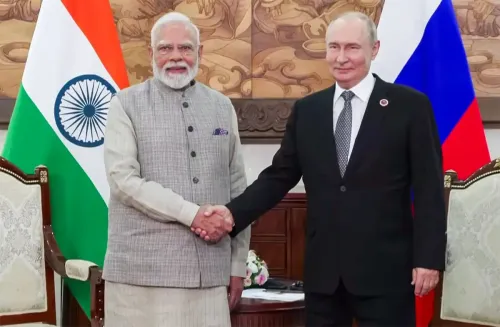
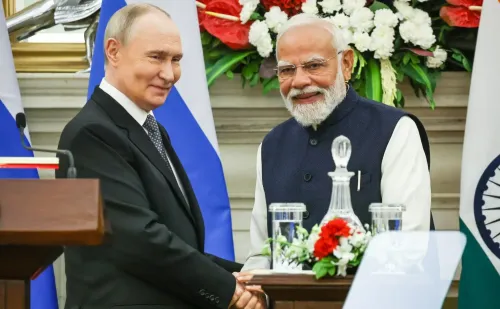
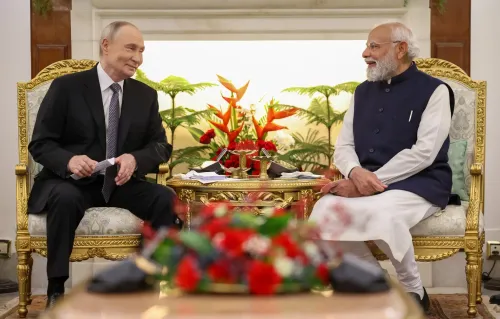
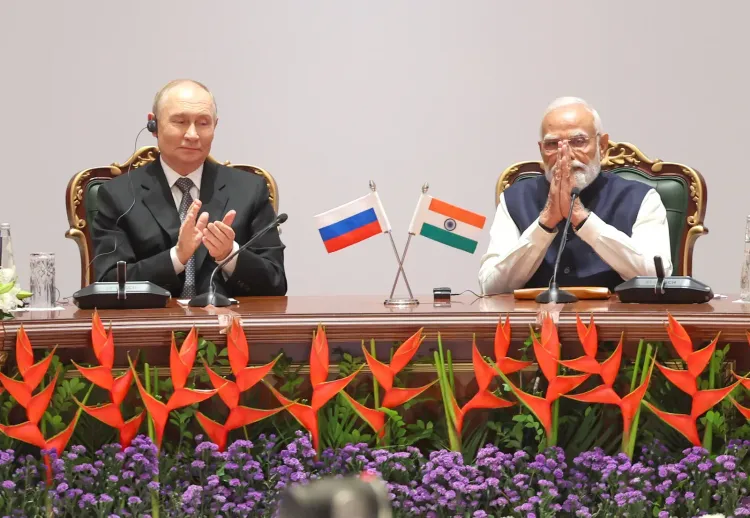
Russian President Vladimir Putin on 15 August 2026 congratulated India on its 80th Independence Day, praising the country's 'remarkable success' in economic, social, scientific, and technological domains and stating that India is 'rightfully enjoying high esteem on the world stage.' The message was addressed to President Droupadi Murmu and Prime Minister Narendra Modi.
Putin's Message in Full
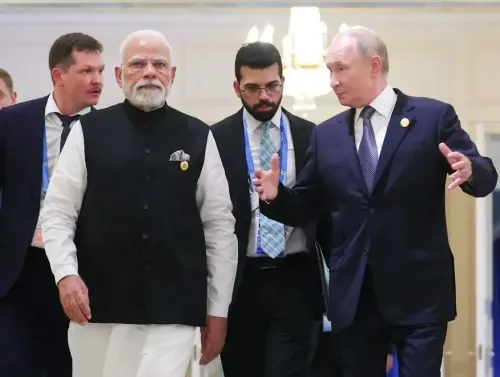
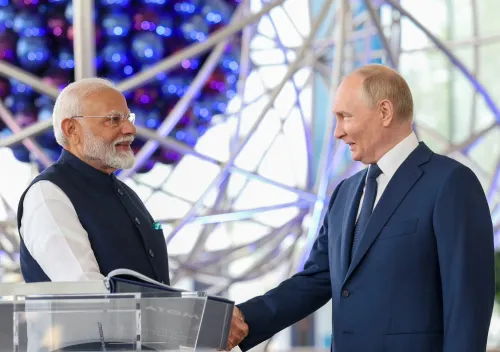
In his Independence Day greeting, Putin underscored the depth of bilateral ties, describing the India-Russia relationship as a 'special and privileged strategic partnership.' He noted that Moscow and New Delhi are 'fruitfully cooperating across various domains' and engaging effectively within multilateral frameworks including the United Nations (UN), the Shanghai Cooperation Organisation (SCO), and BRICS.
'I am confident that our joint efforts will contribute to further comprehensive strengthening of constructive Russian-Indian ties — for the benefit of our friendly peoples, as well as for the sake of ensuring international security and stability,' Putin wrote.
Russian Ambassador Extends Wishes on X
Russian Ambassador to India, Denis Alipov, also conveyed greetings, posting on social media platform X to highlight India's development journey and reaffirm Moscow's support. 'As you advance on this journey of progress, rest assured that Russia's support remains as steadfast today as it was a hundred years ago — and will continue to be so in the future. Jai Hind. Jai the friendship between Russia and India,' Alipov wrote in his post.
Greetings from the International Space Station
In a notable gesture underscoring the two countries' long-standing space cooperation, Russian cosmonauts Pyotr Dubrov, Anna Kikina, and Andrey Fedyaev conveyed Independence Day greetings to India from the International Space Station (ISS).
Dubrov recalled India's journey from colonial rule to self-reliance, also noting that 2026 marks the 65th anniversary of Soviet cosmonaut Yuri Gagarin's historic spaceflight. Kikina highlighted Gagarin's November 1961 visit to India, and traced the arc of bilateral space cooperation from the launch of India's first satellite, Aryabhata, in 1975, to the flight of India's first cosmonaut, Rakesh Sharma, in 1984.
'Today, India creates its own main spacecraft, Gaganyaan, and Indian Gaganauts have already been trained at the Yuri Gagarin Cosmonaut Training Centre in Zvezdny Gorodok,' Kikina added.
What This Signals
The effusive messaging from Moscow — spanning the Kremlin, the Russian Embassy in New Delhi, and cosmonauts aboard the ISS — reflects Russia's continued diplomatic investment in its relationship with India at a time when New Delhi has maintained strategic autonomy on global flashpoints. This comes amid sustained Western pressure on India to distance itself from Moscow. India's balanced posture, rooted in decades of defence and energy ties with Russia, continues to draw explicit acknowledgement from the Kremlin.
As India charts an increasingly assertive global role, the tone of Russia's Independence Day outreach suggests Moscow views New Delhi as an indispensable partner in shaping a multipolar world order.
Point of View
Embassy, and ISS — is not incidental. It is a calibrated signal that Russia views India as a diplomatic anchor at a time when Western nations are pressing New Delhi to pick sides. Putin's invocation of UN, SCO, and BRICS in a single greeting is a reminder that Moscow sees India as a co-architect of multipolarity, not merely a trade partner. What is conspicuously absent from the Kremlin's message is any reference to the ongoing conflict in Ukraine — a silence that itself speaks to the carefully managed nature of the relationship. India's continued strategic autonomy gives both sides room to deepen ties without public friction, but it also means New Delhi carries growing expectations from Moscow that will eventually require harder choices.
NationPress
29 Sept 2026
Frequently Asked Questions
What did Putin say about India on Independence Day 2026?
Putin praised India's 'remarkable success' in economic, social, scientific, and technological areas, saying the country is 'rightfully enjoying high esteem on the world stage.' He addressed the message to President Droupadi Murmu and Prime Minister Narendra Modi on 15 August 2026, India's 80th Independence Day.
What is the 'special and privileged strategic partnership' between India and Russia?
It is the formal framework describing the India-Russia bilateral relationship, which encompasses defence, energy, trade, and multilateral cooperation through forums like the UN, SCO, and BRICS. Putin used the phrase in his Independence Day greeting to reaffirm the depth of ties between Moscow and New Delhi.
Why did Russian cosmonauts send Independence Day greetings to India from the ISS?
Russian cosmonauts Pyotr Dubrov, Anna Kikina, and Andrey Fedyaev sent greetings from the International Space Station to underscore the longstanding space cooperation between India and Russia. Cosmonaut Kikina specifically recalled milestones including India's Aryabhata satellite launch in 1975 and Rakesh Sharma's spaceflight in 1984.
What did Russian Ambassador Denis Alipov say about India?
Ambassador Denis Alipov posted on X to extend Independence Day wishes, highlighting India's development journey and pledging that Russia's support for India's progress 'remains as steadfast today as it was a hundred years ago.' He ended his post with 'Jai Hind. Jai the friendship between Russia and India.'
What is the Gaganyaan programme mentioned in the Independence Day greetings?
Gaganyaan is India's indigenous human spaceflight programme, designed to carry Indian astronauts — referred to as Gaganauts — to space. Russian cosmonaut Anna Kikina noted that Indian Gaganauts have already trained at the Yuri Gagarin Cosmonaut Training Centre in Zvezdny Gorodok, Russia, reflecting continued bilateral cooperation in space.