Lukashenko, Putin hail India's global standing on 80th Independence Day
Synopsis
As India turned 80, both Belarus and Russia sent unusually warm Independence Day greetings — with Putin citing the UN, SCO, and BRICS as pillars of the partnership, and Russian cosmonauts beaming wishes from the ISS. The diplomatic messaging underscores India's value as a non-Western anchor at a moment when Moscow and Minsk are increasingly isolated from the West.
Key Takeaways
Belarusian President Alexander Lukashenko praised India's 'authority on the global stage' and called for ties to reach a strategic level .
Russian President Vladimir Putin highlighted India's 'remarkable success' and cited cooperation within UN, SCO, and BRICS frameworks.
Russian cosmonauts Pyotr Dubrov , Anna Kikina , and Andrey Fedyaev conveyed greetings from the International Space Station .
Cosmonaut Kikina traced India-Russia space ties from the Aryabhata satellite launch in 1975 to Indian Gaganauts training for Gaganyaan .
The messages come as India marks its 80th Independence Day , reinforcing New Delhi's standing as a key non-Western diplomatic partner.
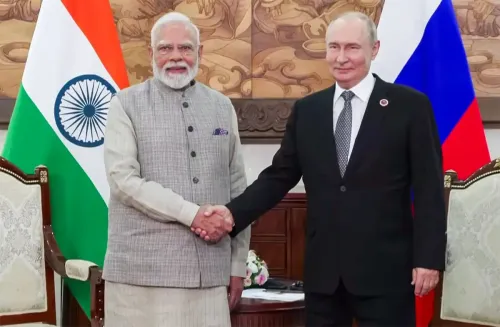
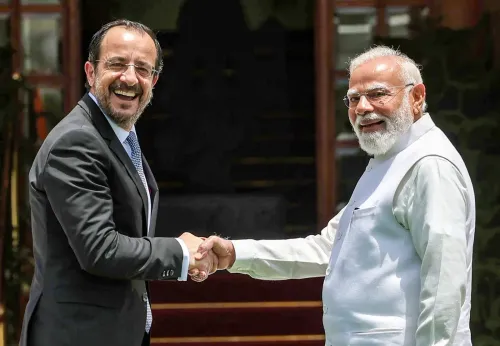
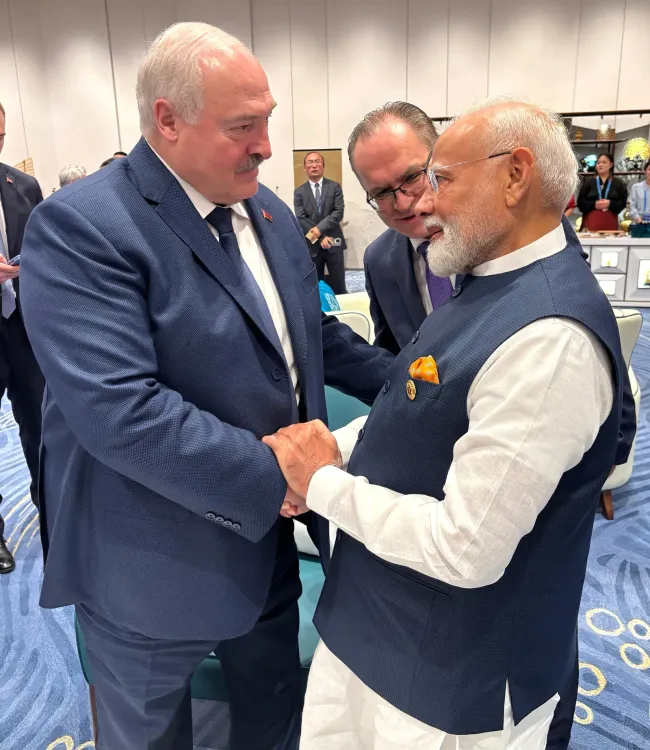
Belarusian President Alexander Lukashenko and Russian President Vladimir Putin on 15 August 2025 conveyed Independence Day greetings to President Droupadi Murmu and Prime Minister Narendra Modi, praising India's rising global authority and calling for deeper bilateral ties. The messages arrived as India marked its 80th Independence Day, with world leaders queuing to acknowledge New Delhi's expanding diplomatic and economic footprint.
Lukashenko's Message to New Delhi
In his congratulatory note, Lukashenko stated that India 'rightfully enjoys authority on the global stage and plays a significant constructive role in addressing pressing issues on the international agenda.' He commended the Indian leadership for 'large-scale reforms' and efforts to ensure 'stability and harmony' in the country.
Lukashenko expressed hope that active joint efforts could elevate Belarusian-Indian relations to a 'qualitatively new level' in both the political and economic spheres, and voiced confidence that ties could be raised to a strategic level. Minsk, he noted, 'consistently strives to deepen dialogue with New Delhi' — a signal of Belarus's intent to strengthen engagement with India even as it remains diplomatically isolated from much of the West.
Putin Highlights 'Remarkable Success' and Strategic Partnership
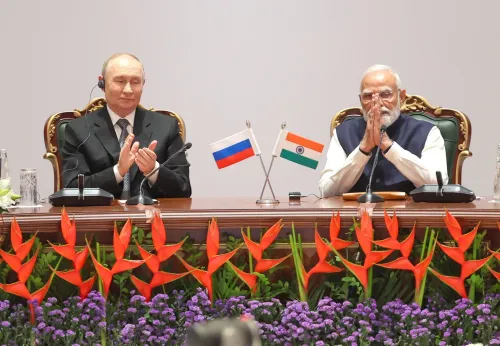
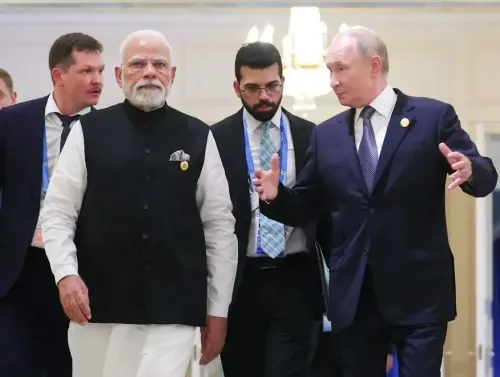
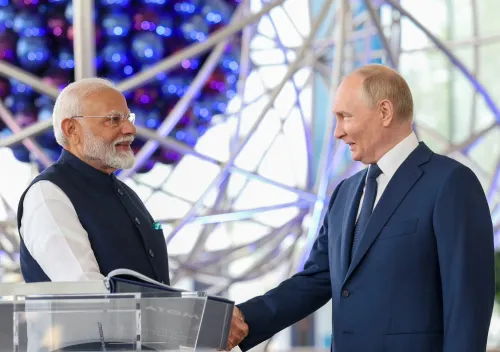
Russian President Putin's message was notably expansive, describing India as achieving 'remarkable success in economic, social, scientific and technological areas, rightfully enjoying high esteem on the world stage.' He underscored that relations between Russia and India are developing 'in the spirit of special and privileged strategic partnership.'
Putin pointed to cooperation within multilateral frameworks — the United Nations (UN), the Shanghai Cooperation Organisation (SCO), and BRICS — as evidence of the breadth of the bilateral relationship. 'I am confident that our joint efforts will contribute to further comprehensive strengthening of constructive Russian-Indian ties — for the benefit of our friendly peoples, as well as for the sake of ensuring international security and stability,' he wrote.
Greetings from the International Space Station
In an unusual gesture underlining the depth of India-Russia space cooperation, three Russian cosmonauts — Pyotr Dubrov, Anna Kikina, and Andrey Fedyaev — conveyed Independence Day greetings to India from the International Space Station (ISS).
Cosmonaut Dubrov noted that India's 80th Independence Day coincides with the 65th anniversary of Soviet cosmonaut Yuri Gagarin's historic spaceflight. Cosmonaut Kikina recalled Gagarin's November 1961 visit to India, and traced the arc of bilateral space cooperation from the launch of India's first satellite, Aryabhata, in 1975, to the flight of India's first cosmonaut, Rakesh Sharma, in 1984. She also noted that Indian Gaganauts have already trained at the Yuri Gagarin Cosmonaut Training Centre in Zvezdny Gorodok for the upcoming Gaganyaan mission.
Cosmonaut Fedyaev extended wishes for 'peace and prosperity,' adding: 'Let the dreams inspire future generations to achieve new victories in the exploration of outer space. Long live India-Russia friendship.'
What the Messages Signal
The effusive tone from both Minsk and Moscow reflects a broader pattern: as Western sanctions tighten around Russia and Belarus, both governments have intensified outreach to non-aligned partners, with India — the world's most populous nation and a G20 economy — a particularly valued interlocutor. Notably, India has maintained trade and diplomatic engagement with Russia throughout the Ukraine conflict, a stance that has drawn scrutiny from Western capitals but reinforced New Delhi's positioning as an autonomous strategic actor.
As India enters its 81st year of independence, the diplomatic messaging from across Eurasia suggests that New Delhi's 'strategic autonomy' doctrine continues to keep doors open on multiple fronts simultaneously.
Point of View
' a 'reliable partner,' a nation 'rightfully' commanding authority — reads less like independent sentiment and more like coordinated diplomatic signalling. For Russia and Belarus, both under sustained Western pressure, India's continued engagement is a strategic lifeline, and these messages are as much about optics in the Global South as they are about bilateral warmth. What is worth watching is whether the rhetoric translates into concrete deliverables: Lukashenko's call for a 'qualitatively new level' of ties has been made before without measurable follow-through, and India's trade relationship with Belarus remains marginal. Putin's invocation of BRICS and SCO is more substantive — but India has also used those same platforms to push back on Russia on Ukraine, a contradiction neither message acknowledges.
NationPress
30 Sept 2026
Frequently Asked Questions
What did Belarus President Lukashenko say about India on Independence Day?
Lukashenko stated that India 'rightfully enjoys authority on the global stage' and praised the Indian leadership's efforts on large-scale reforms and stability. He also expressed hope of elevating Belarusian-Indian relations to a strategic level through active bilateral cooperation.
What did Russian President Putin say in his Independence Day message to India?
Putin described India as achieving 'remarkable success in economic, social, scientific and technological areas' and reaffirmed the 'special and privileged strategic partnership' between Russia and India. He highlighted cooperation within the UN, SCO, and BRICS frameworks.
Why did Russian cosmonauts send greetings to India from the ISS?
Cosmonauts Pyotr Dubrov, Anna Kikina, and Andrey Fedyaev conveyed Independence Day wishes from the International Space Station to underscore the longstanding India-Russia friendship and space cooperation. Cosmonaut Kikina traced bilateral space ties from the Aryabhata satellite launch in 1975 to the ongoing Gaganyaan mission.
Which Independence Day is India celebrating in 2025?
India is celebrating its 80th Independence Day on 15 August 2025, marking eight decades since independence from British colonial rule in 1947.
What is the significance of Belarus and Russia's diplomatic outreach to India?
Both Russia and Belarus are under significant Western diplomatic and economic pressure, making India — a large non-aligned economy — a strategically important partner. The warm messaging reflects both countries' interest in deepening ties with New Delhi, which has maintained engagement with Moscow and Minsk despite Western criticism.