Giriraj Singh: FTAs opening global doors for Indian textiles, MSMEs
Synopsis
Union Textiles Minister Giriraj Singh marked Independence Day 2026 by highlighting how India's expanding free trade agreement network is unlocking global markets for MSMEs, textiles, pharmaceuticals, machinery and seafood — sectors at the heart of India's export-led growth strategy.
Key Takeaways
Union Textiles Minister Giriraj Singh posted on Independence Day, August 15, 2026 , highlighting FTAs as a driver of global market access for Indian exporters.
The India-UAE CEPA (signed February 2022 ) targets bilateral trade of around $100 billion over five years, with textiles and pharmaceuticals as key beneficiaries.
The India-Australia ECTA (in force December 2022 ) grants duty-free or preferential access for Indian seafood, textiles and engineering goods.
Singh identified five priority sectors: MSMEs, textiles, machinery, pharmaceuticals and seafood .
India's ongoing FTA negotiations with the EU and UK remain critical to watch as potential next milestones in this trade agenda.
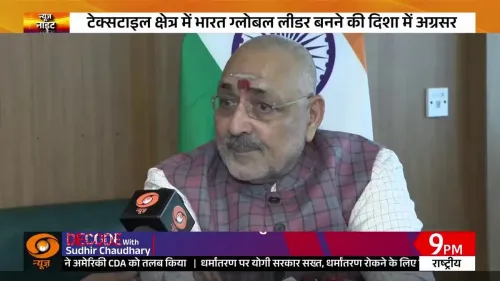
On Independence Day, August 15, 2026, Union Textiles Minister Giriraj Singh declared that the world is recognising India's growing economic strength — and that free trade agreements are now converting that recognition into concrete export opportunity for sectors ranging from textiles to seafood.
Posting in Hindi on the occasion of Independence Day, Singh wrote: 'The world is recognising India's capability and strength. With the growing opportunities from FTAs, the doors of global markets are opening for our MSMEs, textiles, machinery, pharmaceuticals and seafood sectors. These opportunities are becoming India's strength today, and will continue to strengthen India's global identity in the times to come.'
The FTA architecture behind the claim
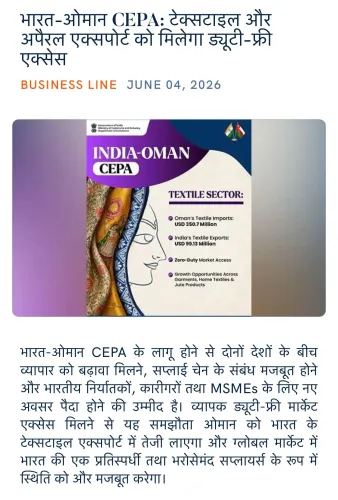
The minister's confidence rests on a trade architecture India has been quietly assembling since 2022. The India-UAE Comprehensive Economic Partnership Agreement (CEPA), signed in February 2022, set an ambition of raising bilateral trade to around $100 billion over five years, with tariff reductions directly benefiting Indian textiles and pharmaceuticals. Months later, the India-Australia Economic Cooperation and Trade Agreement (ECTA) entered into force in December 2022, granting duty-free or preferential access for Indian seafood, textiles and engineering goods into the Australian market. That is two major agreements in a single year — and they were designed to do exactly what Singh is describing: pry open markets for India's most labour-intensive, MSME-dominated sectors.Why MSMEs and textiles are at the centre of this push
India's export strategy has deliberately front-loaded sectors where small and medium enterprises dominate — textiles, seafood processing, pharmaceuticals and light machinery. These are industries where even a marginal tariff reduction at the border of a large economy translates into millions of dollars in additional orders and, critically, millions of jobs at the factory floor. The Ministry of Textiles, which Singh heads, sits at the intersection of this trade push and domestic manufacturing policy. The ministry formulates export-expansion strategies and supports manufacturing clusters — meaning Singh is simultaneously the architect of supply-side capacity and the advocate for demand-side market access.The negotiations still in motion
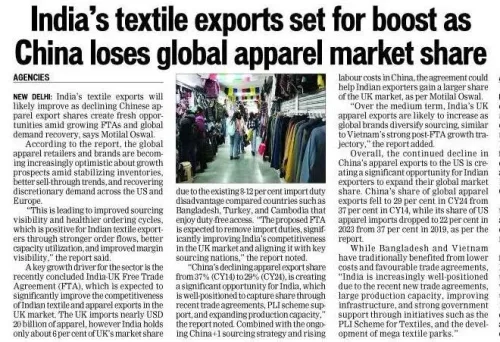
The broader FTA agenda is far from complete. India has maintained active negotiations with the European Union and the United Kingdom since 2021. A deal with either would represent an order-of-magnitude leap in market access — the EU and UK together constitute some of the world's largest import markets for textiles and pharmaceuticals. The outcomes of those talks, and quarterly export performance data under the UAE and Australia agreements, will be the real test of whether Singh's Independence Day optimism is borne out in trade figures. For now, the minister's message is clear: India is not waiting for the world to come to it. The deals are signed, the doors are open, and the sectors that employ the most Indians are first in line.Point of View
He connects high-level trade policy to ground-level livelihoods, a communication strategy the BJP has consistently deployed ahead of election cycles. The post also signals that the Ministry of Textiles sees itself as central to India's export ambitions, not merely a legacy industrial portfolio. The real political accountability will come when export data under the UAE and Australia agreements is scrutinised — and when the EU and UK negotiations either close or stall.
NationPress
15 Aug 2026
Frequently Asked Questions
What did Giriraj Singh say about FTAs on Independence Day 2026?
Singh said that growing FTA opportunities are opening global market doors for Indian MSMEs, textiles, machinery, pharmaceuticals and seafood, and that these agreements are becoming India's strength.
Which FTAs is India using to boost textile and MSME exports?
The two key active agreements are the India-UAE CEPA, signed in February 2022, and the India-Australia ECTA, which came into force in December 2022 — both reduce tariffs on textiles, pharmaceuticals and seafood.
What is the India-UAE CEPA and how does it help exporters?
The India-UAE Comprehensive Economic Partnership Agreement, signed in February 2022, aims to grow bilateral trade to around $100 billion over five years by reducing tariffs on goods including textiles and pharmaceuticals.
Which sectors benefit most from India's free trade agreements?
MSMEs, textile manufacturers, pharmaceutical exporters, seafood processors and engineering goods makers are the primary beneficiaries identified under India's current FTA framework.
What FTA negotiations is India still pursuing?
India has been in active negotiations with the European Union and the United Kingdom since 2021; the outcomes of those talks would significantly expand preferential market access for Indian exporters.