Giriraj Singh hails India-Oman CEPA duty-free textile access
Synopsis
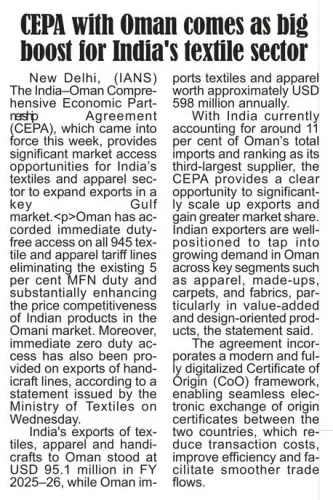
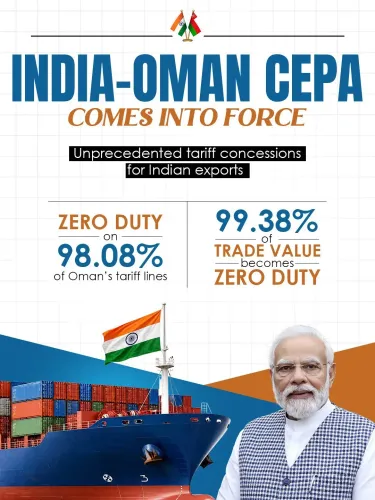
Union Textiles Minister Giriraj Singh on 4 June 2026 highlighted the India-Oman CEPA, saying it will give Indian textile and apparel exporters, especially MSMEs, duty-free market access to Oman. The pact extends New Delhi's Gulf trade push after the 2022 India-UAE CEPA and aims to boost labour-intensive exports.
Key Takeaways
Union Textiles Minister Giriraj Singh flagged the India-Oman CEPA as a boost for textile and apparel exports.
The agreement provides duty-free market access for Indian textiles and apparel into Oman.
MSME exporters in clusters like Tiruppur, Surat and Ludhiana are key intended beneficiaries.
The pact follows the template of the India-UAE CEPA signed in February 2022.
Final tariff schedule and rules-of-origin text will determine the real export gains.
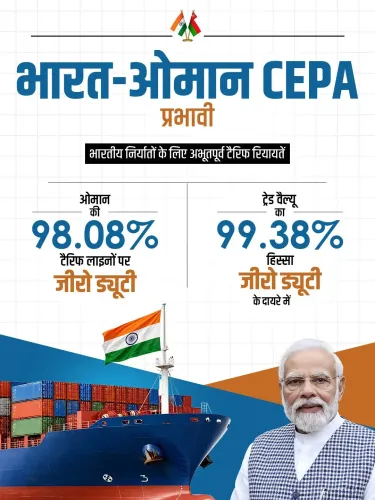
Union Textiles Minister Giriraj Singh on Thursday, 4 June 2026 flagged the India-Oman Comprehensive Economic Partnership Agreement (CEPA) as a breakthrough for Indian textile and apparel exporters, saying the pact will deliver duty-free market access for the labour-intensive sector. In a post shared from New Delhi via the NaMo App, the minister highlighted fresh opportunities for MSMEs under the bilateral deal with the Gulf nation.
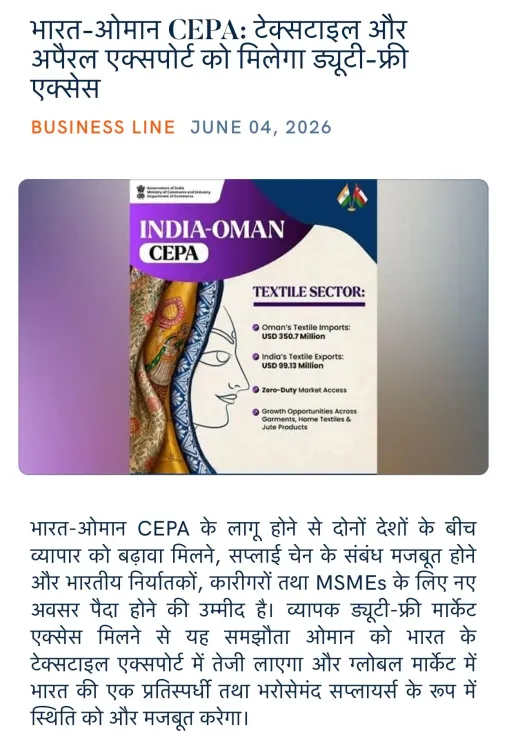
Writing in Hindi, Singh declared: 'Bharat-Oman CEPA: Textile aur Apparel Export ko milega duty-free access' ('India-Oman CEPA: Textile and apparel exports will get duty-free access'). The message was accompanied by an image and a link to a report on the pact's implications for textiles, apparel and small enterprises.
Context
The India-Oman CEPA is a bilateral trade agreement negotiated to deepen commercial ties between New Delhi and Muscat, two longstanding partners in the western Indian Ocean. Oman, a member of the six-nation Gulf Cooperation Council (GCC), has historically been a steady buyer of Indian goods ranging from rice and pharmaceuticals to engineering products and apparel.
Singh's intervention positions textiles as a marquee gain from the agreement. By eliminating customs duties on Indian textile and apparel shipments to Oman, the pact is intended to make Indian mills, weavers and garment units price-competitive against suppliers from China, Bangladesh, Vietnam and Turkey in the Omani market.
Policy backdrop
The Oman deal sits within a broader push by the Centre to lock in preferential access across the Gulf. The India-UAE CEPA, signed in February 2022, granted duty-free access on roughly 90 percent of Indian textile tariff lines and has served as a template for subsequent agreements in the region.
Textiles and apparel routinely feature at the centre of these pacts because of the sector's outsized contribution to employment and its existing export capacity. The Centre has paired such trade deals with domestic interventions such as the PLI scheme for textiles and the PM MITRA mega parks programme, both of which fall under Singh's ministry.
The Oman agreement extends the same tariff-liberalisation logic to a smaller but strategically located market that doubles as a re-export hub for parts of East Africa and the wider Gulf.
Stakeholders and impact
The most direct beneficiaries are textile and apparel exporters, particularly MSMEs in clusters such as Tiruppur, Surat, Ludhiana, Panipat and Noida. Duty-free entry typically translates into a tariff advantage of several percentage points, which can be decisive in thin-margin categories like cotton knitwear, home textiles and ready-made garments.
For Oman, the agreement offers Indian investment into its manufacturing, logistics and downstream apparel retail. Indian diaspora-run firms already operate across Muscat, Sohar and Salalah, and the pact is expected to ease their sourcing arrangements with units back home.
Workers in labour-intensive garment factories stand to benefit if order books expand, though the scale of the gain will depend on the final tariff schedule and rules-of-origin requirements, which determine how much value addition must occur in India for goods to qualify for concessional treatment.
What's next
Industry bodies will be watching for the publication of the full tariff schedule and the rules-of-origin text, which together will define how widely the duty-free benefit can be claimed. Quarterly textile export data to Oman will offer the first hard read on whether the agreement is translating into shipments on the ground.
Any required parliamentary notification and the operational rollout through customs authorities will also be closely tracked. For Singh's ministry, the Oman pact is one more building block in an emerging Gulf-wide preferential trade architecture that the Centre is betting on to lift India's share of global textile and apparel trade.
Point of View
Oman is the logical next node in a Gulf-wide preferential access map that is being stitched together one country at a time. The political value for the BJP is tangible: textile clusters concentrate jobs in electorally significant states. The real test, however, will be whether duty-free access translates into measurable export growth before competing suppliers respond.
NationPress
18 Oct 2026
Frequently Asked Questions
What is the India-Oman CEPA?
The India-Oman CEPA is a Comprehensive Economic Partnership Agreement between India and Oman that provides duty-free market access for several categories of Indian goods, including textiles and apparel. It is part of New Delhi's strategy to deepen trade ties with Gulf Cooperation Council countries.
How will the India-Oman CEPA benefit Indian textile exporters?
It removes customs duties on Indian textile and apparel exports entering Oman, making them more price-competitive against suppliers from China, Bangladesh, Vietnam and Turkey. Exporters in clusters like Tiruppur, Surat, Ludhiana and Panipat are expected to benefit the most.
How is the India-Oman CEPA different from the India-UAE CEPA?
The India-UAE CEPA, signed in February 2022, granted duty-free access on around 90 percent of Indian textile tariff lines and served as the template for later Gulf deals. The India-Oman CEPA extends a similar tariff-liberalisation logic to Oman, though the final tariff schedule and rules of origin will define its specific scope.
Which Indian MSMEs stand to gain from the Oman trade deal?
MSMEs in labour-intensive textile and apparel segments, such as cotton knitwear, ready-made garments and home textiles, stand to gain. Units in Tiruppur, Surat, Ludhiana, Panipat and Noida are typical beneficiaries of duty-free access agreements with Gulf markets.
What should exporters watch next after the India-Oman CEPA announcement?
Exporters should track the publication of the full tariff schedule and rules-of-origin text, which will determine which products qualify for duty-free treatment. Quarterly textile export data to Oman will provide the first real measure of the pact's commercial impact.