Shekhawat targets Congress over Vande Mataram on I-Day

Synopsis
On Independence Day 2026, Union Culture Minister Gajendra Singh Shekhawat accused Congress leadership — citing Sonia Gandhi's Italian origins and Rahul Gandhi's alleged foreign liberal leanings — of being uncomfortable with Vande Mataram and suppressing cadres who wish to sing it.
Key Takeaways
Gajendra Singh Shekhawat , Union Culture and Tourism Minister, posted the attack on 15 August 2026 , choosing Independence Day for maximum symbolic impact.
He alleged that Congress cadres want to sing Vande Mataram but are stopped by the party's top leadership.
He specifically cited Sonia Gandhi's Italian origins as a source of discomfort with India's national pride — a recurring BJP line of attack.
Rahul Gandhi was accused of 'running foreign liberal narratives in India' and intervening against the national song.
Vande Mataram was adopted as India's national song by the Constituent Assembly in January 1950 .
The specific incident of Congress cadres being stopped from singing is not verified by established public records; Shekhawat presents it as a characterisation of Congress's broader stance.
On Independence Day, 15 August 2026, Union Culture and Tourism Minister Gajendra Singh Shekhawat turned the national occasion into a sharp political flashpoint, accusing the Indian National Congress of suppressing its own cadres' desire to sing Vande Mataram — and laying the blame squarely at the feet of the party's top leadership.
Shekhawat's post on X did not mince words. He alleged that while Congress workers wish to sing the national song, the party's senior leadership — which he described as being led by Italian-born Sonia Gandhi — remains 'uncomfortable with India's national pride.' He further claimed that Rahul Gandhi, whom he accused of 'running foreign liberal narratives in India,' intervenes to stop it.
Vande Mataram and the long shadow of the identity debate
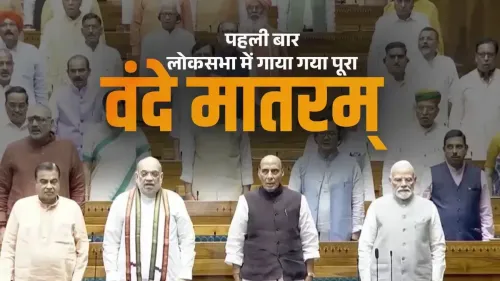
Vande Mataram, composed by Bankim Chandra Chatterjee and adopted as India's national song by the Constituent Assembly in January 1950, has been a recurring flashpoint in Indian political discourse for decades. Its invocation carries enormous symbolic weight — particularly around Independence Day — and BJP leaders have consistently used it as a litmus test of nationalist credentials.
This framing is not new. Since the 1990s, BJP figures have drawn a contrast between their own emphasis on indigenous cultural symbols and what they characterise as Congress leadership's detachment from expressions of national pride — a line of attack that intensifies around national holidays and election cycles.
Sonia Gandhi's origins as a recurring BJP target
Sonia Gandhi, widow of former Prime Minister Rajiv Gandhi, served multiple terms as Congress president and remains one of the party's most prominent figures. Her Italian birth has been a point of political attack from BJP leaders across multiple election cycles, deployed to question her — and by extension, the Congress leadership's — cultural and emotional connection to India.
Rahul Gandhi, Congress leader and former party president, is similarly a frequent target of the charge that he amplifies positions aligned with foreign or liberal opinion rather than domestic sentiment. Shekhawat's post threads both attacks together into a single, pointed Independence Day message.
The research notes that the specific incident referenced — Congress cadres wanting to sing Vande Mataram but being stopped by leadership — is not verifiable from established public records. Shekhawat's post presents this as a characterisation of the party's broader stance, not a documented event.
On the day India marks 79 years of independence, the BJP's culture minister has chosen to define national pride as a political battleground — and Congress's response will be the next move to watch.
Point of View
A symbol with near-universal emotional resonance, to frame Congress as alienated from India's civilisational identity. Targeting Sonia Gandhi's foreign origins on a day of maximum patriotic sentiment is a deliberate escalation, not a casual remark. It signals that the BJP intends to keep cultural identity — not just economic governance — at the centre of political contestation heading into future electoral cycles. Congress's silence or response will define whether this attack lands or is neutralised.
NationPress
15 Aug 2026
Frequently Asked Questions
Why is Vande Mataram controversial in Indian politics?
Vande Mataram, adopted as India's national song in 1950, has been a recurring point of political dispute, with BJP leaders using it as a marker of nationalist credentials and accusing Congress of ambivalence toward it, particularly citing the party leadership's perceived discomfort with the song's Hindu cultural imagery.
What did Gajendra Singh Shekhawat say about Congress on Independence Day 2026?
He posted on X that Congress cadres want to sing Vande Mataram but are stopped by the party's top leadership, which he said is led by Italian-born Sonia Gandhi and is uncomfortable with India's national pride, and that Rahul Gandhi rushes in to stop it.
Why does BJP repeatedly bring up Sonia Gandhi's Italian origins?
BJP leaders have used Sonia Gandhi's Italian birth since the 1990s to question her cultural and emotional connection to India, framing it as evidence that the Congress leadership is detached from indigenous national symbols and sentiment.
Is Rahul Gandhi accused of promoting foreign liberal views?
BJP leaders, including Shekhawat in this post, have repeatedly accused Rahul Gandhi of amplifying positions aligned with foreign or liberal opinion rather than domestic nationalist sentiment, a charge Congress rejects.
What is Gajendra Singh Shekhawat's political position?
Gajendra Singh Shekhawat is a senior BJP leader, Union Minister of Culture and Tourism, and a Lok Sabha Member of Parliament from Jodhpur, Rajasthan.