Shekhawat hails 'Vande Mataram' echoing from Red Fort on 80th Independence Day
Synopsis
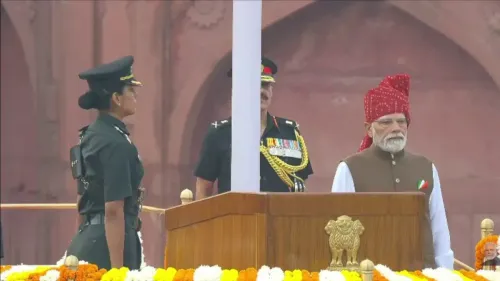
Union Culture Minister Gajendra Singh Shekhawat marked India's 80th Independence Day by hailing what he called the first-ever singing of Vande Mataram from the Red Fort ramparts, calling it a moment of national pride and patriotic unity.
Key Takeaways
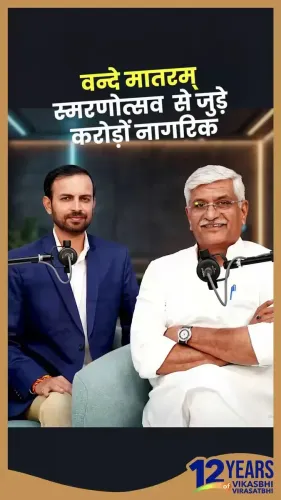
Union Culture and Tourism Minister Gajendra Singh Shekhawat posted on X on 15 August 2026 marking India's 80th Independence Day .
He claimed that Vande Mataram was sung from the Red Fort ramparts for the first time during the Independence Day ceremony.
Vande Mataram , composed by Bankim Chandra Chatterjee , was recognised as India's national song by the Constituent Assembly in 1950 .
The Red Fort has been the site of the Prime Minister's Independence Day address since Jawaharlal Nehru in 1947 .
As Culture Minister, Shekhawat's ministry coordinates the Independence Day programme, making this a policy-relevant signal about the ceremony's cultural direction.
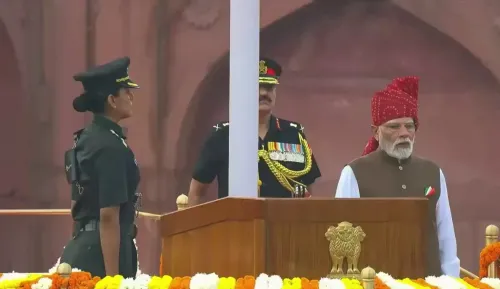
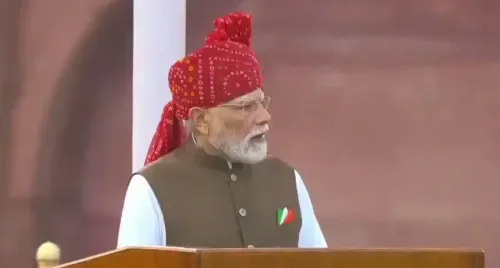
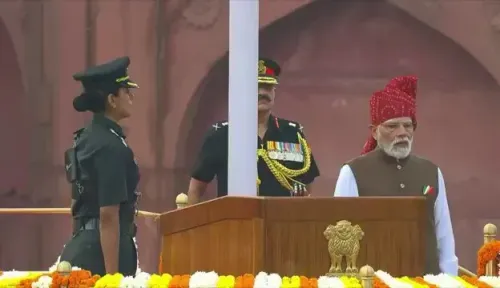
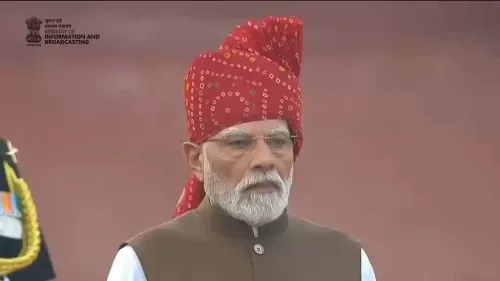
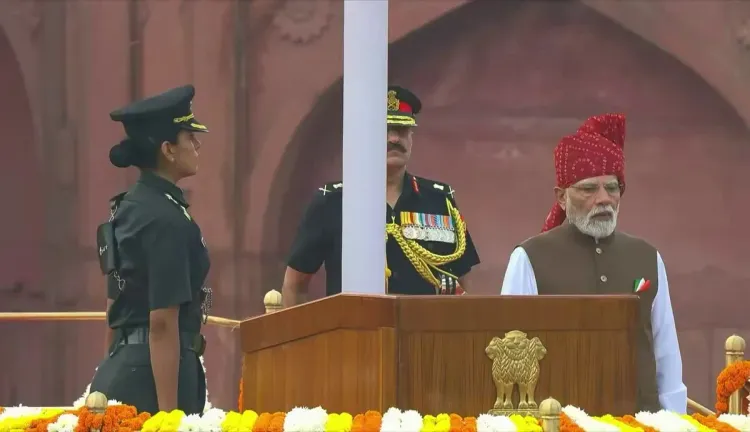
For the first time, according to Union Culture and Tourism Minister Gajendra Singh Shekhawat, the strains of Vande Mataram rang out from the ramparts of the Red Fort on 15 August 2026 — and the minister says the entire nation was swept up in a surge of patriotic feeling on India's 80th Independence Day.
Shekhawat posted on X with the exclamation 'Vande Mataram!' — 'I bow to the motherland!' — calling the moment historic. 'Today, on the occasion of the 80th Independence Day, for the first time the notes of Vande Mataram echoed from the ramparts of the Red Fort, and the entire country was filled with national spirit,' he wrote.
A song with deep roots, a milestone at the ramparts
Vande Mataram, composed by Bankim Chandra Chatterjee in the 19th century, holds a singular place in India's freedom movement — it was the rallying cry of the independence struggle long before the tricolour was raised. India's Constituent Assembly formally recognised it as the national song in 1950, giving it equal honour alongside the national anthem Jana Gana Mana.
The Red Fort, the Mughal-era sandstone citadel in Old Delhi, has been the ceremonial heart of Independence Day since Jawaharlal Nehru hoisted the flag and addressed the nation from its ramparts on 15 August 1947. Every Prime Minister since has continued that tradition — but the formal inclusion of Vande Mataram in the programme from the ramparts itself, if confirmed, would mark a new chapter in how that ceremony is conducted.
Culture ministry's push to centre national symbols
As the minister who oversees India's cultural heritage and national celebrations, Shekhawat's post signals the government's emphasis on weaving the national song more visibly into the Republic's most-watched annual ceremony. The Ministry of Culture coordinates the Independence Day programme at Red Fort, making Shekhawat a direct stakeholder in the event's design and execution.
The moment lands at a symbolically charged juncture — 80 years of independence is not a routine anniversary. It falls in the middle of the government's 'Viksit Bharat' — Developed India — campaign, which frequently invokes the spirit of the freedom movement as a moral anchor for its ambitions through 2047, the centenary of independence.
Whether the singing of Vande Mataram from the Red Fort ramparts becomes a fixed feature of future Independence Day programmes — or remains a singular gesture marking the 80th year — is now a question the cultural establishment will have to answer.
Point of View
Shekhawat's ministry is asserting a more expansive role for the national song in state ritual, consistent with the BJP government's broader project of foregrounding pre-independence cultural symbols in public life. The 80th Independence Day, falling within the 'Viksit Bharat 2047' arc, provides the ideal stage for such symbolic assertions. Whether this becomes institutionalised — or remains a milestone-year flourish — will reveal how deep the cultural recalibration actually runs.
NationPress
29 Sept 2026
Frequently Asked Questions
Was Vande Mataram sung at Red Fort for the first time on Independence Day 2026?
Union Culture Minister Gajendra Singh Shekhawat claimed on X that Vande Mataram was sung from the Red Fort ramparts for the first time on 15 August 2026, India's 80th Independence Day. This specific claim relates to a 2026 event and has not been independently verified through historical records.
What is Vande Mataram and why is it significant?
Vande Mataram is India's national song, composed by Bankim Chandra Chatterjee. It served as a rallying anthem during the independence movement and was formally recognised by the Constituent Assembly in 1950, alongside Jana Gana Mana as the national anthem.
Who is Gajendra Singh Shekhawat?
Gajendra Singh Shekhawat is India's Union Minister of Culture and Tourism, a senior BJP leader, and a Lok Sabha MP from Jodhpur, Rajasthan.
What happens at Red Fort on Independence Day every year?
Every year on 15 August, the Prime Minister hoists the national flag and delivers an address to the nation from the ramparts of the Red Fort in Delhi. This tradition began with Jawaharlal Nehru on the first Independence Day in 1947.
What is India's 80th Independence Day?
India's 80th Independence Day falls on 15 August 2026, marking 80 years since India gained independence from British rule on 15 August 1947.