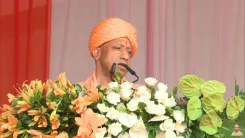
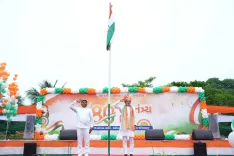
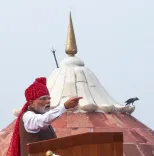
Shekhawat hails Modi's 'Saptadhara' vision on Independence Day
Synopsis
On Independence Day 2026, Union Minister Gajendra Singh Shekhawat endorsed PM Modi's 'Shakti ki Saptadhara' — a seven-pillar national vision spanning manufacturing, agriculture, technology, infrastructure, defence, green economy, and soft power — with youth at its core.
Key Takeaways
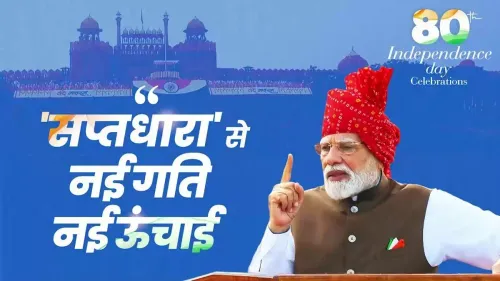
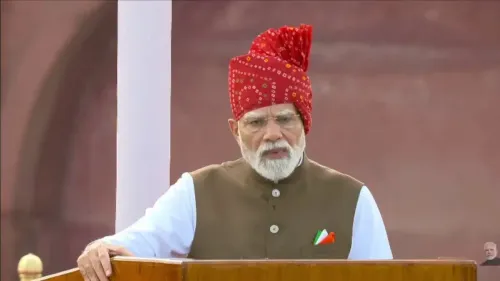
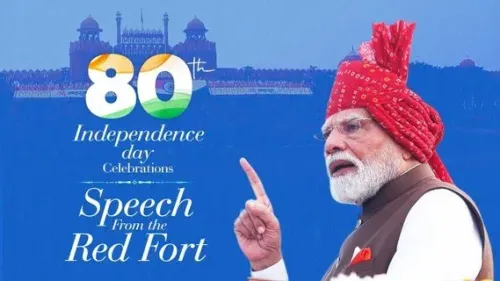
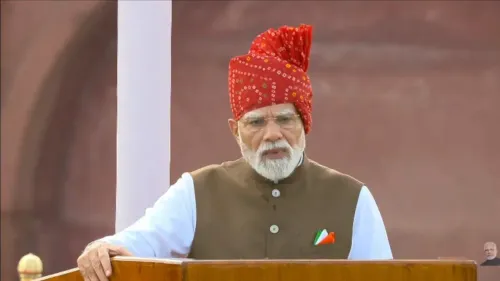
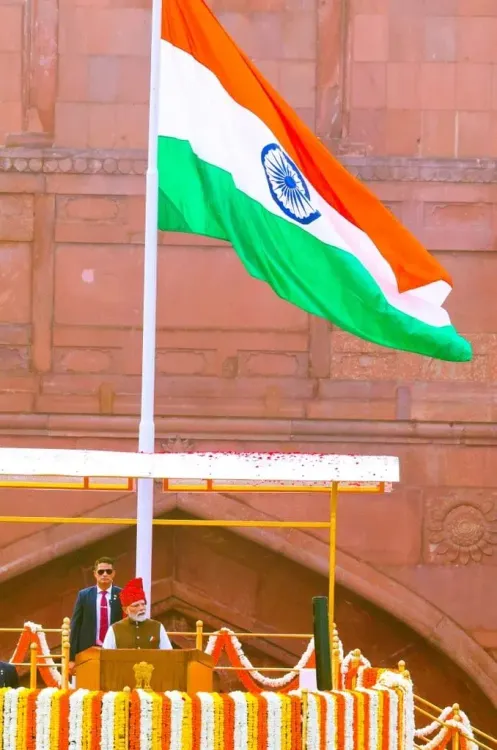
PM Narendra Modi unveiled the 'Shakti ki Saptadhara' framework in his Independence Day 2026 address from the Red Fort .
The seven pillars are: Manufacturing Power, Agriculture and Food Processing, Technology and Innovation, Gati Shakti, Defence Strength, Green Economy, and Soft Power .
Union Minister Gajendra Singh Shekhawat highlighted youth as the central demographic the framework is designed to empower.
The vision builds on existing schemes including Gati Shakti (2021), Atmanirbhar Bharat (2020), Skill India (2015), and Make in India (2014).
Soft Power as an explicit pillar directly intersects with Shekhawat's portfolio of culture and tourism .
Policy follow-through will be tracked via the next Union Budget and NITI Aayog implementation roadmaps.
From the ramparts of the Red Fort on Independence Day, 15 August 2026, Prime Minister Narendra Modi laid out a seven-stream national vision — and Union Culture and Tourism Minister Gajendra Singh Shekhawat was among the first to amplify it, calling the framework a commitment to unlocking India's 'immense potential.'
Seven streams, one demographic at the centre
Shekhawat's post outlines what Modi framed as 'Shakti ki Saptadhara' — the Seven Streams of Strength — placing youth at the core of each. The seven pillars as cited are: Manufacturing Power, Agriculture and Food Processing, Technology and Innovation, Gati Shakti, Defence Strength, Green Economy, and Soft Power. Together, Shekhawat wrote, their coordination will give India 'new momentum, new capability, and new heights in the years ahead.'
The framing is deliberate. India's demographic dividend — a working-age population larger than most nations — has been a recurring anchor of Modi government messaging since 2014. Shekhawat's post specifically calls out 'yuva saathi' (young companions) as the agents who will turn the seven-stream vision into a lived reality, tying the speech directly to the long-running Atmanirbhar Bharat and Viksit Bharat 2047 narratives.
How the seven pillars connect to existing policy architecture
None of the seven streams emerged in a vacuum. Gati Shakti — the National Master Plan for multimodal infrastructure — was launched in October 2021 and already coordinates logistics planning across ministries. Atmanirbhar Bharat, announced in May 2020 during the COVID-19 crisis, seeded the manufacturing and defence indigenisation push that now appears as two of the seven pillars. The Make in India campaign (2014) and the Skill India Mission (2015) form the earlier scaffolding on which Manufacturing Power and the youth-skilling angle now rest.
The addition of Green Economy and Soft Power as explicit pillars signals a broadening of the framework — green growth links to India's international climate commitments, while Soft Power sits squarely in Shekhawat's own ministerial portfolio of culture and tourism. That overlap is not incidental: culture and tourism have been positioned by the government as hard economic drivers, not merely heritage concerns.
What the Red Fort address means beyond the symbolism
Independence Day speeches from the Red Fort carry unique weight — they are the closest India gets to a state-of-the-union address, watched by millions and parsed by markets, diplomats, and opposition benches alike. A seven-pillar articulation at this forum signals that the framework is intended as a durable organising principle, not a one-cycle talking point.
The real test will come in the next Union Budget and in NITI Aayog roadmaps: whether the seven streams attract dedicated allocations, inter-ministerial coordination mechanisms, and measurable targets — or remain an aspirational architecture. Youth employment and skilling guidelines aligned to the seven areas are the clearest near-term policy signals to watch.
India has named its ambition. The arithmetic of turning seven streams into one rising economy now begins.
Point of View
Youth-forward narrative ahead of what is expected to be a politically charged budget cycle. By endorsing it publicly and prominently, Shekhawat — whose own portfolio covers Soft Power — signals ministerial alignment with the overarching Viksit Bharat 2047 brand. The seven-pillar structure also gives the government a ready accountability grid: each stream can be benchmarked, which is a double-edged sword if implementation lags. The real political weight of the speech will be determined not by its rhetoric but by the fiscal and regulatory decisions that follow in the next six months.
NationPress
15 Aug 2026
Frequently Asked Questions
What is 'Shakti ki Saptadhara' announced by PM Modi?
'Shakti ki Saptadhara' — the Seven Streams of Strength — is a framework announced by PM Narendra Modi in his Independence Day 2026 address, comprising Manufacturing Power, Agriculture and Food Processing, Technology and Innovation, Gati Shakti, Defence Strength, Green Economy, and Soft Power, with youth at its centre.
What did Gajendra Singh Shekhawat say about Modi's Independence Day speech?
Union Culture and Tourism Minister Gajendra Singh Shekhawat praised the speech, saying the seven-stream framework represents India's 'immense potential' and that young Indians — 'yuva saathi' — will be the force realising an Atmanirbhar and Viksit Bharat.
What is the Gati Shakti scheme mentioned in Modi's speech?
PM Gati Shakti is a National Master Plan launched in October 2021 to integrate multimodal infrastructure and logistics planning across government ministries, and it forms one of the seven pillars in the new framework.
How does Soft Power relate to Shekhawat's ministry?
Soft Power — one of the seven pillars — directly falls within Shekhawat's mandate as Union Minister of Culture and Tourism, which the government has positioned as an economic and diplomatic asset, not merely a heritage concern.
What should we watch for after Modi's Independence Day 2026 address?
Key signals to track include allocations in the next Union Budget, NITI Aayog implementation roadmaps for the seven streams, and any new youth employment or skilling guidelines explicitly linked to the Saptadhara framework.