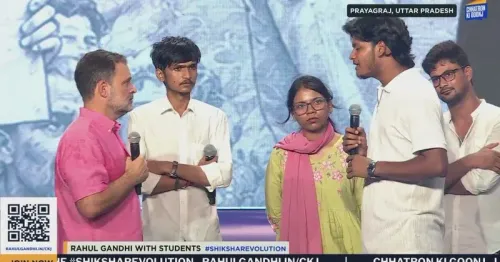
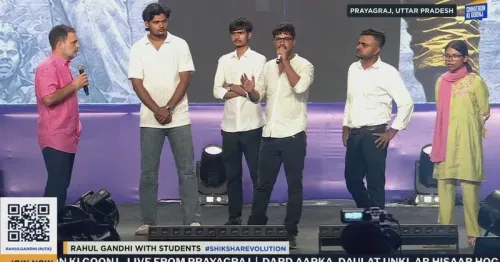
Rahul Gandhi calls for women's equality at Pune student rally on Aug 22
Synopsis
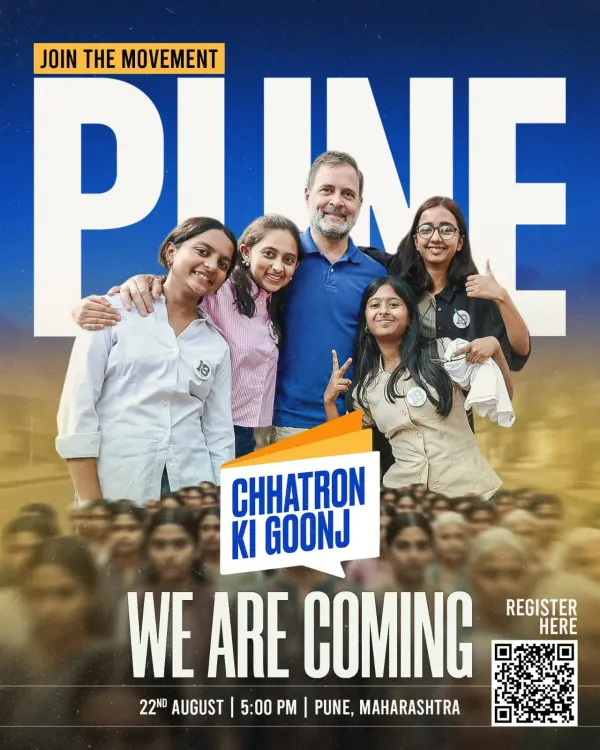
On Independence Day 2026, Congress leader Rahul Gandhi posted a sharp Hindi call-to-action contrasting women's constitutional rights with lived insecurity and discrimination, urging students to join the Chhatron ki Goonj Andolan in Pune on 22 August 2026.
Key Takeaways
Congress leader Rahul Gandhi posted on 15 August 2026 , Independence Day, calling out the gap between promised and delivered rights for Indian women.
He named three demands — equality, safety, opportunity, and freedom of expression — against three failures: insecurity, discrimination, and waiting.
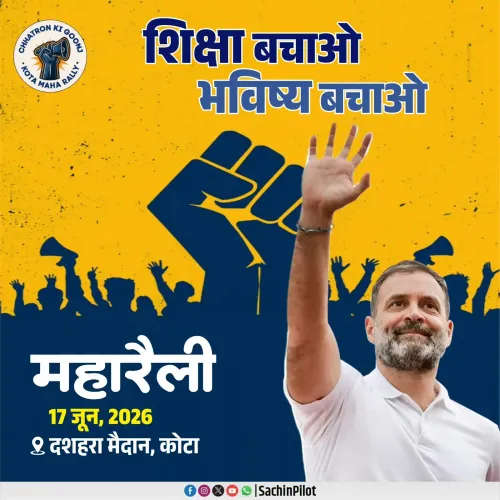
The post invites students to join the Chhatron ki Goonj Andolan in Pune on 22 August 2026 via an online registration link.
Pune was chosen as the venue, reflecting its large student population and history of youth political activity in Maharashtra.
Congress has a record of anchoring women-focused outreach events to constitutional guarantees, often ahead of electoral cycles.
The event's turnout could shape follow-up parliamentary and state-level action on women's safety legislation.
On Independence Day, 15 August 2026, Congress leader Rahul Gandhi turned the national holiday into a pointed political moment — asking, in plain Hindi, what India's girls have actually received in exchange for the rights the Constitution promises them.
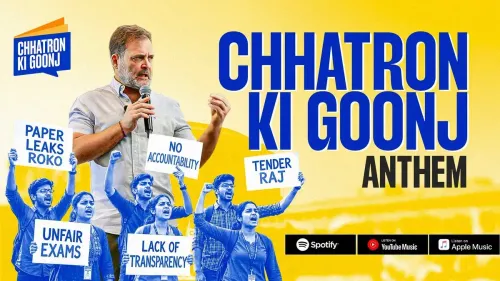
Gandhi's post poses a stark contrast: what women deserve — equality, safety, opportunity, and the freedom to speak — against what they get, which he describes as insecurity, discrimination, and an endless wait for rights that are already theirs on paper. The message closes with a call to action: join the Chhatron ki Goonj Andolan (Students' Echo Movement) in Pune on 22 August 2026 and register now.
Why Pune, why students, why now
Pune is one of Maharashtra's largest student hubs, home to dozens of universities and colleges and a long history of youth-led political mobilisation. Choosing it as the venue signals a deliberate pitch to young, educated women who are both aspirationally mobile and acutely aware of safety gaps on campuses and in public spaces.
The Congress party and Gandhi have periodically anchored state-level youth and women-focused events to constitutional guarantees of equality — a framing that lets the opposition draw a direct line between founding promises and present-day shortfalls. Posting on Independence Day sharpens that contrast: the tricolour flies, but the rights it represents remain contested for millions of women.
The rights gap Gandhi is pointing to
India's legislative record on women's rights is substantial on paper. The Protection of Women from Domestic Violence Act, 2005, passed under the UPA government, remains a landmark legal shield. The Beti Bachao Beti Padhao scheme, launched in 2015, was designed to address the child sex ratio and expand girls' access to education. Yet persistent data on gender-based violence, wage gaps, and female labour-force participation rates continue to fuel the argument that legislation has outpaced enforcement and cultural change.
Gandhi's post does not cite specific statistics, but the three-word indictment — insecurity, discrimination, waiting — maps directly onto those documented gaps, giving the Pune event a ready-made policy vocabulary before a single speech is delivered.
What the 22 August rally could set in motion
The registration link and the movement's name — Chhatron ki Goonj, literally 'the echo of students' — suggest an organised, multi-city or multi-campus structure rather than a one-off rally. Turnout in Pune will be the first real test of whether that structure has traction. If the event draws significant numbers, expect follow-up parliamentary questions on women's safety laws when the next session opens, and possible state-level protests in Maharashtra ahead of any upcoming electoral cycle.
On a day when every party competes for the patriotic frame, Gandhi chose to make Independence Day a referendum on unfulfilled promises to half the population. That is a message designed to echo well beyond Pune.
Point of View
He positions the ruling dispensation as the party that inherited and squandered those guarantees. The Pune venue and student-movement branding suggest Congress is trying to build an organised youth infrastructure, not just generate a news cycle. If the Chhatron ki Goonj Andolan gains momentum across campuses, it could become a durable mobilisation vehicle ahead of Maharashtra's next electoral contest. The post's blunt Hindi — 'Ab aur nahin' ('No more') — is also a rhetorical signal that the party intends to prosecute this issue aggressively in Parliament.
NationPress
15 Aug 2026
Frequently Asked Questions
What is the Chhatron ki Goonj Andolan?
Chhatron ki Goonj Andolan, meaning 'Students' Echo Movement,' is a student-focused initiative being mobilised by Congress leader Rahul Gandhi, with a rally scheduled in Pune on 22 August 2026. The exact organisers and full programme have not been independently confirmed.
Why did Rahul Gandhi post about women's rights on Independence Day?
Gandhi used Independence Day — 15 August 2026 — to contrast India's constitutional promises of equality and safety for women with what he described as persistent insecurity, discrimination, and delayed rights in practice.
Where and when is the Pune student rally?
The rally is scheduled for 22 August 2026 in Pune, Maharashtra. Gandhi's post included a registration link for students wishing to participate.
What laws has India passed to protect women's rights?
Key legislation includes the Protection of Women from Domestic Violence Act, 2005, enacted under the UPA government, and the Beti Bachao Beti Padhao scheme launched in 2015 to improve the child sex ratio and girls' education.
What could happen after the 22 August Pune event?
Analysts will watch the rally's turnout closely. A strong showing could prompt follow-up parliamentary questions on women's safety laws and state-level protests in Maharashtra, particularly if electoral activity in the state intensifies.