CM Pema Khandu Honours Sanitation Workers, CCTV Drive at Itanagar I-Day Event
Synopsis
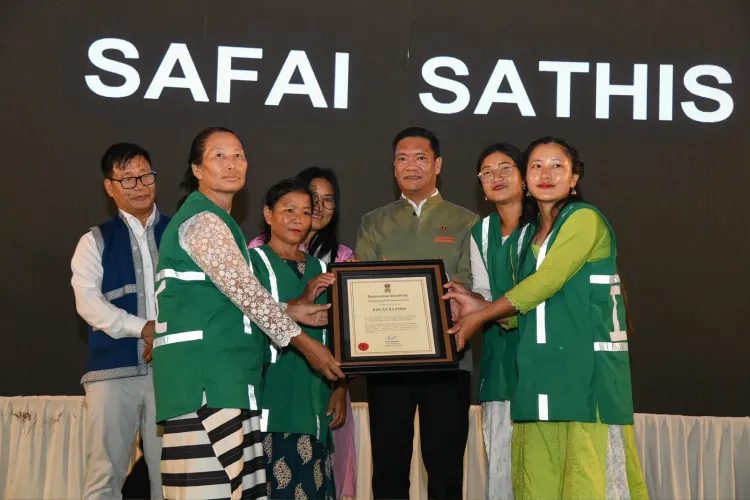
Arunachal Pradesh CM Pema Khandu honoured 100 Safai Sathis and the Itanagar Municipal Corporation's TEESRI AANKH programme — deploying 239 solar-powered CCTV cameras — at the state's Independence Day 'At Home' event, spotlighting urban cleanliness as a governance priority for the capital.
Key Takeaways
Arunachal Pradesh CM Pema Khandu hosted the Independence Day 'At Home' ceremony in Itanagar on August 15, 2026 , attended by Governor Lt Gen KT Parnaik (Retd) .
100 Safai Sathis — frontline sanitation workers of the Itanagar Municipal Corporation — were formally honoured at the event.
The TEESRI AANKH initiative of the Itanagar Municipal Corporation has deployed 239 solar-powered CCTV cameras to improve surveillance and city management.
The programme reflects a wider pattern of low-cost solar technology adoption for public safety in Northeast India's hill-state capitals.
The initiative aligns with national frameworks including the Swachh Bharat Mission (2014) and AMRUT (2015) for urban infrastructure in smaller cities.
Possible expansion of the TEESRI AANKH camera network or integration with state waste management targets is being watched ahead of future municipal budgets.
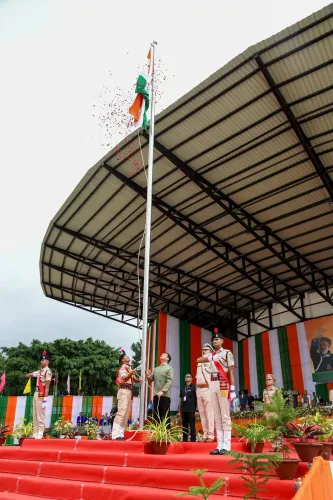
On Independence Day, August 15, 2026, Arunachal Pradesh Chief Minister Pema Khandu used the state's 'At Home' ceremony in Itanagar to shine a spotlight not on politicians, but on the people who keep the capital running — sanitation workers and a solar-powered surveillance network quietly changing how the city is managed.
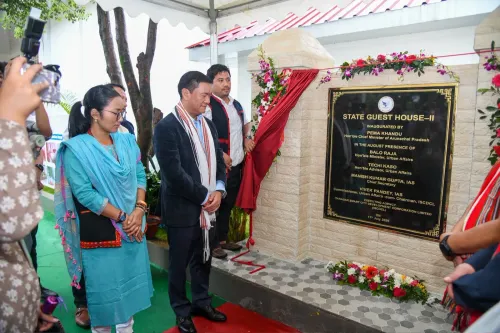
The event, graced by Governor Lt Gen KT Parnaik (Retd) and First Lady Smt. Anagha Parnaik, honoured 100 Safai Sathis — frontline sanitation workers of the Itanagar Municipal Corporation — alongside the corporation's TEESRI AANKH initiative, which has deployed 239 solar-powered CCTV cameras across the capital region to improve safety and waste management oversight.
What TEESRI AANKH Actually Does on the Ground
The name translates literally to 'third eye' — and the intent is exactly that. The Itanagar Municipal Corporation's TEESRI AANKH programme uses solar-powered cameras to monitor public spaces, track cleanliness compliance, and deter illegal dumping. Running on solar power makes the network viable in a hill-state capital where grid reliability can be patchy — a practical design choice, not just an aesthetic one.
The broader pattern is visible across Northeast state capitals: low-cost technology plugged into persistent urban governance gaps. Itanagar, a fast-growing hill city, has long struggled with waste management and unregulated public spaces. A camera network that runs on sunlight and feeds into municipal oversight is a tangible, scalable answer to that challenge.
Safai Sathis: The Faces Behind the Clean Streets
Chief Minister Khandu's decision to formally honour the 100 Safai Sathis at a high-visibility Independence Day function carries its own signal. Sanitation workers are among the least-recognised figures in urban governance; placing them on the same stage as the Governor makes the recognition visible and public. Khandu posted: 'A cleaner city requires everyone to step up. Itanagar is our city, and keeping it clean is our responsibility.'
The sentiment aligns with the decade-long push of the Swachh Bharat Mission, launched in 2014, which has consistently tried to shift sanitation from a bureaucratic checkbox to a civic culture. The Atal Mission for Rejuvenation and Urban Transformation (AMRUT), running since 2015, has similarly channelled funds into municipal infrastructure in smaller cities — the kind of unglamorous work that shows up in cleaner drains and better-lit streets rather than ribbon-cutting ceremonies.
Independence Day as a Governance Report Card
State governments across India routinely use Independence Day platforms to showcase delivery — but the choice of what to showcase tells its own story. By centering sanitation workers and a surveillance initiative rather than a flagship infrastructure project, Khandu's administration is making a bet on incremental, visible urban quality-of-life improvements as a political and governance priority for Itanagar.
Whether the TEESRI AANKH network expands further — or gets integrated into state-level waste management targets in upcoming municipal budgets — will be the real measure of whether this Independence Day recognition translates into sustained policy momentum.
Two hundred and thirty-nine cameras, one hundred workers, one public stage. Itanagar's Independence Day just made urban cleanliness a headline act.
Point of View
Khandu is making urban liveability — not large infrastructure — the visible face of BJP governance in Arunachal Pradesh's capital. The move tracks a broader Northeast India pattern where state governments leverage national cleanliness and smart-city frameworks to demonstrate delivery on modest but tangible public goods. For a party that has consistently tied its brand to Swachh Bharat, the optics of honouring frontline workers alongside a sitting Governor reinforces that civic messaging at the grassroots. The durability of this approach depends on whether TEESRI AANKH scales beyond its current footprint or remains a well-publicised pilot.
NationPress
30 Sept 2026
Frequently Asked Questions
What is the TEESRI AANKH initiative in Itanagar?
TEESRI AANKH is an Itanagar Municipal Corporation programme that has installed 239 solar-powered CCTV cameras across the capital region to improve public surveillance, safety, and cleanliness monitoring.
Who are the Safai Sathis honoured by CM Pema Khandu?
Safai Sathis are frontline sanitation workers employed by the Itanagar Municipal Corporation. A total of 100 Safai Sathis were formally recognised at the Independence Day 'At Home' event on August 15, 2026.
What happened at Arunachal Pradesh's Independence Day 'At Home' programme?
Chief Minister Pema Khandu hosted the event, attended by Governor Lt Gen KT Parnaik (Retd) and First Lady Smt. Anagha Parnaik. The occasion was used to honour sanitation workers and the TEESRI AANKH CCTV initiative of the Itanagar Municipal Corporation.
Why are solar-powered CCTV cameras used in Itanagar?
Solar power makes the camera network viable in a hill-state capital where electricity grid reliability can be inconsistent, offering a cost-effective and sustainable solution for round-the-clock urban surveillance.
How does the TEESRI AANKH initiative connect to national schemes?
The initiative aligns with the Swachh Bharat Mission (2014) and AMRUT (2015), both of which support sanitation and municipal infrastructure improvements in Indian cities, including smaller hill-state capitals like Itanagar.