CM Samrat Choudhary hoists flag on 80th Independence Day
Synopsis
Bihar Chief Minister Samrat Choudhary hoisted the national flag at Loksevak Awas on India's 80th Independence Day, August 15, 2026, honouring freedom fighters and calling on citizens to renew their commitment to patriotism and national unity.
Key Takeaways
Bihar CM Samrat Choudhary performed the flag-hoisting ceremony at Loksevak Awas on August 15, 2026 .
The occasion marks India's 80th Independence Day , commemorating freedom from British rule since 1947 .
Choudhary paid tribute to the sacrifice and martyrdom of India's freedom fighters in his message.
He called for renewed patriotism, unity, and resolve among citizens — themes central to the national observance.
Bihar has a historically significant connection to the independence movement, including the Champaran Satyagraha of 1917 .
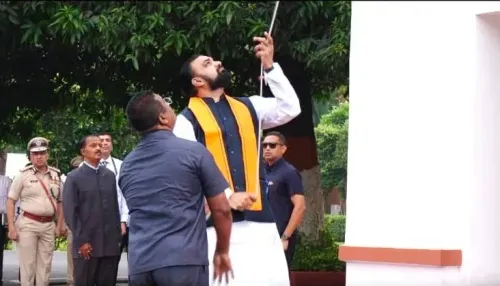
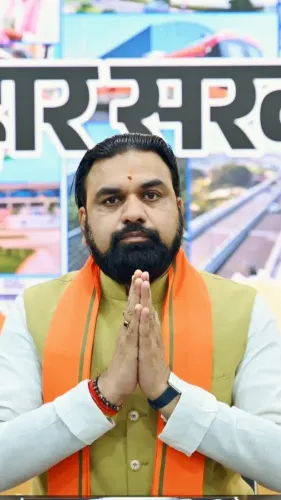
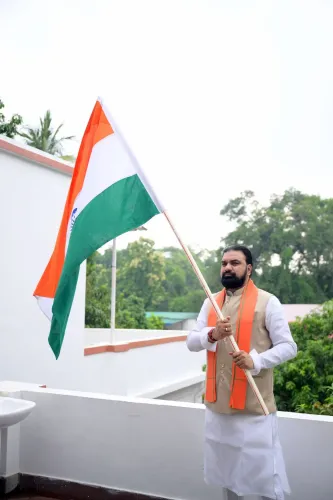
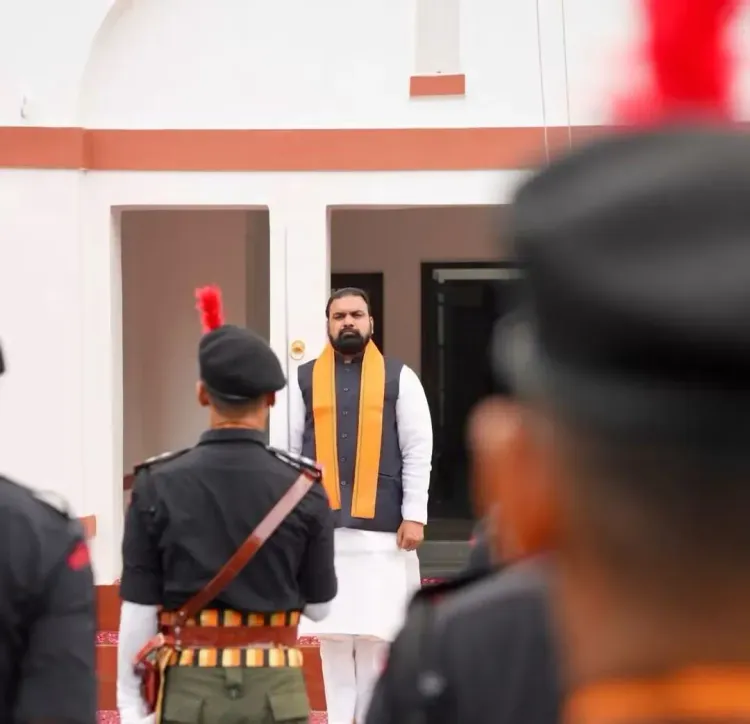
On the occasion of India's 80th Independence Day, Bihar Chief Minister Samrat Choudhary hoisted the national flag at Loksevak Awas on Saturday, August 15, 2026, paying tribute to the freedom fighters whose sacrifice made the day possible.
A salute at Loksevak Awas
Sharing the moment on X, CM Choudhary wrote: '80वें स्वतंत्रता दिवस के पावन अवसर पर आज लोकसेवक आवास पर ध्वजारोहण कर राष्ट्रध्वज को नमन किया' — 'On the auspicious occasion of the 80th Independence Day, I hoisted the national flag at Loksevak Awas and paid my respects to the tricolour.' He added that the occasion reminds every Indian of the sacrifice, devotion, and martyrdom of freedom fighters, and fills citizens' hearts with patriotism, unity, and fresh resolve. The post closed with 'Jai Hind!' and 'Bharat Mata Ki Jai!'
Eighty years of a living tradition
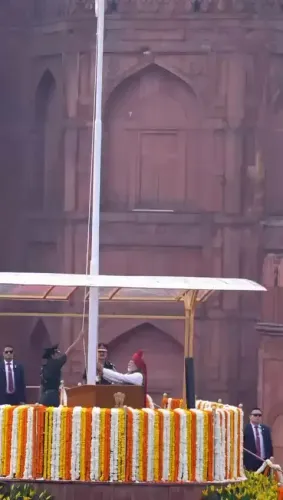
India has observed August 15 as Independence Day every year since 1947, when the country ended nearly two centuries of British rule. The flag-hoisting ceremony — conducted at residences, offices, and public grounds from the Prime Minister's address at the Red Fort down to every district headquarters — follows a fixed national protocol that has remained largely unchanged across decades. For state chief ministers, the ritual carries both constitutional weight and political symbolism: a visible affirmation of their role as the republic's stewards at the state level.
Samrat Choudhary, a senior BJP leader, assumed the office of Bihar Chief Minister as part of the NDA alliance government in the state. Bihar, one of India's most populous states, has a deep historical connection to the independence movement — from the Champaran Satyagraha of 1917, which marked Mahatma Gandhi's first major civil-disobedience campaign on Indian soil, to the role of Bihari leaders in the Quit India Movement of 1942. That lineage gives Independence Day observances in the state a particular resonance.
Across the country on this day, leaders from every party and every level of government participated in similar ceremonies — a rare moment when the political calendar pauses for a shared national ritual. The tricolour, the anthem, and the salute cut across coalition lines.
For Bihar's 130 million residents, the day also serves as a marker of the state's own aspirations — infrastructure, education, and economic development that successive governments have promised to deliver in the republic's next chapter.
Point of View
Independence Day flag-hoisting is never purely ceremonial — it is a moment of visible, uncontested authority. Choudhary's post, amplified with national hashtags, positions him squarely within the BJP's broader 'Viksit Bharat' patriotic narrative ahead of what promises to be an active political calendar. The invocation of freedom fighters' sacrifice also subtly anchors the ruling alliance in a historical legitimacy that transcends day-to-day partisan contests. In Bihar, where identity and sentiment drive voter mobilisation as powerfully as policy, these symbolic gestures accumulate into a coherent political brand.
NationPress
29 Sept 2026
Frequently Asked Questions
Where did Bihar CM Samrat Choudhary hoist the flag on Independence Day 2026?
Bihar Chief Minister Samrat Choudhary hoisted the national flag at Loksevak Awas, his official residence, on August 15, 2026.
Which Independence Day did India celebrate in 2026?
India celebrated its 80th Independence Day on August 15, 2026, marking eight decades since independence from British rule in 1947.
What did Samrat Choudhary say on Independence Day 2026?
CM Choudhary said the occasion reminds Indians of the sacrifice and martyrdom of freedom fighters and instils patriotism, unity, and fresh resolve in citizens' hearts. He signed off with 'Jai Hind!' and 'Bharat Mata Ki Jai!'
Who is Samrat Choudhary?
Samrat Choudhary is the Chief Minister of Bihar and a senior leader of the Bharatiya Janata Party (BJP), serving as part of the NDA alliance government in the state.
What is Bihar's connection to India's independence movement?
Bihar holds a central place in India's freedom struggle, most notably as the site of the Champaran Satyagraha of 1917 — Mahatma Gandhi's first major civil-disobedience campaign in India — and significant participation in the Quit India Movement of 1942.