Shivraj invokes PM Modi's 7-pillar vision from Red Fort
Synopsis
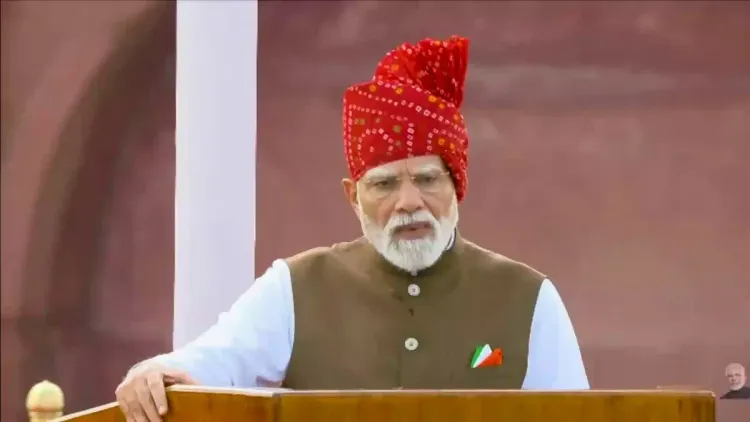
On Independence Day 2026, Union Agriculture Minister Shivraj Singh Chouhan amplified PM Narendra Modi's Red Fort address by framing India's national ambitions as a 'Shakti ki Saptadhara' — seven pillars spanning manufacturing, agriculture, technology, Gati Shakti, defence, green economy, and soft power.
Key Takeaways
Union Agriculture Minister Shivraj Singh Chouhan shared PM Narendra Modi 's Independence Day 2026 address from the Red Fort .
The vision is framed as 'Shakti ki Saptadhara' — seven streams: Manufacturing Power, Agriculture and Food Processing, Technology and Innovation, Gati Shakti, Defence Power, Green and Blue Economy, and India's Soft Power .
The pillars build on flagship schemes including Make in India (2014) , Atmanirbhar Bharat (2020) , and PM Gati Shakti (2021) .
Placing Agriculture and Food Processing at number two signals continued emphasis on rural income growth and value-chain investment.
The Green and Blue Economy pillar reflects India's net-zero by 2070 commitment made at COP26 in November 2021 .
Budget allocations and parliamentary follow-through on food-processing clusters and defence indigenisation will be the next concrete test of these priorities.
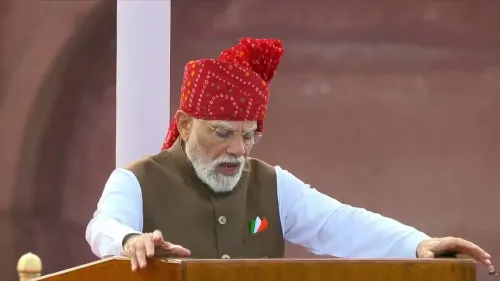
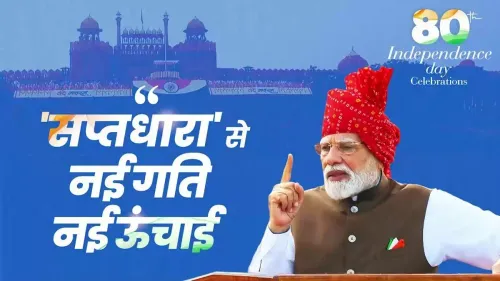
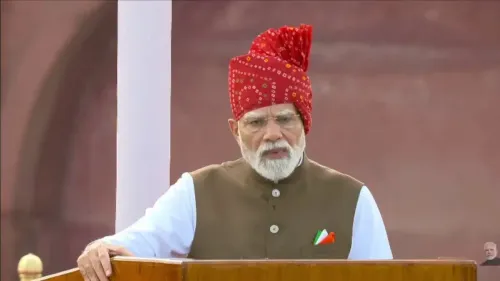
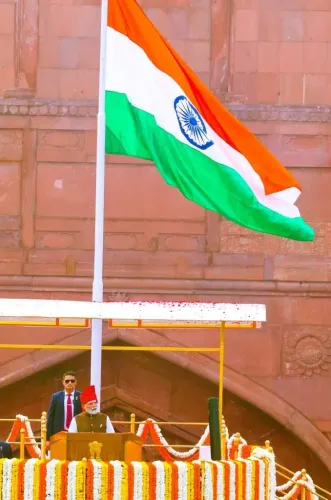
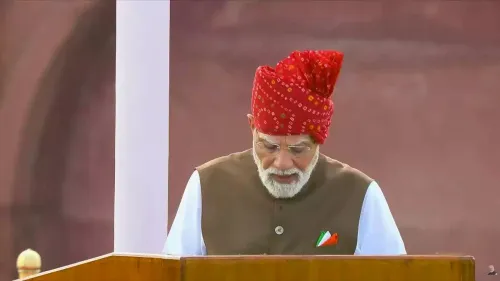
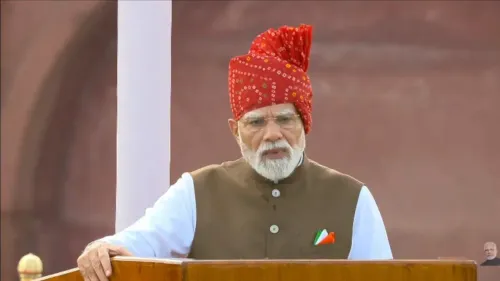
From the ramparts of the Red Fort on Independence Day, 15 August 2026, Union Agriculture Minister Shivraj Singh Chouhan amplified Prime Minister Narendra Modi's address to the nation — distilling it into what he called a 'Shakti ki Saptadhara,' a sevenfold stream of national strength that maps India's ambitions across manufacturing, technology, defence, and beyond.
Seven pillars, one vision
Chouhan's post, shared in the minister's characteristic mix of Hindi and English, listed the seven priorities as: Manufacturing Power, Agriculture and Food Processing, Technology and Innovation, Gati Shakti, Defence Power, Green and Blue Economy, and India's Soft Power. The framing is deliberate — each pillar maps onto a distinct strand of flagship policy that the Modi government has pursued since 2014.
The list is not accidental. Make in India, launched in September 2014, anchors the manufacturing pillar. Atmanirbhar Bharat, unveiled in May 2020, wove together manufacturing, defence indigenisation, and technology self-reliance into a single national doctrine. PM Gati Shakti — the national master plan for multi-modal infrastructure connectivity, rolled out in October 2021 — now gets its own named slot in the vision. And India's net-zero by 2070 commitment, staked at COP26 in November 2021, finds its echo in the Green and Blue Economy pillar.
Agriculture's place at the centre
That Agriculture and Food Processing sits at number two is not incidental. As the minister responsible for farmers' welfare, Chouhan has consistently argued that rural income growth and food-value-chain investment are as central to India's economic rise as industrial output. The explicit pairing of agriculture with food processing signals a continued push toward value-addition — moving India's farm sector from raw commodity export toward processed-goods competitiveness.
The Red Fort as annual reset button
The Red Fort address has served as the government's annual strategic reset since Independence — a platform where priorities get named, reaffirmed, or reordered before the nation. By framing Modi's speech through the lens of 'Saptadhara' — seven streams — Chouhan gives the address a memorable, unified architecture. Seven is not arbitrary; it echoes classical Indian frameworks of governance and dharma, lending the vision both modern policy weight and cultural resonance.
What to watch next: how these seven pillars translate into specific budget allocations and parliamentary commitments in the months ahead — particularly on food-processing cluster expansion and defence indigenisation targets — will reveal whether the vision hardens into measurable policy or remains an aspirational frame.
The speech has been made. Now the scoreboard begins.
Point of View
Memorable architecture at a moment when the BJP needs to demonstrate coherent long-term governance rather than ad hoc announcements. For Chouhan specifically, foregrounding agriculture alongside manufacturing is a signal to his rural constituency base that farm welfare remains central to the national vision, not a sideshow to industrial growth. The real test of these seven pillars will come in budget arithmetic and legislative follow-through.
NationPress
29 Sept 2026
Frequently Asked Questions
What is 'Shakti ki Saptadhara' mentioned by Shivraj Singh Chouhan?
'Shakti ki Saptadhara' refers to seven pillars of national strength outlined in PM Narendra Modi's Independence Day 2026 address from the Red Fort: Manufacturing Power, Agriculture and Food Processing, Technology and Innovation, Gati Shakti, Defence Power, Green and Blue Economy, and India's Soft Power.
What did PM Modi say at the Red Fort on Independence Day 2026?
According to Union Agriculture Minister Shivraj Singh Chouhan's post, PM Modi outlined a seven-pillar vision for India's development, covering manufacturing, agriculture, technology, infrastructure, defence, green economy, and soft power.
What is PM Gati Shakti and why is it one of the seven pillars?
PM Gati Shakti is a national master plan for multi-modal infrastructure connectivity launched in October 2021 to integrate planning across ministries. It is listed as a dedicated pillar because infrastructure connectivity underpins growth across all other sectors.
Why did Shivraj Singh Chouhan highlight agriculture in the seven pillars?
As Union Minister of Agriculture and Farmers Welfare, Chouhan has consistently argued that rural income growth and food-value-chain investment are central to India's economic rise, making Agriculture and Food Processing a natural priority for him to emphasise.
What does India's Green and Blue Economy pillar mean?
The Green and Blue Economy pillar reflects India's commitment to sustainable growth — including renewable energy and environmental targets such as the net-zero by 2070 goal pledged at COP26 in November 2021, as well as maritime and ocean-based economic activities.