CM Rekha Gupta Echoes Modi's 7-Pillar Vision on I-Day
Synopsis
On Independence Day 2026, PM Modi invoked a 'Saptadhara' — seven pillars of national strength — from the Red Fort, spanning manufacturing, agriculture, technology, Gati Shakti, defence, green and blue economy, and soft power. Delhi CM Rekha Gupta amplified the vision, signalling strong Centre-Delhi alignment on India's strategic roadmap.
Key Takeaways
PM Narendra Modi outlined seven pillars of national strength — the 'Shakti Saptadhara' — in his Independence Day 2026 address from the Red Fort .
The seven pillars are: Manufacturing Power , Agriculture and Food Processing , Technology and Innovation , Gati Shakti , Defence Power , Green and Blue Economy , and Soft Power .
Delhi CM Rekha Gupta quoted and amplified the Prime Minister's address on 15 August 2026 , signalling alignment between Delhi and the Centre.
The pillars build on policy continuity from Make in India (2014) , Atmanirbhar Bharat (2020) , and PM Gati Shakti (2021) .
The pairing of Green Economy and Blue Economy highlights India's dual focus on energy transition and maritime development.
Subsequent Union Budgets and defence indigenisation timelines will be the key tests of how each pillar is resourced.
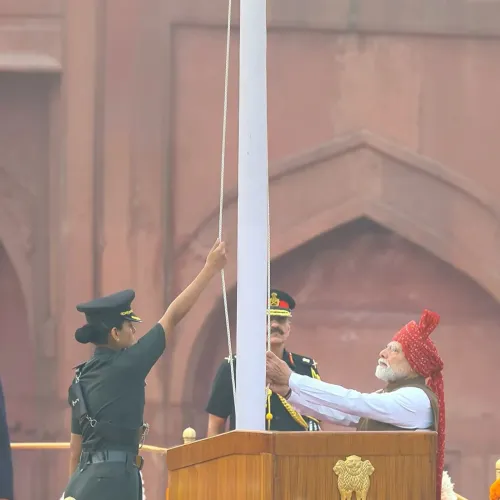
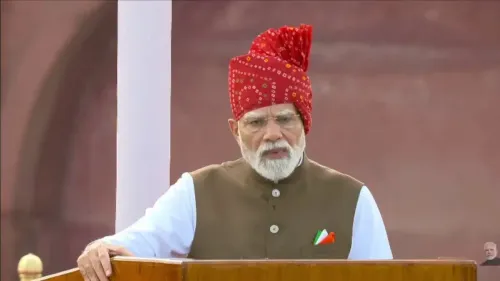
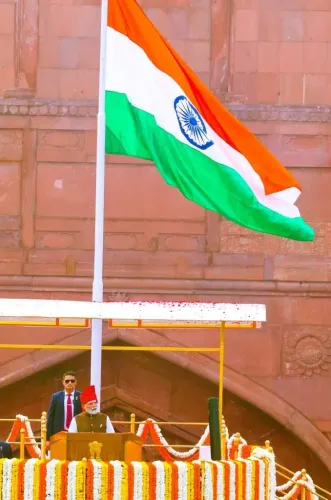
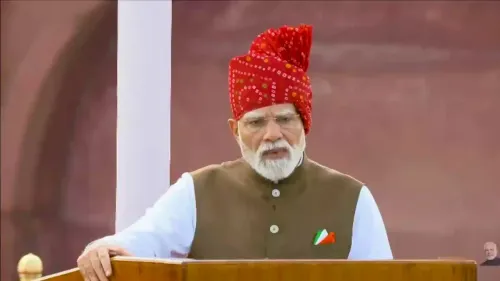
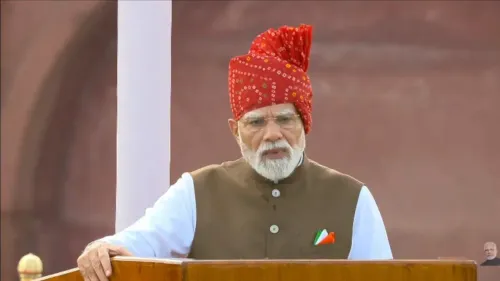
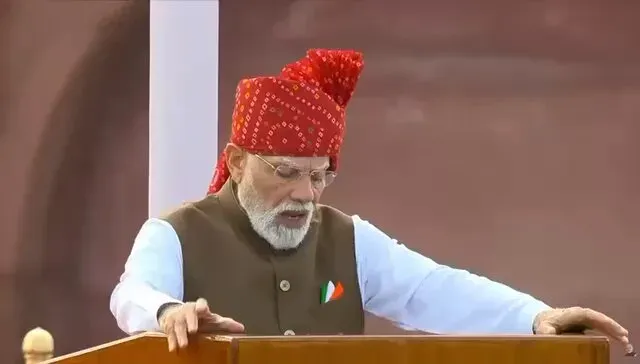
From the ramparts of the Red Fort on Independence Day, 15 August 2026, Prime Minister Narendra Modi laid out a seven-point blueprint for national strength — and Delhi Chief Minister Rekha Gupta amplified it to the nation, calling it a 'Saptadhara' of power that charts India's course forward.
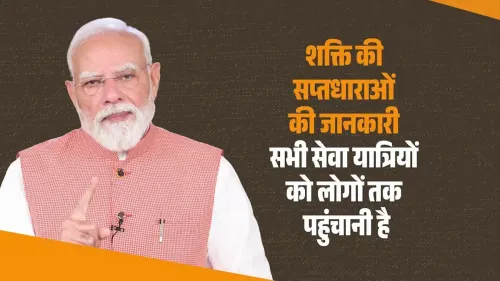
Quoting the Prime Minister directly, CM Gupta shared the seven pillars Modi invoked from the Lal Qila: 'शक्ति की सप्तधारा' — the seven streams of strength. They are Manufacturing Power, Agriculture and Food Processing, Technology and Innovation, Gati Shakti, Defence Power, Green Economy and Blue Economy, and Soft Power. Seven pillars. One unified vision.
From Red Fort to Policy Blueprint
The Red Fort address is not merely ceremonial — it is the Prime Minister's most consequential annual platform, where broad national priorities are declared and watched closely by industry, investors, and policymakers alike. Modi's framing of a 'Saptadhara' — a Sanskrit term meaning seven streams or tributaries — signals that these are not isolated schemes but a converging national strategy.
The pillars draw directly from policy continuity built since 2014. Make in India, launched that year, laid the groundwork for manufacturing ambition. The PM Gati Shakti National Master Plan, announced in 2021, brought multi-modal infrastructure integration under a single framework — and now features explicitly as the fourth pillar. The Atmanirbhar Bharat vision of 2020, which pushed self-reliance in defence and technology, is visible in pillars three and five.
Green, Blue, and the Soft-Power Bet
Two of the seven pillars stand out for their forward-looking ambition. The pairing of Green Economy and Blue Economy in a single pillar signals India's intent to lead on both renewable energy transition and maritime economic development — sectors that carry significant geopolitical weight in the Indo-Pacific. The inclusion of Soft Power as the seventh pillar reflects a longstanding but now formally elevated emphasis on cultural diplomacy, from yoga and cinema to diaspora engagement.
Together, the seven streams span the full arc of economic life — from the farm to the factory, from the ocean to outer space, from hard defence capability to cultural influence.
What the Saptadhara Signals for Policy Watchers
The practical test for each pillar will come in subsequent Union Budgets and economic surveys, where allocations and targets will reveal how seriously each stream is being resourced. Gati Shakti project completions, defence indigenisation timelines, and green-energy capacity additions are the metrics to watch. The Independence Day address sets the direction; the numbers that follow will set the pace.
CM Gupta's decision to amplify and attribute the quote precisely — naming Modi, citing the Red Fort, listing all seven pillars — is itself a political signal of alignment between the Delhi government and the Centre's national agenda.
Seven streams, one river. Whether India's institutions can carry that current at scale is the question every subsequent policy announcement will have to answer.
Point of View
Memorable sovereignty story ahead of what are likely to be consequential electoral and economic cycles. The explicit inclusion of Gati Shakti as a named pillar, rather than a background scheme, suggests the government wants infrastructure delivery to be a front-facing political credential. The Green-Blue Economy pairing is geopolitically shrewd, positioning India simultaneously in the global climate conversation and the Indo-Pacific maritime contest. CM Gupta's amplification is textbook Centre-state messaging discipline, reinforcing that the BJP's Delhi government and the Union government speak with one strategic voice.
NationPress
30 Sept 2026
Frequently Asked Questions
What are the seven pillars of strength PM Modi announced on Independence Day 2026?
PM Modi announced seven pillars — Manufacturing Power, Agriculture and Food Processing, Technology and Innovation, Gati Shakti, Defence Power, Green Economy and Blue Economy, and Soft Power — from the Red Fort on 15 August 2026.
What is the 'Shakti Saptadhara' mentioned by PM Modi?
'Shakti Saptadhara' means the seven streams of strength. PM Modi used this Sanskrit phrase in his Independence Day 2026 address to frame seven strategic pillars for India's national development.
What is Gati Shakti and why is it listed as a pillar?
Gati Shakti refers to the PM Gati Shakti National Master Plan, launched in 2021, which integrates infrastructure planning across roads, railways, ports, and logistics. Its inclusion as a named pillar signals that infrastructure delivery is a top government priority.
Why did Delhi CM Rekha Gupta post about PM Modi's Independence Day speech?
CM Rekha Gupta quoted and amplified PM Modi's seven-pillar vision to signal political alignment between the Delhi government and the Centre's national agenda on Independence Day 2026.
What does India's Green Economy and Blue Economy pillar mean?
The Green Economy pillar covers renewable energy and sustainable development, while the Blue Economy pillar focuses on maritime resources, shipping, and ocean-based economic activity — both seen as key to India's long-term growth and geopolitical positioning.