Puri Backs Modi's Independence Day Energy Push for Viksit Bharat
Synopsis
On India's 80th Independence Day, Petroleum Minister Hardeep Singh Puri backed PM Modi's Red Fort call for energy security, citing the opening of 99% of 'No-Go' exploration areas, HELP, OALP frontier bids, and the Oilfields Amendment Act, 2025 as pillars of India's energy self-reliance drive.
Key Takeaways
PM Modi's 80th Independence Day address from the Red Fort placed energy security at the centre of the Viksit Bharat vision.
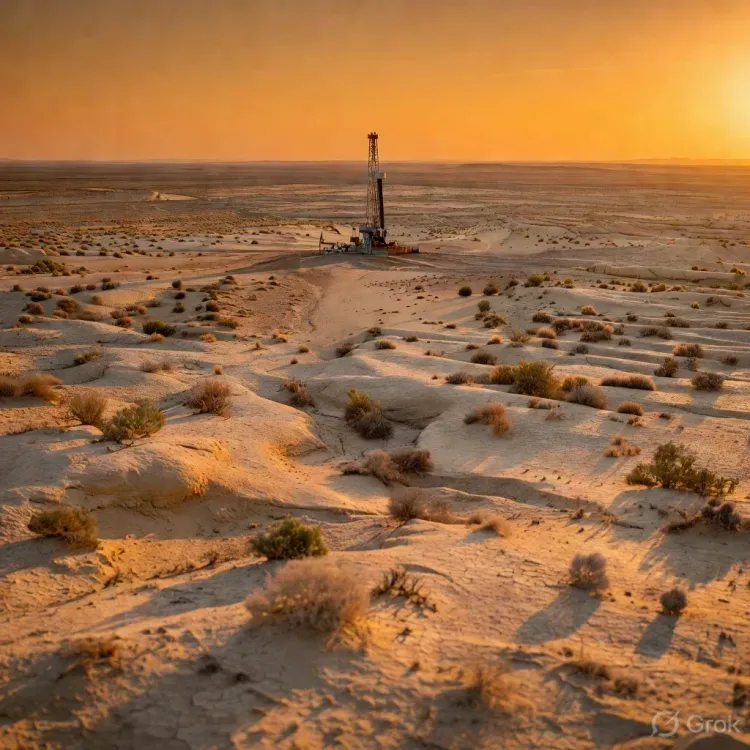
Nearly 99% of previously designated 'No-Go' areas have been opened for hydrocarbon exploration under the current government.
The Hydrocarbon Exploration and Licensing Policy (HELP) , launched in 2016 , granted operators marketing and pricing freedom under a uniform licensing model.
The Open Acreage Licensing Policy (OALP) allows continuous block bidding; over 37% of OALP bids have come from newly opened frontier areas.
Additional reforms cited include deepwater incentives, faster pipeline approvals, and the Oilfields Amendment Act, 2025 .
Puri framed domestic production growth as a geopolitical hedge against global supply-chain disruptions.
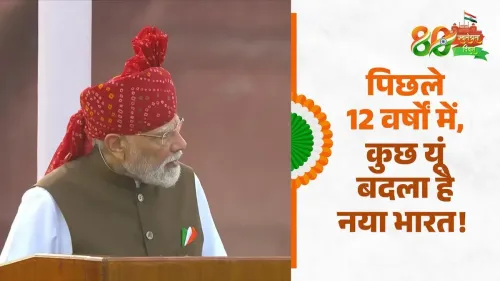
India's 80th Independence Day just became a policy moment. Union Petroleum Minister Hardeep Singh Puri on Saturday, August 15, 2026, amplified Prime Minister Narendra Modi's address from the ramparts of the Red Fort, calling it a 'deeply inspiring and momentous' call to place energy security at the heart of India's march toward Viksit Bharat — a developed India.
Modi's Independence Day address, Puri said, 'underscored the pivotal role of the energy sector in India's emergence as a global economic powerhouse.' The minister framed the speech not merely as rhetoric but as the capstone of a decade-long reform arc — one his ministry has been executing block by block, policy by policy.
From 'No-Go' to Go: How India Opened Its Exploration Map
The centrepiece of Puri's account is a striking statistic: nearly 99% of previously designated 'No-Go' areas have now been opened for hydrocarbon exploration. For years, vast swathes of India's sedimentary basins were off-limits to drillers — a legacy of inter-ministerial turf disputes and environmental hold-outs. That wall has largely come down. Layered on top is the Hydrocarbon Exploration and Licensing Policy (HELP), introduced in 2016, which replaced the older NELP framework with a uniform licensing and revenue-sharing model. Under HELP, operators gained marketing and pricing freedom — a critical lever that made Indian blocks more attractive to private and foreign investors who previously faced administered price ceilings that eroded project economics.OALP Bids and the Frontier Dividend
The Open Acreage Licensing Policy (OALP), introduced as part of HELP, allows companies to identify and bid for exploration blocks on a continuous basis rather than waiting for government-curated rounds. Puri cited a striking outcome: over 37% of OALP bids have come from the newly opened frontier areas — a signal that investors are moving into territory that was, until recently, entirely off the table. The minister also pointed to deepwater incentives, streamlined approvals for pipeline expansion, and the Oilfields Amendment Act, 2025, as further planks in the reform architecture. Together, he argued, they are 'unlocking new frontiers and giving fresh momentum to India's energy future.'Geopolitical Hedging Through Domestic Production
Puri's framing was deliberately global. At a moment of sustained geopolitical uncertainty — with energy supply chains still vulnerable to disruption — he positioned domestic production growth as a strategic hedge, not just an economic one. 'PM Modi Ji's farsighted energy diplomacy and global leadership,' he said, are 'diversifying supplies and building resilience' so that India's growth engine 'continues to power ahead with confidence.' The logic is straightforward: every additional barrel produced at home is one fewer barrel exposed to a sanctions regime, a shipping-lane crisis, or a cartel decision made in a Gulf capital. The real test of these reforms will come when official production statistics from the newly opened blocks are published — and when subsequent OALP bidding rounds reveal whether investor appetite holds. The policy architecture is in place. The wells still have to deliver.Point of View
If borne out by official data, represent a genuine structural shift in India's upstream regime, not incremental tinkering. The move to frame energy security as both an economic and geopolitical imperative reflects a broader government pivot: domestic production is increasingly presented as strategic resilience, not just fiscal prudence. The real credibility test arrives when block-level production data catches up with the liberalised licensing map.
NationPress
29 Sept 2026
Frequently Asked Questions
What did PM Modi say about energy security on Independence Day 2026?
In his address from the Red Fort on India's 80th Independence Day, PM Modi called for placing energy security at the heart of India's journey toward Viksit Bharat, emphasising the sector's role in making India a global economic powerhouse.
What is HELP — the Hydrocarbon Exploration and Licensing Policy?
HELP, or the Hydrocarbon Exploration and Licensing Policy, was launched in 2016 to replace the earlier NELP framework. It introduced a uniform licensing model, revenue-sharing contracts, and marketing and pricing freedom for oil and gas operators.
What is OALP and how does it work?
The Open Acreage Licensing Policy (OALP) operates under HELP and allows exploration companies to identify and bid for blocks on a continuous basis, rather than waiting for periodic government-curated auction rounds.
What are 'No-Go' areas in Indian oil exploration?
'No-Go' areas were zones — often overlapping with defence, environmental, or other restricted designations — where hydrocarbon exploration was previously prohibited. The government says nearly 99% of these areas have now been opened for exploration.
What is the Oilfields Amendment Act 2025?
The Oilfields Amendment Act, 2025 is cited by Minister Puri as part of the reform package streamlining the regulatory framework for oil and gas operations in India. Specific provisions are subject to official legislative records.