Puri on Youth Day: Young India to Lead Viksit Bharat Drive
Synopsis
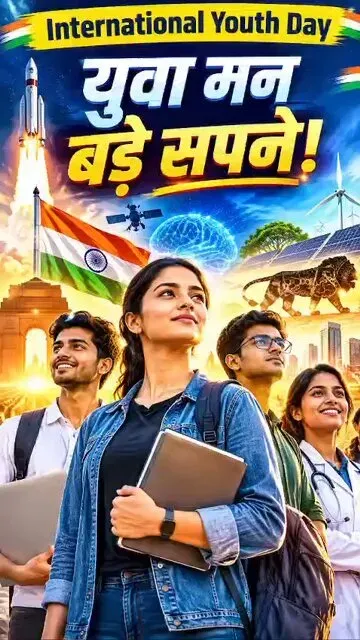
Union Petroleum Minister Hardeep Singh Puri marked International Youth Day by calling India's young population the central force behind the Viksit Bharat 2047 vision, citing sectors from startups and space research to energy as arenas where youth ambition is being converted into nation-building opportunity.
Key Takeaways
Union Petroleum Minister Hardeep Singh Puri posted on International Youth Day, August 12 , framing India's youth as both the engine and the beneficiaries of Amrit Kaal .
The Amrit Kaal framework, announced by PM Modi on Independence Day 2022 , sets a 25-year roadmap for India to achieve developed-nation status by 2047 .
Puri highlighted sectors including startups, technology, defence, space research, digital empowerment and the energy sector as arenas of youth impact.
He referenced government initiatives in skill development, entrepreneurship and innovation — anchored by the Skill India Mission (2015) and Startup India (2016) — as the ecosystem enabling this transition.
Puri drew a civilisational arc, contrasting ancient India's contributions in ideas and democracy with modern India's potential to export innovation, talent and global leadership.
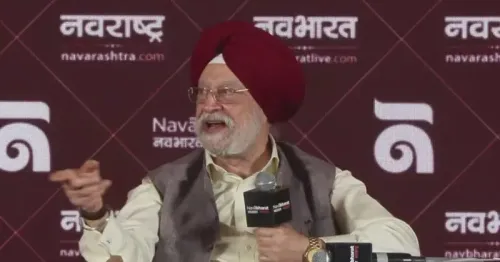
On International Youth Day, August 12, Union Petroleum Minister Hardeep Singh Puri made the case that India's demographic advantage is not merely a statistic — it is the engine of a civilisational leap. Writing on the occasion, the senior BJP leader argued that a young, ambitious India stands at the centre of the country's march through Amrit Kaal toward Viksit Bharat by 2047.
Puri's message framed the 25-year Amrit Kaal period (2022–2047) — first articulated by Prime Minister Narendra Modi in his 2022 Independence Day address — as a window of historic opportunity. 'Our large and aspirational young population of ambitious achievers will not just be its driving force, but also the main beneficiaries of this epochal journey,' Puri wrote, invoking PM Modi's leadership as the guiding force behind this trajectory.
From Startups to Space: Where India's Youth Are Showing Up
The minister drew a wide arc across sectors where young Indians are already making their presence felt — startups, technology, sports, science, defence, culture, entrepreneurship, social innovation, and, notably for a petroleum minister, the energy sector. The breadth of the list is deliberate: it mirrors the government's own multi-front strategy to channel youthful energy into structured opportunity.
Puri pointed specifically to initiatives in skill development, innovation, healthcare, space research, digital empowerment and sports as the ecosystem being built to convert aspiration into action. This aligns directly with two flagship programmes — the Skill India Mission, launched in 2015, and Startup India, launched in 2016 — both designed to absorb and amplify the ambitions of a young workforce.
Ancient Legacy, Modern Mandate
Puri closed with a civilisational frame that has become a recurring motif in the government's communication: 'Ancient India gave the world ideas, knowledge, democracy and civilisation. A young India has the opportunity to give innovation, talent, enterprise and leadership at scale to the world it inherits.' The formulation positions contemporary India not as a late arrival to global leadership, but as a civilisation resuming its natural role — this time through technology and enterprise rather than philosophy alone.
The message also flagged a demand-side reality: youth aspirations for better opportunities, global exposure, and a stronger voice in shaping the country's future. It is a signal that the government is listening to what young Indians want — not just directing what they should do.
As India's youth population remains one of the largest in the world, the real test of Viksit Bharat will be whether the ecosystem Puri describes can absorb ambition at the scale the moment demands.
Point of View
Reinforcing the BJP's long-running argument that India's young population is a policy asset, not just a social fact. By explicitly naming the energy sector alongside startups and space, Puri stakes his ministry's claim within the broader youth narrative, a move that serves both governance signalling and political positioning ahead of any budget or policy cycle. The civilisational framing — ancient India to modern India — is a consistent ideological thread that elevates routine ministerial communication into a larger national story. The real question the post quietly raises is whether scheme delivery on the ground matches the scale of the aspiration being articulated at the top.
NationPress
26 Sept 2026
Frequently Asked Questions
What is Viksit Bharat and how does it relate to India's youth?
Viksit Bharat is the Indian government's vision to make India a fully developed nation by 2047 , the centenary of independence. Youth are positioned as both the primary drivers and the main beneficiaries of this goal, with schemes in skill development, startups, and digital infrastructure designed to channel their energy into economic growth.
What did Hardeep Singh Puri say on International Youth Day 2026?
Puri called India's young population the 'driving force' and 'main beneficiaries' of the Amrit Kaal journey toward Viksit Bharat, citing sectors from startups and technology to the energy sector and space research as areas where youth are making their mark.
What government schemes support India's youth in skill development and entrepreneurship?
The Skill India Mission , launched in 2015 , and Startup India , launched in 2016 , are the two flagship programmes aimed at training young Indians and supporting technology-driven enterprises and innovators.
Why did a Petroleum Minister speak about youth and startups?
As a senior cabinet minister, Hardeep Singh Puri's remit extends to broad national policy communication. He also specifically referenced the energy sector as one arena where Indian youth are making an impact, linking his ministry's domain to the wider youth development narrative.