UDF wins Kerala 2025 with 102 seats, faces CM and cabinet dilemma
Synopsis
The UDF's return to Kerala after a decade is emphatic — 102 seats, a record 63 for Congress. But the real contest has just begun inside the alliance: who becomes Chief Minister, how 21 cabinet slots are split among a fractious coalition, and whether former CPI-M heavyweights can be rewarded without inflaming Congress loyalists.
Key Takeaways
The UDF won 102 seats in the Kerala assembly elections, ending a decade in opposition.
Congress alone secured a record 63 seats , its strongest performance in the state in several election cycles.
The Chief Minister pick — likely between V.D.
Satheesan , Ramesh Chennithala , and K.C.
Venugopal — will be decided by the party high command in New Delhi .
The IUML with 22 seats , Kerala Congress-Joseph with 7 , and the RSP with 3 seats all expect cabinet representation within a 21-minister ceiling.
Former CPI-M leaders G.
Kunjikrishnan who contested under UDF add further complexity to cabinet allocation.
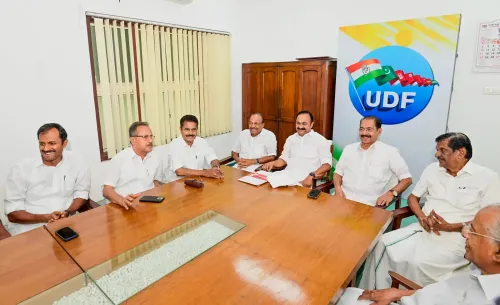
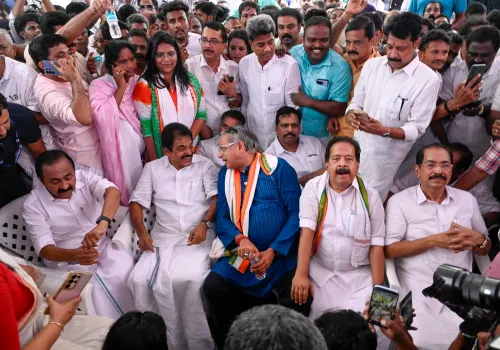
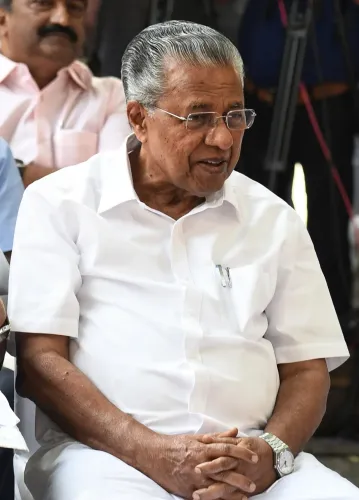
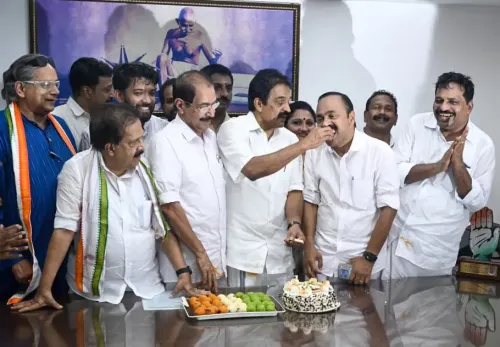
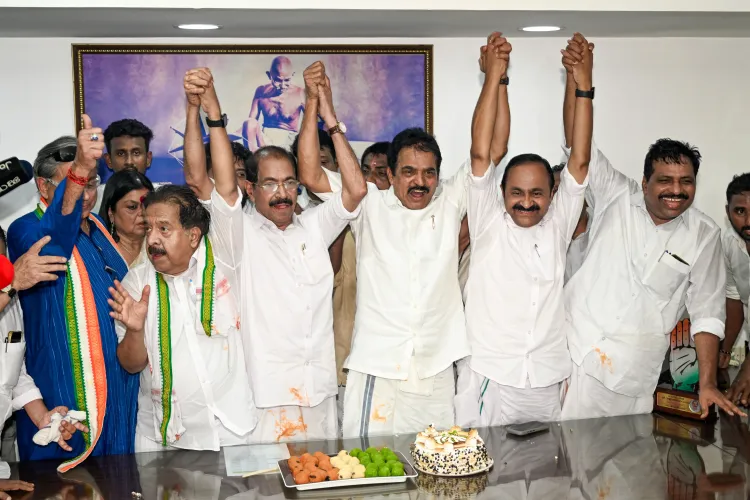
The Congress-led United Democratic Front (UDF) has staged a sweeping return to power in Kerala after a decade in the opposition, securing 102 seats in the state assembly elections. The verdict ends the CPI-M-led Left Democratic Front (LDF) government of Pinarayi Vijayan, who had scripted history in 2021 by winning a rare consecutive term. The Congress alone clinched a record 63 seats, placing it firmly at the centre of the new dispensation.
A Mandate Decade in the Making
The UDF had narrowly missed its comeback in 2021, when Vijayan's LDF defied anti-incumbency to secure a second straight term — an anomaly in Kerala's near-clockwork alternating political cycle. This time, the alliance has returned with a commanding majority, making it one of the most decisive verdicts the state has seen in recent memory. The Congress's tally of 63 seats is its best performance in the state in several election cycles, giving the party an unusually strong hand in coalition negotiations.
The Chief Minister Question
Despite the scale of the victory, the most immediate challenge facing the UDF is the selection of its Chief Minister — a decision that is anything but straightforward. Unlike earlier eras defined by towering, uncontested figures such as K. Karunakaran, A.K. Antony, and Oommen Chandy, the current Congress leadership in Kerala is more diffused and faction-driven.
Leader of the Opposition V.D. Satheesan, his predecessor Ramesh Chennithala, and Congress General Secretary K.C. Venugopal all represent influential power centres within the party. Traditionally, the Leader of the Opposition has gone on to become Chief Minister — a pattern that would favour Satheesan. However, Chennithala's experience and Venugopal's proximity to the central leadership in New Delhi complicate what might otherwise have been a straightforward succession. Satheesan has, for now, deferred to the party high command, signalling that the final call will likely be made in New Delhi rather than Thiruvananthapuram.
Cabinet Formation: A Delicate Balancing Act
Once the leadership question is settled, the UDF faces arguably an even more complex exercise: cabinet formation. Kerala allows a maximum of 21 ministers, including the Chief Minister, making portfolio allocation a tight balancing act among allies and factions.
The Indian Union Muslim League (IUML), the second-largest UDF constituent with 22 seats, will expect a significant share — potentially mirroring or exceeding the five cabinet berths it secured in 2011. The Kerala Congress-Joseph, with seven seats, is widely expected to seek two cabinet positions, while the Revolutionary Socialist Party (RSP), which won three seats, will press for at least one berth.
The real test lies in accommodating smaller allies and influential individuals such as K.K. Rema, Mani C. Kappan, Anoop Jacob, and C.P. John, each heading their own outfits. Whether they are granted independent cabinet berths or asked to share rotational terms — as has been seen in Left governments — remains an open question.
Rewarding the 'Giant Killers'
Adding another layer of complexity is the presence of former CPI-M heavyweights who contested under the UDF banner, including G. Sudhakaran, T.K. Govindan, and V. Kunjikrishnan. Rewarding them with cabinet positions could strengthen the coalition's breadth and signal its big-tent ambitions, but may also trigger resentment within Congress ranks who see such appointments as coming at their expense.
What Comes Next
For the UDF and the Congress high command, the road ahead is clearly fraught with political trade-offs. The victory has handed them a rare opportunity to govern decisively after a decade in the wilderness, but how they manage competing ambitions and expectations will determine whether this mandate translates into stable governance or internal discord. All eyes are now on New Delhi, where the Congress leadership is expected to convene discussions on the Chief Minister's name in the coming days.
Point of View
A muscular IUML, smaller partners with outsized expectations, and former Left heavyweights demanding reward — makes this coalition harder to manage than the one it just defeated. Kerala's 21-minister ceiling is not just a constitutional limit; it is a political pressure cooker. The real test of this mandate is not whether the UDF can win an election — it has — but whether it can govern without the factional paralysis that has historically undercut Congress-led governments in the state. The fact that the CM decision has already been pushed to New Delhi is, this early, a telling signal.
NationPress
23 Sept 2026
Frequently Asked Questions
How many seats did the UDF win in the Kerala 2025 elections?
The UDF won 102 seats in the Kerala assembly elections, ending a decade in opposition. The Congress alone secured a record 63 seats within the alliance.
Who are the frontrunners for Kerala Chief Minister from the UDF?
The three main names in contention are Leader of the Opposition V.D. Satheesan, former minister Ramesh Chennithala, and Congress General Secretary K.C. Venugopal. The final decision is expected to be made by the Congress high command in New Delhi.
How will the UDF divide cabinet positions among its allies?
Kerala allows a maximum of 21 ministers including the Chief Minister. The IUML, with 22 seats, is expected to seek at least five berths, while Kerala Congress-Joseph (7 seats) may get two and the RSP (3 seats) at least one, leaving limited room for Congress MLAs and smaller partners.
Why is the UDF's return to power significant?
The UDF's victory ends a decade out of power and breaks the LDF's rare consecutive-term run under Pinarayi Vijayan, who had defied anti-incumbency in 2021. It is also Congress's best individual tally in Kerala in several election cycles.
What challenges does the UDF face despite its large mandate?
The UDF must navigate a fractious CM selection, a tight cabinet ceiling with multiple claimants, and the sensitive question of rewarding former CPI-M leaders who contested under its banner — all without triggering resentment within Congress ranks.