CM Pema Khandu Hails Army-Led Tour as Students Meet President Murmu
Synopsis
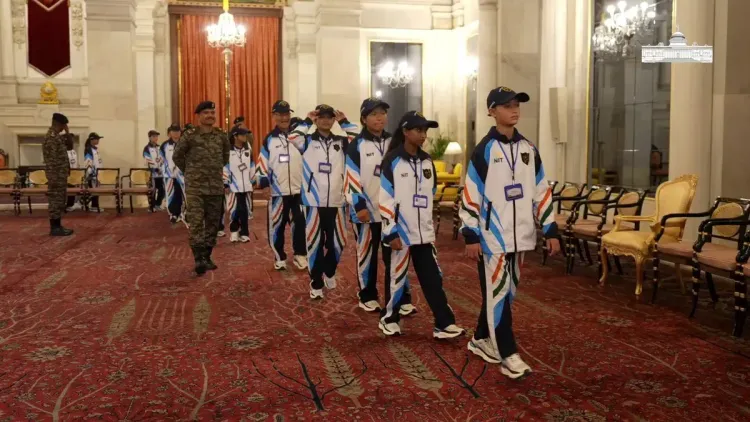
Arunachal Pradesh CM Pema Khandu celebrated students from Lhou Gonpa, Tawang and Gangtok, Sikkim meeting President Droupadi Murmu at Rashtrapati Bhavan under the National Integration Tour, facilitated by the Indian Army's Gajraj Corps.
Key Takeaways
Students from Lhou Gonpa, Tawang, Arunachal Pradesh and Gangtok, Sikkim participated in the National Integration Tour .
The students met President Droupadi Murmu at Rashtrapati Bhavan on or around October 2, 2026 .
Gajraj Corps of the Indian Army facilitated the tour for the Lhou Gonpa students.
CM Pema Khandu publicly thanked the Indian Army for organising the enriching opportunity.
The tour aims to foster national integration among children from India's strategically significant northeastern frontier regions.
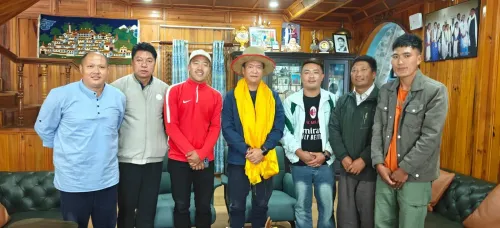
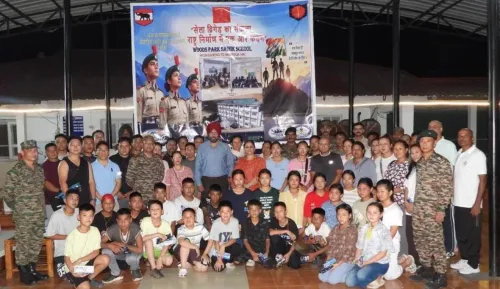
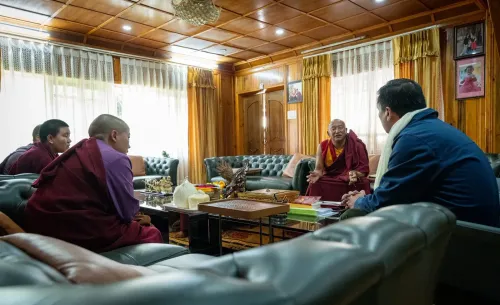
Students from the remote monastery town of Lhou Gonpa, Tawang got a view of India few children from the country's northeastern frontier ever see — the grandeur of Rashtrapati Bhavan and a personal audience with the President of India, Smt. Droupadi Murmu. Arunachal Pradesh Chief Minister Pema Khandu shared his pride on Friday, October 2, 2026, as photographs and video captured the moment these young students — joined by peers from Gangtok, Sikkim — stood before the nation's highest constitutional office.
A Monastery Town's Children at the Heart of the Republic
Lhou Gonpa is a small settlement in Tawang district, Arunachal Pradesh — a high-altitude borderland that shares cultural and geographic ties with the Tibetan plateau. For students growing up there, a journey to New Delhi and an interaction with the President is not routine. It is, in every sense, a window into the wider republic they are part of.
The visit was organised under the National Integration Tour programme, which brings schoolchildren from geographically or strategically significant regions of India to major national landmarks and institutions. Such tours are designed to foster a sense of shared citizenship and constitutional pride among young people from diverse and often remote communities.
Gajraj Corps: The Engine Behind the Tour
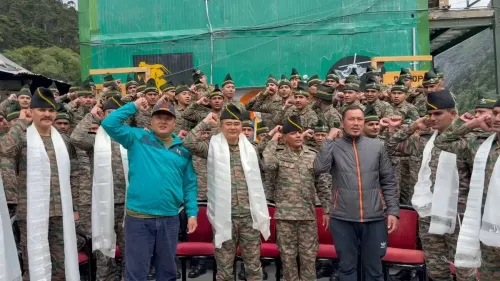
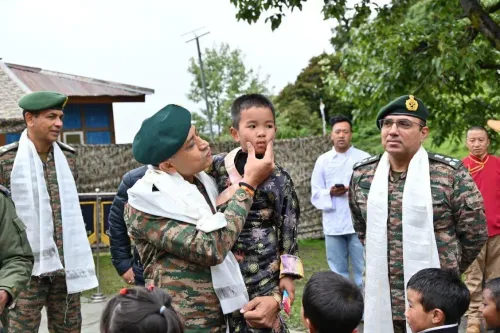
CM Khandu specifically credited the Indian Army — and by name, @GajrajCorps_IA — for making the tour possible. The Gajraj Corps is the Indian Army formation responsible for the northeastern frontier, including Arunachal Pradesh and Sikkim. Beyond operational duties, the Corps has long been involved in civil outreach programmes in these border areas, from infrastructure assistance to educational and cultural initiatives.
That a military formation is the primary facilitator of a children's educational tour to Rashtrapati Bhavan speaks to the unique relationship between the Army and civilian life in India's frontier districts — where state administrative capacity can be thin and the Army often fills critical developmental gaps.
What the Interaction Means for Border Communities
Khandu called the interactions 'meaningful' and spoke of young minds experiencing 'the diversity, heritage and shared spirit of our great nation.' For Tawang — a district of deep cultural significance, home to one of the largest Tibetan Buddhist monasteries in the world and a site of historical and strategic sensitivity — such moments of integration carry weight well beyond the ceremonial.
The inclusion of students from Gangtok, Sikkim alongside those from Arunachal also signals a deliberate pairing of two northeastern communities that share Himalayan geography, Buddhist heritage, and a similar position on India's northern frontier.
Children from India's most distant borderlands meeting the President. The Army opening the door. That is national integration — not as a slogan, but as an itinerary.
Point of View
Backed by the Indian Army's Gajraj Corps, reflects a deliberate strategy of using soft civic engagement to strengthen the sense of constitutional belonging in India's sensitive border districts. Tawang is not just geographically remote — it is a district of immense strategic and cultural significance, making youth outreach there a form of quiet but consequential nation-building. CM Khandu's public acknowledgement of the Army's role underscores the depth of civil-military cooperation that underpins governance in the Northeast. These gestures, small in ceremony, are part of a long arc of integrating India's frontier populations into the mainstream republic.
NationPress
2 Oct 2026
Frequently Asked Questions
What is the National Integration Tour for students in India?
The National Integration Tour is a programme that takes schoolchildren from geographically or strategically significant parts of India to major national institutions, landmarks, and constitutional offices, with the aim of fostering national pride and a sense of shared citizenship.
Which students from Arunachal Pradesh met President Droupadi Murmu?
Students from Lhou Gonpa, Tawang, Arunachal Pradesh , along with students from Gangtok, Sikkim , met President Droupadi Murmu at Rashtrapati Bhavan as part of the National Integration Tour.
What is the Gajraj Corps and what is its role in Arunachal Pradesh?
The Gajraj Corps is an Indian Army formation responsible for the northeastern frontier, covering areas including Arunachal Pradesh and Sikkim. Beyond its military role, it also conducts civil outreach and development activities in border communities, including facilitating educational tours.
Where is Lhou Gonpa in Tawang, Arunachal Pradesh?
Lhou Gonpa is a settlement in Tawang district, Arunachal Pradesh — a high-altitude Himalayan region bordering China, known for its Tibetan Buddhist heritage and significant strategic importance.
Why did CM Pema Khandu thank the Indian Army for the student tour?
CM Pema Khandu thanked the Indian Army, specifically the Gajraj Corps, because they organised and facilitated the National Integration Tour that enabled students from the remote Lhou Gonpa area of Tawang to travel to New Delhi and meet the President of India.