MP Runs 406 Gau-Ambulances for Cattle Emergency Care
Synopsis
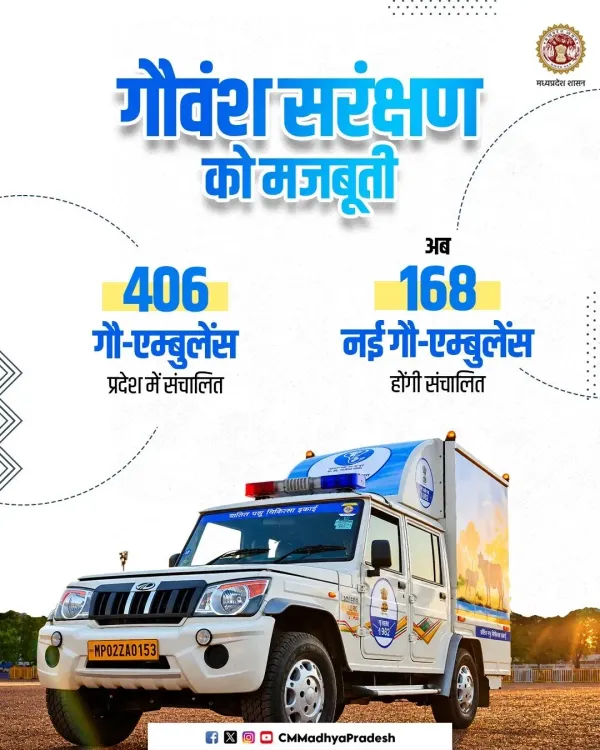
Madhya Pradesh is running 406 Gau-Ambulances — mobile veterinary units for sick and injured cattle — the state's Chief Minister's Office announced on 15 October 2026, the latest milestone in the state's livestock welfare and cow protection programmes.
Key Takeaways
406 Gau-Ambulances are currently operational across Madhya Pradesh as of 15 October 2026 .
Each unit provides on-the-spot emergency veterinary care and transport for sick or injured cattle.
The programme covers both farm livestock and stray cattle, supporting the state's gaushala network.
MP's mobile veterinary expansion began under livestock development programmes from the mid-2010s onward.
Utilisation data — call volumes, response times — from the animal husbandry department would be the next key indicator of the fleet's real-world impact.
When a stray or farm cow is injured on a rural road in Madhya Pradesh, help now has a dedicated number to call — and a vehicle on the way. The Chief Minister's Office of Madhya Pradesh announced on Thursday, 15 October 2026 that the state is currently operating 406 Gau-Ambulances, mobile veterinary units designed to reach sick or injured cattle swiftly across the state.
What a Gau-Ambulance actually does
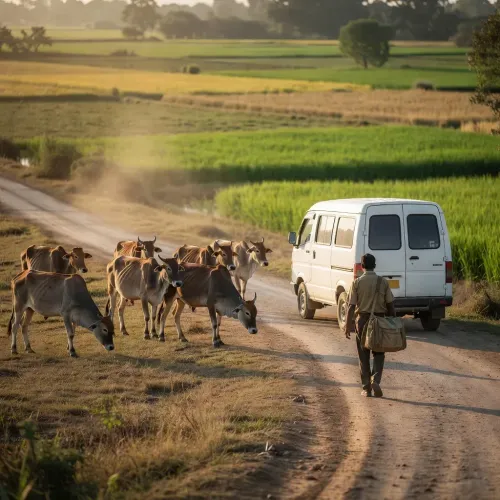
These are not ordinary vans. Each unit is equipped to provide emergency veterinary treatment on the spot and, where necessary, transport cattle to the nearest gaushala or veterinary facility. The programme targets both farm livestock and the large population of stray cattle — a persistent challenge in central India — by putting trained animal health workers on the road rather than waiting for owners to bring animals in.
Madhya Pradesh carries one of India's largest cattle populations, and the state's network of government-supported gaushalas (cattle shelters) has long been a pillar of its animal husbandry policy. The ambulance fleet is designed to be the mobile arm of that network, reducing the gap between an injured animal and medical intervention.
A policy line stretching back to the mid-2010s
The state began expanding mobile veterinary services under successive livestock development programmes from the mid-2010s onward. That gradual scale-up now stands at 406 operational units — a figure the CMO cited as the current strength of the fleet. Several other Indian states have introduced similar cattle ambulance schemes, but Madhya Pradesh has positioned its programme as one of the more systematically expanded in the country.
The scheme sits at the intersection of two durable policy priorities: rural livestock welfare, which directly affects the income of millions of small farmers and herders, and cow protection, a politically significant commitment for the state government. Whether one reads it through an agrarian-welfare lens or a cultural-political one, the operational outcome — faster emergency care for cattle — is the same.
What the numbers ahead will tell
The announcement raises a natural follow-up question: how many calls does the fleet actually handle? Published utilisation data — call volumes, response times, recovery rates — from the state's animal husbandry department would give a clearer picture of whether 406 ambulances are meeting demand or whether gaps remain in MP's more remote districts. State budget allocations for further units will be the next indicator to watch.
For now, Madhya Pradesh has put a concrete number on the table: 406 vehicles rolling to protect cattle health, one emergency at a time.
Point of View
MP's published impact figures — or absence of them — will shape the national conversation on scalable livestock emergency care.
NationPress
15 Oct 2026
Frequently Asked Questions
What is the Gau-Ambulance scheme in Madhya Pradesh?
The Gau-Ambulance scheme operates mobile veterinary units that respond to calls about sick or injured cattle, provide on-the-spot treatment, and transport animals to gaushalas or veterinary facilities when needed.
How many Gau-Ambulances are running in MP in 2026?
The Chief Minister's Office of Madhya Pradesh announced that 406 Gau-Ambulances are currently operational across the state as of October 2026.
Who can use the Gau-Ambulance service in Madhya Pradesh?
The service is available to livestock owners and gaushala operators, and also covers stray cattle found injured on roads or in fields across the state.
When did Madhya Pradesh start the cattle ambulance programme?
MP began expanding mobile veterinary ambulance services under livestock development programmes from the mid-2010s onward, with the fleet growing to 406 units by 2026.
Do other Indian states have cattle ambulance services?
Yes, several Indian states have introduced dedicated cattle ambulance schemes as part of cow protection and rural livestock health policies, though the scale and operational structure vary by state.