CM Sai Highlights Chhattisgarh's Sacred Rice Link to Jagannath Temple
Synopsis
Chhattisgarh Chief Minister Vishnu Deo Sai highlighted on 16 July 2026 that rice from the state's Devbhog region has been offered as sacred prasad at the Jagannath Temple in Puri for centuries, calling it a symbol of devotion, tradition, and cultural connection.
Key Takeaways
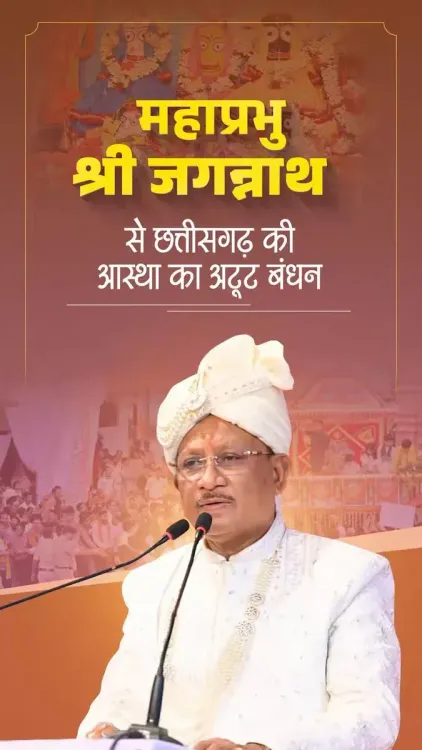
Chhattisgarh CM Vishnu Deo Sai posted on 16 July 2026 affirming the state's centuries-old faith bond with Mahaprabhu Shri Jagannath Swami .
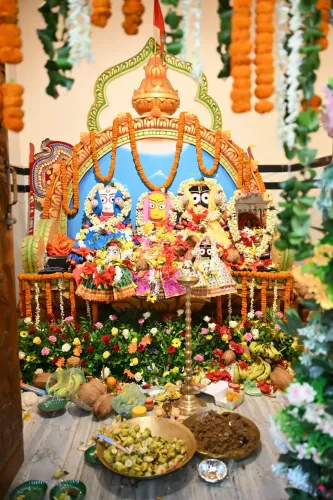
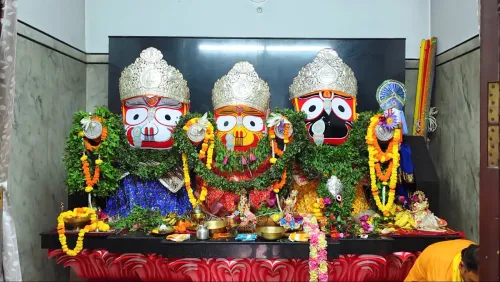
Rice from Devbhog in Chhattisgarh is supplied as the sacred bhat prasad offered to the deity at the Jagannath Dham, Puri .
CM Sai described the contribution as a symbol of 'devotion, tradition, and cultural connection,' not merely an agricultural supply.
The arrangement reflects pre-modern inter-regional devotional networks that continue under contemporary state administrations.
Similar documented supply arrangements exist from Odisha , West Bengal , and Andhra Pradesh for the same temple.
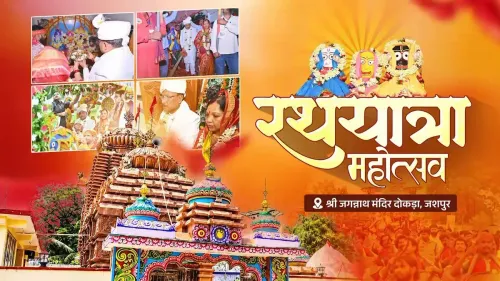
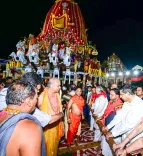
The statement coincides with the season of annual Rath Yatra preparations in Puri .
Chhattisgarh Chief Minister Vishnu Deo Sai on Thursday, 16 July 2026, underscored the centuries-old spiritual bond between Chhattisgarh and Mahaprabhu Shri Jagannath Swami, noting that rice from the state's Devbhog region is offered as sacred prasad (blessed food) at the Jagannath Dham in Puri.
Context
Posting in Hindi on 16 July 2026, Chief Minister Sai wrote: 'Mahaprabhu Shri Jagannath Swami se Chhattisgarh ki aastha ka sambandh sadiyon purana hai' — 'Chhattisgarh's bond of faith with Mahaprabhu Shri Jagannath Swami is centuries old.' He specifically highlighted that the sacred rice prasad — the holy bhat (cooked rice) offered to the deity — is sourced from Devbhog in Chhattisgarh. The Chief Minister described this not merely as an agricultural contribution but as a symbol of 'devotion, tradition, and cultural connection.'
Policy Backdrop
The Jagannath Temple in Puri, Odisha, is one of the four sacred dhams (pilgrimage centres) in Hinduism, drawing millions of devotees annually. Pre-modern devotional networks across the Indian subcontinent established arrangements by which specific regions supplied particular produce for temple rituals — a practice that has continued under successive state administrations. Devbhog, situated in Gariaband district of Chhattisgarh, is historically documented as a source of fine rice varieties destined for the Puri temple's daily offerings. Similar contributions from regions in Odisha, West Bengal, and Andhra Pradesh are also recorded for the same temple.
Chhattisgarh, carved out as a separate state in 2000, has consistently positioned its identity around its agrarian heritage and cultural ties to eastern Indian pilgrimage circuits. The state is among India's significant rice-producing regions, and the Devbhog supply to Puri represents an intersection of agriculture, faith, and inter-state cultural diplomacy.
Stakeholders and Impact
The most direct beneficiaries of this arrangement are Devbhog's rice farming communities, whose produce carries both economic value and deep religious significance. For Jagannath devotees across India — numbering in the crores — the provenance of temple prasad holds profound spiritual meaning, making the Chhattisgarh connection a matter of both agricultural policy and religious heritage.
Chief Minister Sai's statement also signals a deliberate effort by the BJP-led Chhattisgarh government to foreground the state's cultural and spiritual identity on a national stage. By publicly associating Chhattisgarh with one of Hinduism's most revered shrines, the administration reinforces its outreach to the state's large devotional constituency ahead of routine political cycles.
What's Next
Annual Rath Yatra preparations in Puri — typically observed in June or July — bring renewed attention to the logistics and traditions of temple supply chains, including rice offerings. Any formal cultural exchange between the Chhattisgarh and Odisha governments around these rituals could further institutionalise the Devbhog-Puri linkage. Observers will watch whether CM Sai's statement precedes or accompanies a state-level cultural delegation or a formal memorandum reinforcing this centuries-old arrangement.
Point of View
The BJP-led government signals a broader strategy of anchoring state identity to living religious heritage rather than purely developmental metrics. The timing — close to the Rath Yatra season — amplifies the resonance of the message among Jagannath devotees across eastern and central India. This fits a wider pattern of BJP-governed states actively publicising their cultural and spiritual contributions to major pilgrimage institutions as a form of soft political consolidation.
NationPress
17 Jul 2026
Frequently Asked Questions
Why does Chhattisgarh send rice to the Jagannath Temple in Puri?
Rice from Chhattisgarh's Devbhog region has been supplied to the Jagannath Temple in Puri for centuries as part of a historical devotional arrangement, where it is offered as sacred bhat prasad to Mahaprabhu Jagannath.
What is Devbhog and where is it located?
Devbhog is a region in Gariaband district of Chhattisgarh, historically known for producing fine rice varieties that are sent as temple offerings to the Jagannath Dham in Puri, Odisha.
What did Chhattisgarh CM Vishnu Deo Sai say about Jagannath Temple?
On 16 July 2026, CM Vishnu Deo Sai stated that Chhattisgarh's bond of faith with Mahaprabhu Shri Jagannath Swami is centuries old, and that Devbhog rice forms the sacred prasad offered at the Puri temple, symbolising devotion, tradition, and cultural connection.
Is Chhattisgarh the only state that sends offerings to the Jagannath Temple?
No. Documented supply arrangements for the Jagannath Temple in Puri also involve regions from Odisha, West Bengal, and Andhra Pradesh, reflecting a broad network of inter-regional devotional contributions.
When is Rath Yatra celebrated and what is its connection to this news?
Rath Yatra is typically observed in June or July each year in Puri, Odisha. CM Sai's statement about Devbhog rice offerings coincides with the Rath Yatra season, when attention to Jagannath Temple traditions is at its peak.