CM Dhami: Border Tourism, Local Livelihoods Top Uttarakhand Agenda
Synopsis
The Uttarakhand Chief Minister's Office on 4 June 2026 said CM Pushkar Singh Dhami has placed border-area tourism and local livelihoods at the centre of the state's agenda, reinforcing a frontier-development push aimed at curbing out-migration from Himalayan districts and broadening incomes for villagers, homestay hosts and tourism operators.
Key Takeaways
Uttarakhand CMO post dated 4 June 2026 quotes CM Pushkar Singh Dhami on frontier priorities.
Twin focus: promoting tourism in border areas and strengthening local livelihoods.
Aligns with the Uttarakhand Tourism Policy 2019-2024 emphasis on border circuits and homestays.
Complements the Union government's Vibrant Villages Programme near the Line of Actual Control.
Key districts to watch include Pithoragarh and Chamoli for project sanctions in 2026-27.
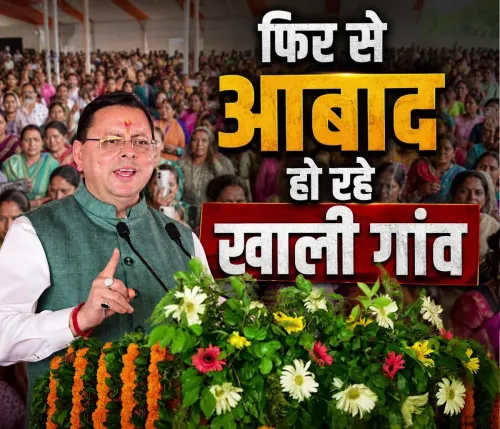
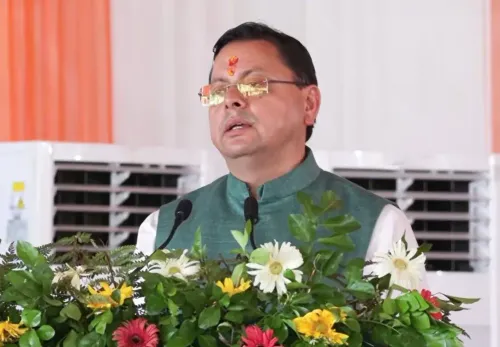
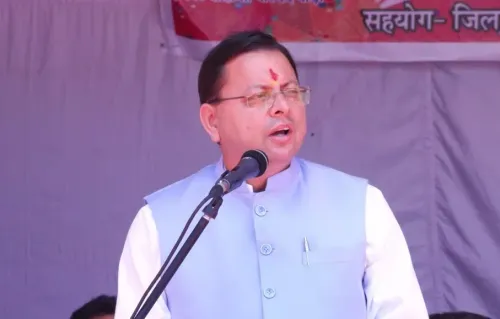
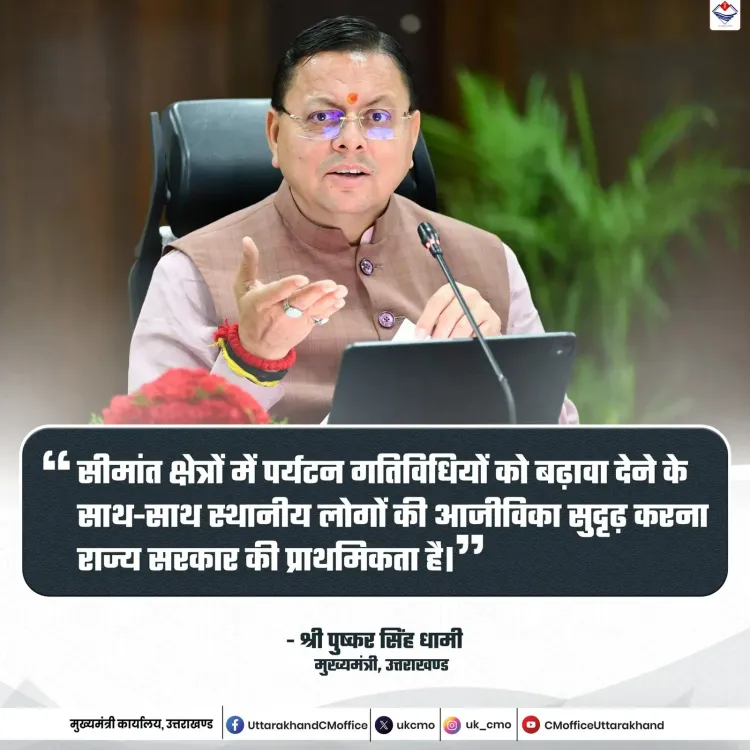
The Chief Minister's Office of Uttarakhand on 4 June 2026 shared remarks by Chief Minister Pushkar Singh Dhami placing border-area tourism and the livelihoods of local residents at the centre of the state government's development agenda. The post, published on the official handle, framed frontier development as a continuing priority for the hill state.
Quoting the Chief Minister, the post stated in Hindi: 'Seemant kshetron mein paryatan gatividhiyon ko badhava dene ke saath-saath sthaniya logon ki aajeevika sudridh karna rajya sarkar ki prathmikta hai' ('Promoting tourism activities in border areas, along with strengthening the livelihoods of local people, is a priority of the state government').
Context
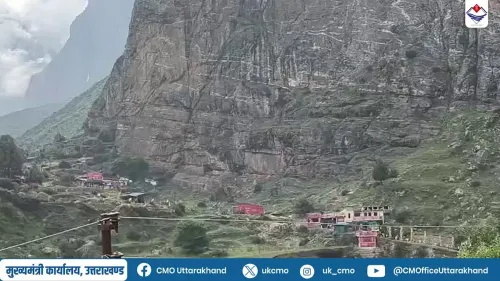
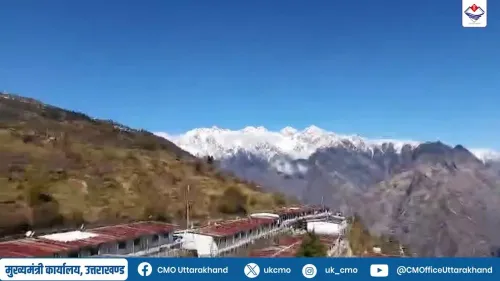
Uttarakhand is a Himalayan state that shares international borders with China and Nepal, and its economy leans heavily on tourism and pilgrimage circuits including the Char Dham yatra. Frontier districts such as Pithoragarh, Chamoli and Uttarkashi have historically grappled with out-migration as residents move to the plains in search of work, leaving several villages thinly populated.
Chief Minister Pushkar Singh Dhami, who has led the state government since 2021 and returned to office after the 2022 assembly election, has repeatedly framed development of remote and border belts as a strategic as well as an economic objective. Thursday's post adds to a series of statements positioning border villages as the next frontier of state-led tourism expansion.
Policy backdrop
The Uttarakhand Tourism Policy 2019-2024 identified border districts as focus areas for new tourism circuits and homestay development, offering incentives for private investment and community-run accommodation. The policy sought to diversify visitor flows beyond saturated pilgrimage centres and channel demand toward less-explored valleys near the frontier.
At the Union level, the Vibrant Villages Programme has supported homestays, trekking routes and basic infrastructure in villages close to the Line of Actual Control, complementing state efforts. The combined approach pairs livelihood generation with the strategic aim of sustaining population in sensitive frontier areas, a model adopted across several Himalayan states.
Stakeholders and impact
The immediate beneficiaries identified in the Chief Minister's framing are border villagers and local tourism operators, including homestay hosts, guides, porters and small transporters. Strengthening tourism in these belts is expected to widen the income base for households that currently depend on subsistence agriculture, animal husbandry and seasonal labour.
The message also speaks to a wider constituency of small entrepreneurs in hill districts who have lobbied for better road connectivity, electricity, mobile network coverage and credit access to scale up homestays and adventure-tourism ventures. For the state administration, expanding economic activity near the border carries the additional dividend of anchoring communities in villages that have steadily lost residents over the past two decades.
What's next
Attention will turn to district-level project sanctions under the state tourism department and to any supplementary provisions for border districts in the 2026-27 budget cycle. New circuit announcements, homestay subsidy disbursals and infrastructure tenders in Pithoragarh and Chamoli will indicate how the stated priority is translated into on-ground spending.
Tourism operators in the hills will also watch for coordination between state schemes and central programmes such as Vibrant Villages, which together shape the funding envelope available to frontier panchayats. If sustained, the policy push could reshape the geography of Uttarakhand tourism, drawing footfalls beyond the established pilgrimage corridor and into villages that have long sat at the edge of the state's economic map.
Point of View
Where border development is pitched simultaneously as economic uplift and as a quiet strategic instrument. By tying tourism promotion to livelihoods, the messaging seeks to convert frontier geography from a vulnerability into a growth lever, while addressing the politically sensitive issue of hill out-migration. The real test lies not in the rhetoric but in whether district administrations and tourism boards can convert priority into sanctioned projects in border belts. If sustained, this approach mirrors a broader Himalayan template combining economic stakes with population retention.
NationPress
21 Oct 2026
Frequently Asked Questions
What did the Uttarakhand CMO post about border tourism?
The Uttarakhand CMO quoted CM Pushkar Singh Dhami saying that promoting tourism activities in border areas along with strengthening local livelihoods is a priority of the state government. The post was shared on 4 June 2026 on the official handle.
Why is Uttarakhand focusing on border-area tourism?
Border districts have faced persistent out-migration and limited livelihood options, while sharing sensitive frontiers with China and Nepal. Tourism is seen as a way to generate local income, retain population in frontier villages and diversify visitor flows beyond the Char Dham circuit.
Which Uttarakhand districts are considered border or frontier areas?
Districts such as Pithoragarh, Chamoli and Uttarkashi sit along Uttarakhand's international borders and are typically classified as frontier areas for tourism and development planning.
What is the Vibrant Villages Programme?
It is a central government scheme that funds infrastructure, homestays and trekking routes in villages near the Line of Actual Control. It complements state-level tourism and livelihood schemes in Himalayan border belts.
How does this announcement link to existing Uttarakhand tourism policy?
The Uttarakhand Tourism Policy 2019-2024 had already identified border districts as focus areas for new circuits and homestay development. The Chief Minister's latest message reaffirms that direction as a continuing government priority.