CM Dhami Announces Tourism Push for Niti Valley Border Region
Synopsis
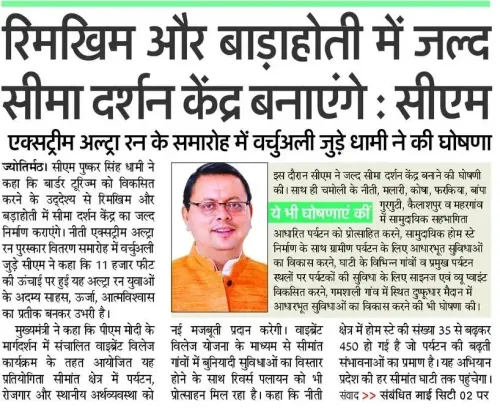
Chief Minister Pushkar Singh Dhami on 1 June 2026 announced community homestays, signage, a border viewing centre, and adventure infrastructure for Niti Valley and border villages in Chamoli district, Uttarakhand, at the Niti Extreme Ultra Run ceremony.
Key Takeaways
Eight villages — Niti, Malari, Kosha, Farkiya, Bampa, Gurguti, Kailashpur, and Mahargaon — in Chamoli district will get community-participation-based tourism infrastructure.
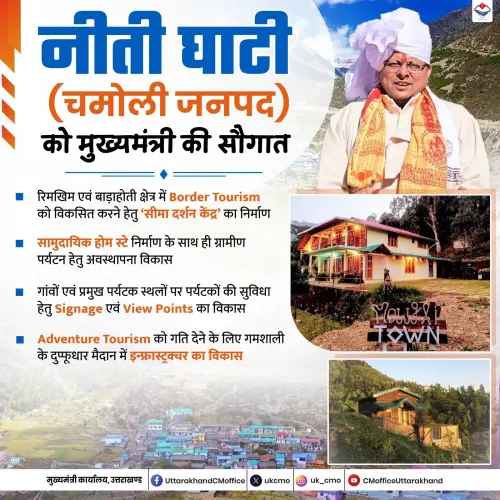
A Seema Darshan Kendra (Border Viewing Centre) will be built in the Rimkhim and Baraahoti areas to develop border tourism.
Community homestays and rural tourism facilities will be constructed to strengthen local livelihoods in border villages.
Signage and view points will be developed at key tourist locations across Niti Valley.
Basic facilities at Dupphoodhar Maidan in village Gamshali will be upgraded to host adventure tourism and large events.
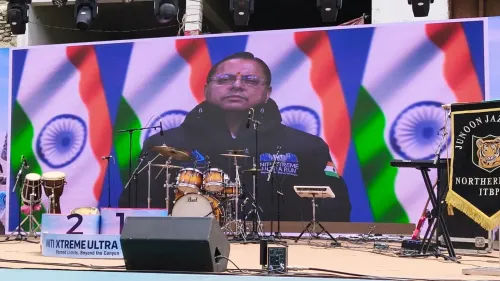
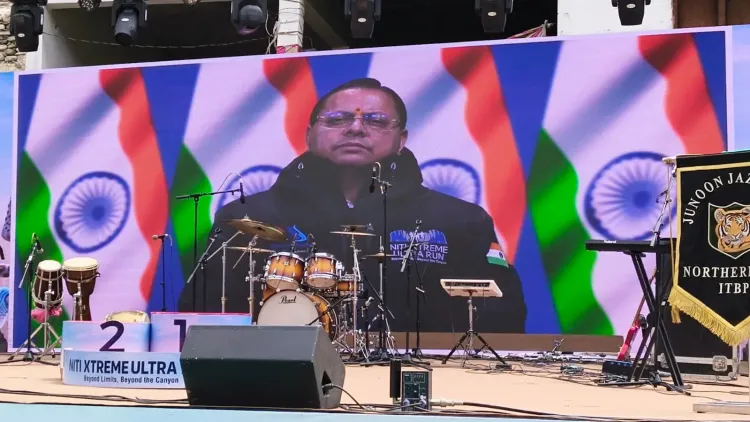
The announcements were made virtually at the prize ceremony of the Niti Extreme Ultra Run , held from 31 May to 2 June 2026.
Chief Minister Pushkar Singh Dhami on 1 June 2026 announced a series of tourism infrastructure measures for the border villages of Chamoli district in Uttarakhand, joining virtually the prize distribution ceremony of the 'Niti Extreme Ultra Run' — an adventure running event held in Niti Valley from 31 May to 2 June. The announcements cover community homestays, signage, view points, a border tourism centre, and upgraded facilities at a high-altitude meadow.
Context
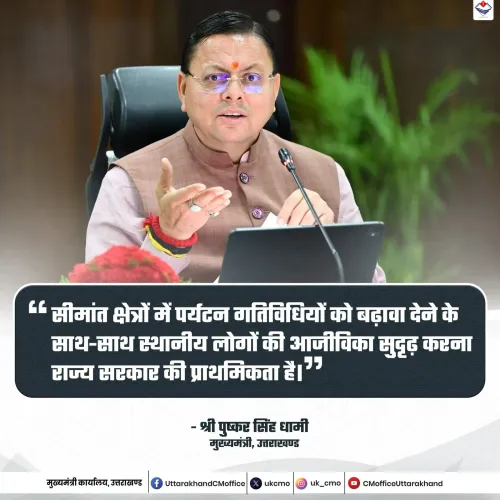
Addressing the ceremony virtually, CM Dhami said that strengthening the livelihoods of people in border areas alongside promoting tourism activities is 'the state government's priority.' He specifically named eight villages — Niti, Malari, Kosha, Farkiya, Bampa, Gurguti, Kailashpur, and Mahargaon — in Chamoli district where community-participation-based tourism will be encouraged. The Niti Extreme Ultra Run has become a platform for spotlighting this remote high-altitude valley, which sits adjacent to the Indo-China border.
Policy Backdrop
Uttarakhand's tourism policy since the mid-2010s has consistently emphasised rural homestays and adventure infrastructure in remote Himalayan valleys. Successive state governments have used regulated tourism in Indo-China border tracts to simultaneously generate local income and reinforce administrative presence — a model also deployed in Pithoragarh and Uttarkashi districts. CM Dhami, in office since 2021, has made border-district development a recurring theme of his administration.
The proposed 'Seema Darshan Kendra' (Border Viewing Centre) in the Rimkhim and Baraahoti areas of Chamoli district follows a format already piloted at the India-Pakistan border in Punjab and at select points along the Line of Actual Control. The concept converts strategic geography into a regulated tourist draw while keeping sensitive zones under structured access.
Announcements and Impact
CM Dhami outlined five concrete commitments: construction of community homestays and rural tourism infrastructure across the eight named villages; installation of signage and view points at key tourist sites in Niti Valley; construction of a Seema Darshan Kendra in the Rimkhim and Baraahoti belt for border tourism; and development of basic facilities at Dupphoodhar Maidan in village Gamshali to support adventure tourism and large-scale events. The CM stated these steps will give 'new strength to tourism, employment, and the local economy across the entire border region.'
The primary beneficiaries are border villagers, local youth seeking non-agricultural livelihoods, and the growing segment of adventure and experiential tourists drawn to high-altitude Himalayan circuits. Homestay clusters, in particular, have a track record of retaining tourism revenue within village households rather than routing it to urban operators.
What's Next
The tangible test for these announcements will come during the next state budget cycle, when allocations for the homestay clusters and the Seema Darshan Kendra will need to be sanctioned. The 2027 tourist season is the earliest realistic window for visible on-ground progress, given the short construction window available at elevations above 3,500 metres. Sustained follow-through will also depend on road connectivity upgrades that have historically constrained infrastructure delivery in the Niti Valley corridor.
Point of View
In particular, signals alignment with a central-government push to make the LAC periphery more visible and economically active for ordinary Indians. What distinguishes this round of announcements is the granularity — eight named villages and a specific meadow — which raises accountability expectations compared to earlier blanket tourism pledges. Whether budget allocations follow in the next cycle will determine whether this becomes a genuine livelihood intervention or another aspirational announcement in the long list of Himalayan border-development promises.
NationPress
15 Oct 2026
Frequently Asked Questions
What is the Niti Extreme Ultra Run?
The Niti Extreme Ultra Run is an adventure running event held in Niti Valley in Chamoli district, Uttarakhand, designed to promote extreme sports tourism in the high-altitude border region. The 2026 edition was held from 31 May to 2 June.
What is a Seema Darshan Kendra?
A Seema Darshan Kendra, or Border Viewing Centre, is a regulated facility that allows civilians to view border areas in a structured, safe manner, combining tourism with awareness of India's frontier regions. CM Dhami announced one for the Rimkhim and Baraahoti areas of Chamoli district.
Which villages in Chamoli will get homestays under CM Dhami's announcement?
The eight villages named are Niti, Malari, Kosha, Farkiya, Bampa, Gurguti, Kailashpur, and Mahargaon, all in Chamoli district of Uttarakhand.
Where is Niti Valley located?
Niti Valley is a remote, high-altitude valley in Chamoli district of Uttarakhand, situated close to the Indo-China border and known for its strategic location and scenic Himalayan landscape.
How will these tourism announcements help local people in Niti Valley?
The planned community homestays, rural tourism facilities, and infrastructure upgrades are intended to generate non-agricultural income for border villagers and local youth, retaining tourism revenue within village households rather than with outside operators.