CM Dhami to Build Border Darshan Centres in Niti Valley
Synopsis
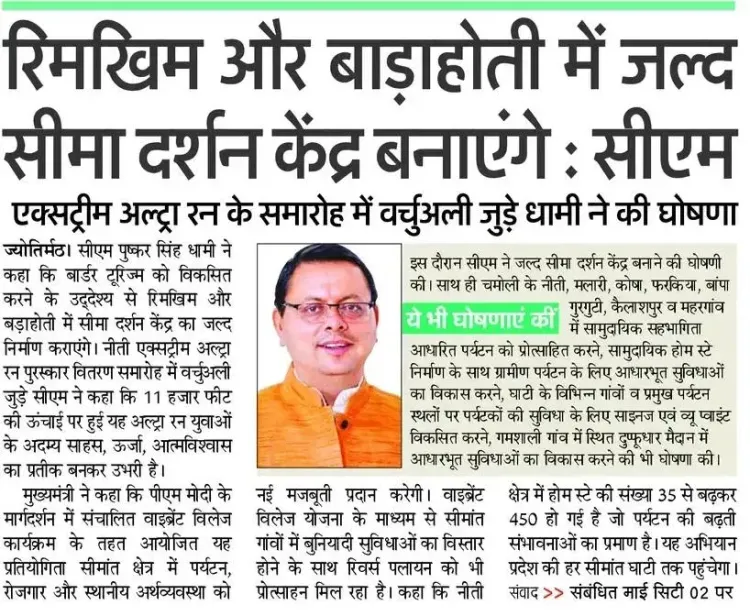
Chief Minister Pushkar Singh Dhami has announced Seema Darshan Kendras at Rimkhim and Barahoti in Uttarakhand's Niti Valley, extending India's border-tourism infrastructure push to two strategically sensitive frontier sites near the Indo-China boundary.
Key Takeaways
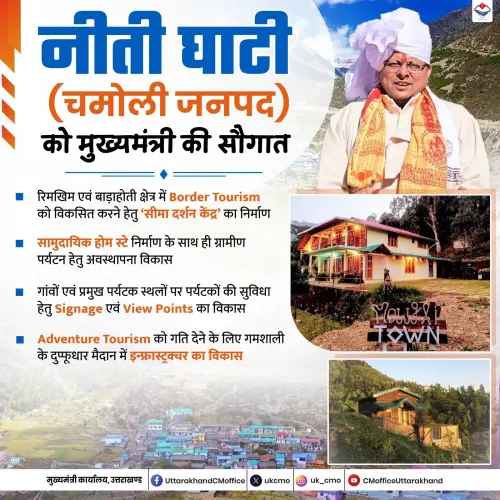
CM Pushkar Singh Dhami announced Border Viewing Centres (Seema Darshan Kendras) at Rimkhim and Barahoti in Niti Valley, Chamoli district .
Barahoti is a high-altitude pasture with documented historical sensitivity in India-China border relations.
The initiative aligns with the Central government's Vibrant Villages Programme (2023) , which targets border-village infrastructure across Himalayan states.
The centres are intended to serve domestic tourists and generate economic activity for border villagers facing outmigration.
Funding allocation, tendering, and formal timelines are yet to be announced; linkage with central scheme budgets is anticipated.
The Chief Minister's Office of Uttarakhand announced on Tuesday, 2 June 2026, that Chief Minister Pushkar Singh Dhami has declared plans to establish Seema Darshan Kendras (Border Viewing Centres) at Rimkhim and Barahoti in the remote Niti Valley of Chamoli district.
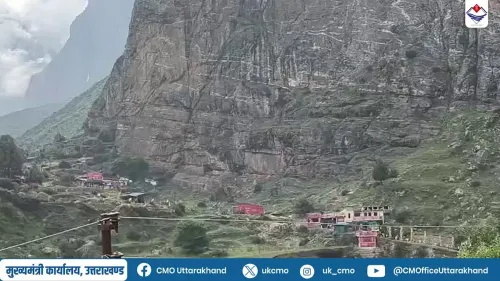
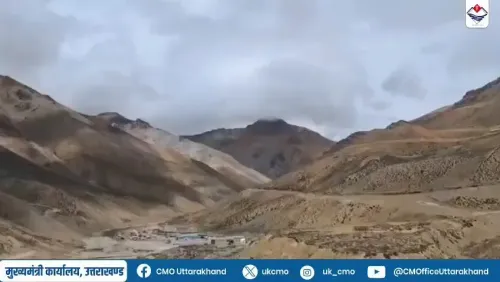
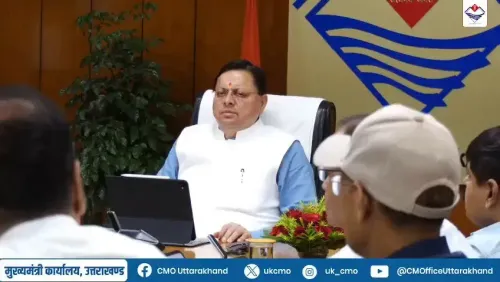
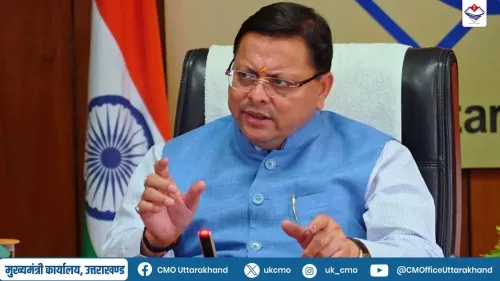
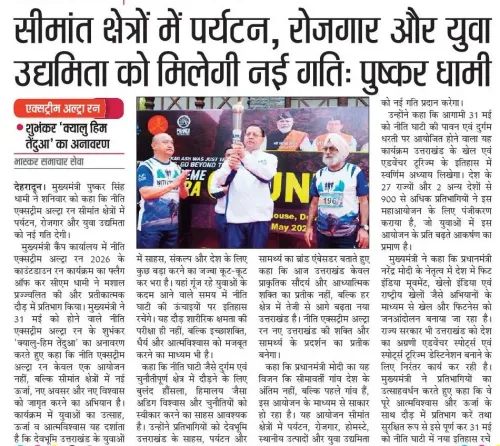
Announcing the initiative, CM Dhami stated: 'Niti Ghati ke Rimkhim aur Barahoti mein banaenge Seema Darshan Kendra' — 'We will build Border Viewing Centres at Rimkhim and Barahoti in Niti Valley.' The announcement was accompanied by four images shared from the official Chief Minister's Office account on X.
Context
Niti Valley is one of Uttarakhand's most remote corridors, nestled in Chamoli district along the Indo-China border. Rimkhim is a village settlement within the valley, while Barahoti is a high-altitude pasture that has historically carried sensitivity in India-China border diplomacy. Both locations sit at the edge of India's frontier with Tibet and have seen limited civilian infrastructure development until recent years.
The announcement positions these two sites as focal points for structured tourism and citizen engagement with India's northern frontier, a model already tested in Ladakh and parts of Arunachal Pradesh.
Policy Backdrop
The proposal aligns with the Vibrant Villages Programme, launched by the Central government in 2023, which targets infrastructure, livelihood support, and connectivity in border villages across Himalayan states including Uttarakhand. The programme explicitly encourages tourism and visible state presence in frontier settlements to counter demographic decline and strengthen strategic depth.
India has pursued incremental development of viewing and tourism infrastructure along the Line of Actual Control (LAC) since the early 2020s, coordinating state tourism departments with central border-area schemes. Seema Darshan Kendras fit within this broader architecture — offering civilians a curated, safe vantage point near sensitive frontier zones without compromising operational security.
Stakeholders and Impact
Border villagers in Niti Valley stand to benefit most directly, as such centres typically generate ancillary economic activity — homestays, local guides, and handicraft markets — that can slow the outmigration that has hollowed out many Himalayan frontier communities. Domestic tourists, particularly those drawn to high-altitude heritage and border landscapes, represent the primary visitor demographic.
The strategic dimension is equally significant. A permanent, staffed Darshan Kendra at Barahoti — a location with a documented history of border-related friction — signals continued civilian and administrative engagement with a tract that has periodically attracted attention in bilateral contexts.
What's Next
Concrete timelines, funding allocations, and tendering processes for the two centres are yet to be formally announced. Observers will watch for line-item provisions in the Uttarakhand state budget or tourism policy updates, as well as any formal linkage with Vibrant Villages Programme implementation schedules at the central level. CM Dhami's government has signalled infrastructure and border-area development as priorities, and this announcement extends that commitment to some of the state's most strategically positioned terrain.
Point of View
Not just administrative or military presence. The move fits a clear post-2020 pattern in which Himalayan state governments, backed by central schemes like Vibrant Villages, use tourism infrastructure to assert demographic and economic vitality in border tracts. The political dividend for the BJP government in Uttarakhand is equally apparent: visible, named projects in remote border constituencies reinforce a national-security-meets-development narrative ahead of any electoral cycle.
NationPress
15 Oct 2026
Frequently Asked Questions
What is a Seema Darshan Kendra?
A Seema Darshan Kendra, or Border Viewing Centre, is a government-built facility that allows civilians to safely view and experience India's international border areas, typically equipped with viewing platforms, informational displays, and visitor amenities.
Where are the new Border Viewing Centres being built in Uttarakhand?
CM Pushkar Singh Dhami announced the centres will be built at Rimkhim and Barahoti, both located in Niti Valley in Chamoli district of Uttarakhand, near the Indo-China border.
What is the Vibrant Villages Programme and how does it relate to this announcement?
The Vibrant Villages Programme is a Central government scheme launched in 2023 to develop infrastructure, livelihood support, and connectivity in border villages of Himalayan states. The Seema Darshan Kendra proposal aligns with its objectives of activating frontier settlements economically and maintaining visible state presence.
Why is Barahoti significant in the context of this announcement?
Barahoti is a high-altitude pasture in Uttarakhand with a documented history of border sensitivities between India and China, making the announcement of a civilian viewing centre there a notable signal of India's intent to maintain active civilian engagement at the frontier.
When will the Niti Valley Border Viewing Centres be completed?
No specific completion timeline has been announced. The funding allocation and tendering process are yet to be formalised, and observers expect details to emerge through the Uttarakhand state budget or central Vibrant Villages Programme updates.