CM Himanta Highlights Assam's 5-Year Revenue Surplus Record
Synopsis
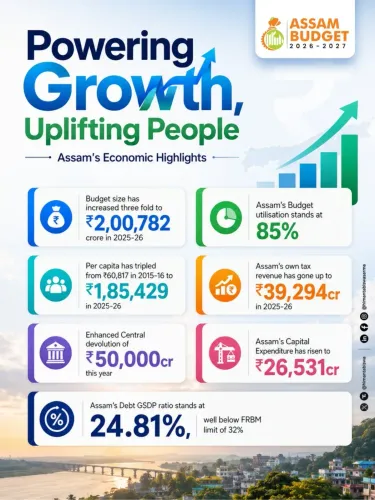
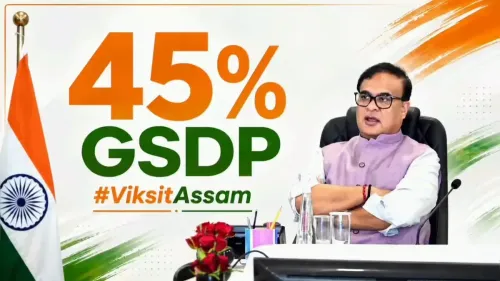
Assam Chief Minister Himanta Biswa Sarma on 29 May 2026 highlighted the state's five-year revenue surplus streak and growing national GDP share, framing fiscal prudence as the engine of a 'Viksit Assam' — the state's contribution to India's 2047 developed-nation vision.
Key Takeaways
Himanta Biswa Sarma posted on 29 May 2026 citing Assam's fiscal and economic performance milestones.
The Chief Minister claims five consecutive years of revenue surplus for Assam under the current administration.
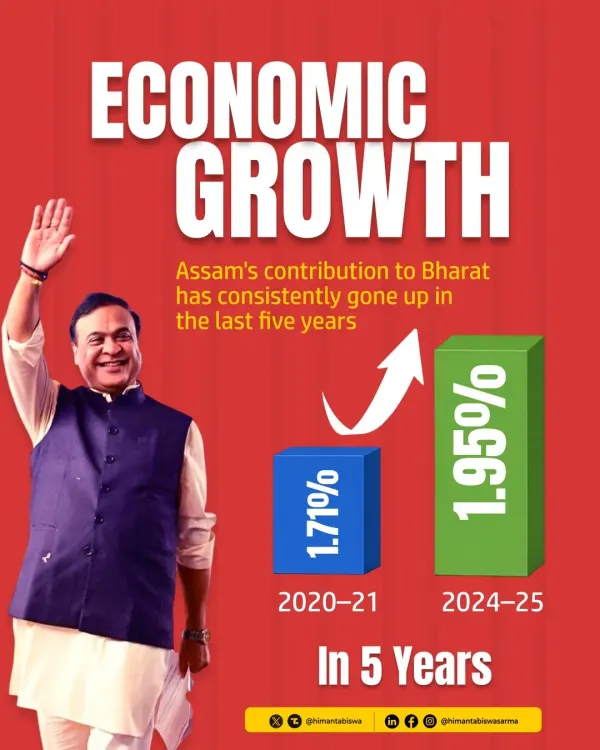
He also asserts a rising share of Assam in India's national GDP , though exact figures await official documentation.
The post uses dual hashtags — #ViksitAssam and #AtalAvichalAgragamiAssam — linking state outcomes to both the Viksit Bharat 2047 vision and the legacy of former PM Atal Bihari Vajpayee .
Sarma, who also leads the North-East Democratic Alliance (NEDA) , positions Assam's fiscal record as a governance model for the broader Northeast.
Official budget and economic survey documents are expected to provide the detailed revenue and GDP data underpinning these claims.
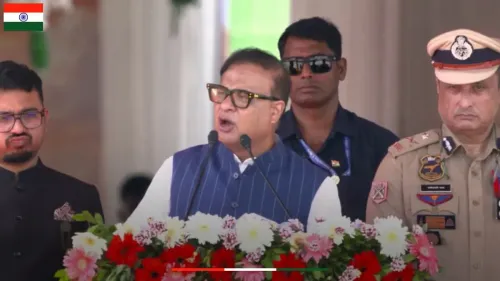
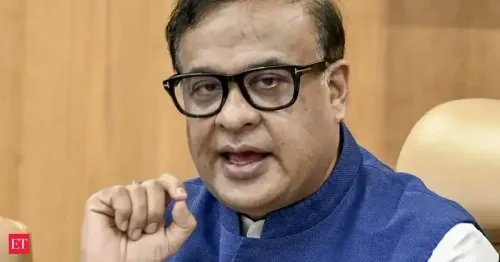
Assam Chief Minister Himanta Biswa Sarma on Friday, 29 May 2026, cited the state's fiscal performance as the bedrock of its development ambitions, pointing to a revenue surplus maintained for five consecutive years and a rising share in India's national GDP as evidence of sustained economic progress under his administration.
Context
Posting under the hashtags #ViksitAssam and #AtalAvichalAgragamiAssam, the Chief Minister framed the state's fiscal record as the foundation for a developed Assam — a state-level echo of the Central government's Viksit Bharat vision, which targets India's transformation into a developed nation by 2047. The second hashtag invokes the legacy of former Prime Minister Atal Bihari Vajpayee, linking Assam's current trajectory to an earlier era of development-focused governance.
Sarma's post declared that 'a #ViksitAssam rests on the foundations of fiscal prudence and sustained economic expansion,' adding that 'the numbers tell the story' of the state's progress. The dual-hashtag framing is consistent with the BJP's broader state-level messaging, which connects local governance outcomes to national political slogans.
Policy Backdrop
Assam transitioned to BJP-led governance in 2016, with economic reform and infrastructure development as stated priorities. The Central government's North East Industrial Development Scheme, launched in 2017, was designed to accelerate industrial and economic growth across the region, providing a policy scaffolding that state governments in the Northeast have cited in support of their growth narratives.
Himanta Biswa Sarma became Chief Minister in May 2021 and has since positioned fiscal discipline — controlling expenditure while growing revenue receipts — as a signature of his administration. A revenue surplus, where the government's revenue receipts exceed its revenue expenditure, is considered a marker of fiscal health as it leaves room for capital investment without borrowing for day-to-day operations.
As convenor of the North-East Democratic Alliance (NEDA), Sarma also carries a regional political role, and statements on Assam's economic performance carry weight beyond the state's own borders, projecting a model for BJP-aligned governance across the Northeast.
Stakeholders and Impact
Assam's taxpayers and the state's business and investor community are the most directly affected stakeholders. A sustained revenue surplus, if borne out in official budget documents, signals that the state is not drawing down on its fiscal buffers to meet routine spending — a reassurance for investors evaluating the state's creditworthiness and long-term policy stability.
The claim of an increasing contribution to India's national GDP is significant for a state historically associated with economic underperformance relative to the national average. If verified through official economic survey data, it would represent a structural shift in the state's economic standing. The post's figures, however, await corroboration from published budget and economic survey documents.
What's Next
Attention will now turn to Assam's forthcoming economic survey and budget documentation, which are expected to carry the granular revenue and GDP figures that underpin the Chief Minister's claims. Any follow-up announcements — particularly investment commitments or infrastructure project launches tied to the Viksit Assam framework — will be watched as indicators of whether the fiscal headroom is being deployed for capital expenditure.
The broader question is whether Assam's fiscal narrative translates into measurable improvements in per capita income, employment, and public services — the metrics by which residents will ultimately judge the 'developed Assam' promise.
Point of View
Which retains emotional resonance among the party's core voters. The fiscal-prudence messaging is also a direct counter to a long-standing critique of Northeast states as fiscally dependent on Central transfers. By foregrounding revenue surplus and GDP share, Sarma is constructing an image of Assam as a self-sustaining growth story rather than a recipient state — a reframing that has both electoral and investor-relations value. Whether the numbers hold up to scrutiny in forthcoming official documents will determine how durable this narrative proves to be.
NationPress
14 Oct 2026
Frequently Asked Questions
What is Viksit Assam?
'Viksit Assam' is the state government's development framework, positioning Assam as a state-level contributor to the Central government's 'Viksit Bharat' vision of India becoming a developed nation by 2047. Chief Minister Himanta Biswa Sarma has used the term to describe Assam's economic and governance goals under his administration.
Has Assam maintained a revenue surplus for five years?
Chief Minister Himanta Biswa Sarma has claimed that Assam has maintained a revenue surplus for five consecutive years. The claim is pending corroboration from officially published state budget and economic survey documents.
What does the hashtag AtalAvichalAgragamiAssam mean?
The hashtag translates roughly to 'Steadfast, Unwavering, Progressive Assam' and invokes the name of former Prime Minister Atal Bihari Vajpayee. It is used by the Assam government to connect the state's development agenda to Vajpayee's legacy of governance and national progress.
What is NEDA and what is Himanta Biswa Sarma's role in it?
The North-East Democratic Alliance (NEDA) is a BJP-led political alliance of parties across India's northeastern states. Himanta Biswa Sarma serves as its convenor, giving him a regional political role beyond his position as Assam's Chief Minister.
What is the North East Industrial Development Scheme?
The North East Industrial Development Scheme was launched by the Central government in 2017 to accelerate industrial and economic growth across India's northeastern states. It provides incentives for investment in the region and has been cited by state governments, including Assam, as a policy enabler for economic expansion.