CM Himanta: 91.7% of Assam Women Now in Formal Banking
Synopsis
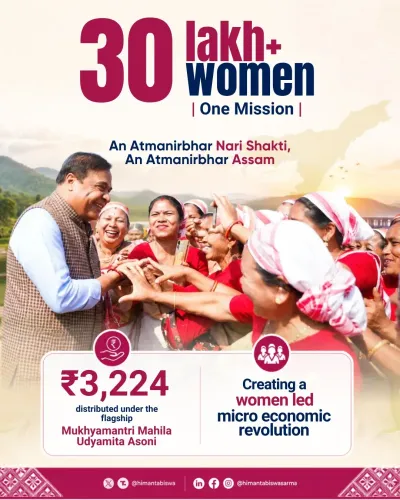
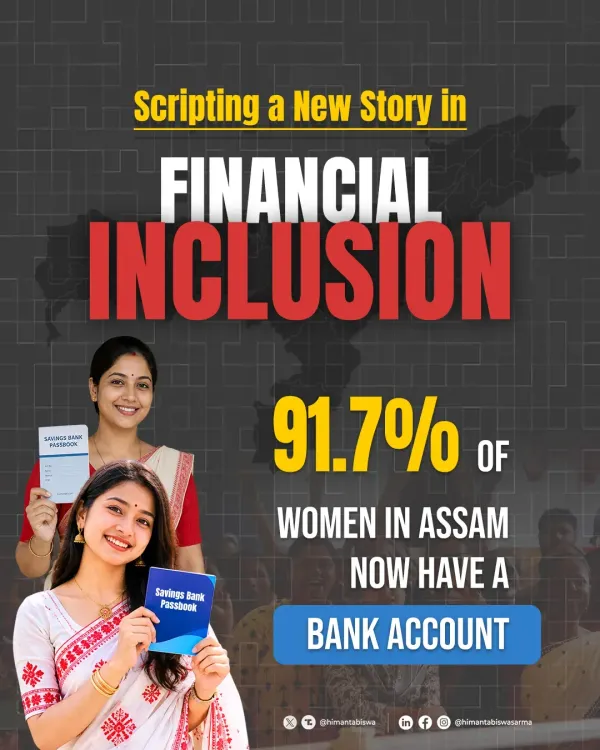
Assam Chief Minister Himanta Biswa Sarma announced on June 2, 2026, that 91.7 per cent of women in the state are now within the formal banking system, framing the milestone as a core achievement of the government's Nari Shakti empowerment agenda and financial inclusion drive.
Key Takeaways
Himanta Biswa Sarma announced on June 2, 2026 that 91.7 per cent of women in Assam are part of the formal banking system.
The Chief Minister linked the figure to the government's Nari Shakti agenda and commitment to household-level development.
The milestone builds on the Pradhan Mantri Jan Dhan Yojana , launched in August 2014 , which expanded banking access with a focus on women.
Higher banking inclusion directly supports self-help groups and micro-credit ecosystems in Assam's rural districts.
Independent verification of the 91.7 per cent figure from state or RBI data is awaited.
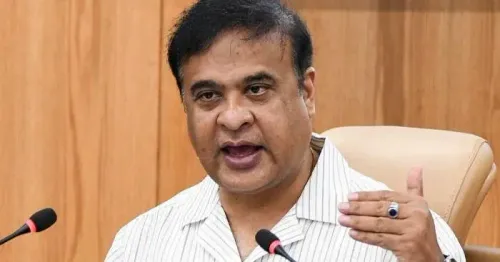
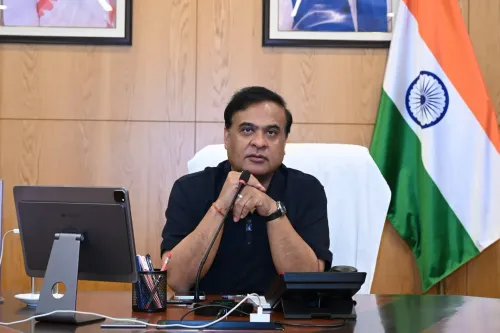
Assam Chief Minister Himanta Biswa Sarma on Tuesday, June 2, 2026, highlighted a significant milestone in the state's financial inclusion drive, stating that 91.7 per cent of women in Assam are now part of the formal banking system — a figure he described as a testament to the government's commitment to empowering women and ensuring development reaches every household.
Context
In his post, Sarma framed banking access as a foundational step for family-level progress, writing: 'When a woman gains access to banking, an entire family moves forward.' The 91.7 per cent coverage figure, if borne out by official data, would place Assam among the better-performing states on gender-disaggregated financial inclusion metrics in India's northeast. The Chief Minister linked the achievement to the government's Nari Shakti agenda — a broad umbrella for women-centric welfare and empowerment initiatives.
Policy Backdrop
The push for women's banking inclusion in Assam sits within the larger architecture of the Pradhan Mantri Jan Dhan Yojana (PMJDY), the Central government's flagship financial inclusion programme launched in August 2014. PMJDY was designed to provide universal access to banking services, with a specific emphasis on opening zero-balance accounts for women in rural and semi-urban areas. Over the decade since its launch, the scheme has been credited with drawing millions of previously unbanked women into the formal financial system across India.
In Assam and other Northeastern states, the BJP-led governments have consistently highlighted Jan Dhan coverage and digital banking metrics as indicators of welfare delivery. The state has also pushed complementary programmes around self-help groups and micro-credit access, which depend on women holding individual bank accounts to function effectively.
Stakeholders and Impact
The direct beneficiaries are Assam's women — particularly those in rural districts where geographic isolation and low literacy historically kept them outside the formal economy. A bank account, even a basic one, enables direct benefit transfers, access to government subsidies, micro-loans, and insurance products. For rural households, a woman's entry into the banking system often means the family's first reliable savings mechanism and a point of contact with formal credit.
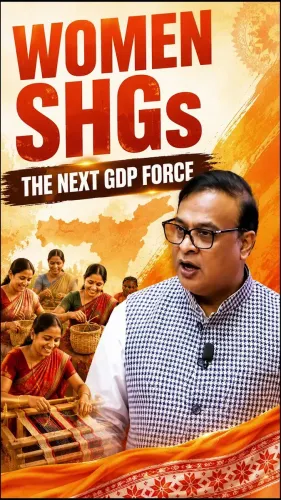
Self-help groups, which are central to Assam's rural credit ecosystem, also benefit directly: their functioning depends on member accounts being active within the banking system. Higher inclusion rates can therefore accelerate the formation and sustainability of such groups across the state.
What's Next
Attention will now turn to whether the state or the Reserve Bank of India releases gender-disaggregated banking data that independently corroborates the 91.7 per cent figure cited by Chief Minister Sarma. Observers will also watch for any new Assam government schemes aimed at deepening women's financial participation — particularly in digital literacy and micro-credit — that may follow from this milestone announcement. Sustained inclusion, as policy analysts note, requires not just account ownership but active and regular usage, making the next phase of the state's inclusion agenda as consequential as the first.
Point of View
The announcement positions Assam as a benchmark in the Northeast, reinforcing Sarma's profile as a development-oriented administrator ahead of any electoral cycle. The framing around 'Nari Shakti' also connects the data point to a broader gender-empowerment vocabulary that the BJP has cultivated nationally. The key test will be whether active account usage data, not just enrolment figures, supports the headline number.
NationPress
20 Sept 2026
Frequently Asked Questions
What percentage of women in Assam have bank accounts?
Chief Minister Himanta Biswa Sarma stated on June 2, 2026 , that 91.7 per cent of women in Assam are now part of the formal banking system, though independent verification of the figure is pending.
What is Nari Shakti in the context of Assam government schemes?
'Nari Shakti' is a broad policy umbrella used by the Assam government to describe women-centric welfare and empowerment initiatives, including financial inclusion drives, self-help group support, and access to government benefit transfers.
How does Jan Dhan Yojana help women in Assam?
The Pradhan Mantri Jan Dhan Yojana , launched in August 2014 , provides zero-balance bank accounts that allow women to receive direct benefit transfers, access micro-credit, and participate in self-help groups — all of which are central to rural welfare delivery in Assam .
Why is women's banking access important for rural families?
A bank account gives women in rural areas a formal savings mechanism, access to government subsidies and insurance, and eligibility for micro-loans — benefits that collectively improve household economic resilience and reduce dependence on informal moneylenders.
What will happen next after Assam's women banking milestone?
Observers are watching for official gender-disaggregated data from the state or the Reserve Bank of India to verify the 91.7 per cent figure, as well as any new Assam government programmes focused on digital literacy and active account usage among women.