CM Himanta Targets 10L Youth Jobs, 20-30% GDP Boost via SHGs

Synopsis
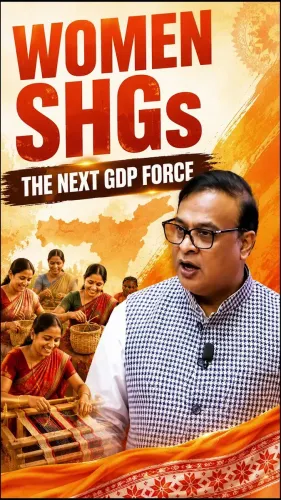
Chief Minister Himanta Biswa Sarma told the Assam Assembly on May 26, 2026, that fostering entrepreneurship among 10 lakh youth and empowering 40 lakh SHG women could single-handedly lift the state's GDP by 20 to 30 per cent, outlining a dual-track economic vision for the state.
Key Takeaways
CM Himanta Biswa Sarma presented a dual economic vision at the Assam Assembly on May 26, 2026 .
The plan targets entrepreneurship development for 10 lakh youth to drive job creation across the state.
Empowering 40 lakh SHG women to lead the rural economy is projected to boost Assam's GDP by 20 to 30 per cent .
Women's Self Help Groups in Assam operate under frameworks rooted in the National Rural Livelihoods Mission , launched in 2011 .
Concrete budget allocations and scheme guidelines are yet to be announced to operationalise the targets.
The approach mirrors inclusive economic strategies adopted by other northeastern states moving beyond agriculture and public employment.
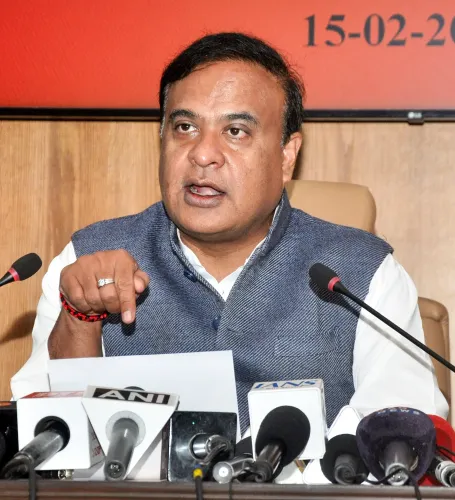
The Chief Minister's Office of Assam, on Tuesday, May 26, 2026, shared that Chief Minister Dr. Himanta Biswa Sarma outlined an ambitious economic agenda at the Assam Assembly, targeting entrepreneurship for 10 lakh youth and leveraging 40 lakh Self Help Group (SHG) women to drive a projected 20 to 30 per cent boost in Assam's GDP.
Context
Speaking at the Assam Assembly session, CM Himanta Biswa Sarma underscored what he called a 'transformative vision' for the state's economy. The two-pronged approach focuses on creating an entrepreneurship ecosystem for the youth and unlocking the economic potential of women-led rural collectives. The Chief Minister stated that empowering the state's 40 lakh SHG women to lead the rural economy 'can single-handedly boost Assam's GDP by 20% to 30%.'
Policy Backdrop
Self Help Groups have been a cornerstone of rural development policy in India since the launch of the National Rural Livelihoods Mission (NRLM) in 2011, which aimed to scale women-led collectives and rural enterprises across states, including Assam. Assam governments have consistently framed large-scale youth entrepreneurship and SHG expansion as twin levers for job creation and state GDP growth, particularly as the northeastern region seeks inclusive economic models beyond traditional agriculture and public-sector employment.
CM Sarma, who has helmed the state since May 2021, has repeatedly positioned economic self-reliance — through both formal enterprise and grassroots women's collectives — as a defining policy priority. The Assembly statement reinforces this broader arc, putting concrete numerical targets on ambitions that have been part of the state's development discourse for several years.
Stakeholders and Impact
The youth entrepreneurship target of 10 lakh individuals, if realised, would represent a significant structural shift in Assam's employment landscape, reducing dependence on government jobs and agriculture. Young people in semi-urban and rural pockets of the state stand to be the primary beneficiaries of any scheme guidelines or funding that follows from this vision.
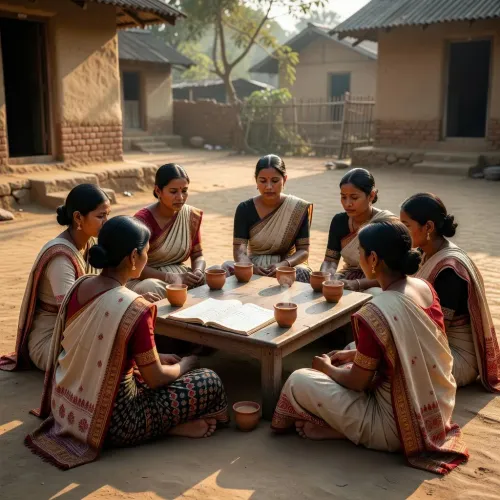
For the state's 40 lakh SHG women, the Chief Minister's framing elevates their role from beneficiaries of welfare programmes to active drivers of the rural economy. Women's collectives in Assam are already engaged in micro-finance, handicrafts, agri-processing, and local trade — sectors that could be scaled with targeted policy support. A GDP uplift in the range of 20 to 30 per cent, as claimed, would place Assam among India's faster-growing state economies.
What's Next
The immediate focus will be on whether the Assembly session produces concrete budget allocations, scheme guidelines, or institutional frameworks to operationalise the 10 lakh youth entrepreneurship target and the SHG scaling plan. Observers will watch the state's next annual economic survey for baseline data and measurable milestones against the GDP growth claim.
If follow-through matches the scale of the vision, Assam could emerge as a benchmark for northeastern states seeking inclusive, women-led rural growth models — a development with implications for national livelihood policy as well.
Point of View
If backed by allocations, could redefine Assam's development model. The 20-30 per cent GDP boost claim is ambitious by any measure and will face scrutiny unless followed by a credible implementation roadmap. Pairing youth entrepreneurship with women-led rural enterprise signals an intent to address both unemployment and structural rural stagnation simultaneously. The statement also positions Sarma ahead of potential electoral cycles, where economic delivery narratives carry significant weight in Assam's diverse constituency.
NationPress
24 Sept 2026
Frequently Asked Questions
What is CM Himanta Biswa Sarma's plan for Assam's economy?
CM Himanta Biswa Sarma has outlined a two-part economic plan: fostering entrepreneurship among 10 lakh youth for job creation, and empowering 40 lakh SHG women to lead the rural economy, which he claims could boost Assam's GDP by 20 to 30 per cent .
How can SHG women boost Assam's GDP by 20-30 per cent?
The Chief Minister's argument is that 40 lakh Self Help Group women in Assam, if actively empowered to lead rural economic activity — through micro-enterprise, agri-processing, trade, and finance — represent an untapped productive force large enough to deliver a significant GDP uplift. Specific scheme details are yet to be announced.
What is the target for youth entrepreneurship in Assam?
The Chief Minister's Office stated that CM Himanta Biswa Sarma has set a target of creating an entrepreneurship ecosystem for 10 lakh youth in Assam to drive job creation.
What are Self Help Groups (SHGs) in Assam?
Self Help Groups are women-led rural collectives that pool savings and access micro-credit for livelihood activities. In Assam, they operate under frameworks linked to the National Rural Livelihoods Mission , launched nationally in 2011 , and are active in sectors such as handicrafts, agri-processing, and local trade.
When did Himanta Biswa Sarma become Chief Minister of Assam?
Dr. Himanta Biswa Sarma became Chief Minister of Assam in May 2021 and has since focused on state economic development, employment generation, and rural empowerment as key policy priorities.