CM Fadnavis spends Diwali with Nagpur farmers, announces drought relief
Synopsis
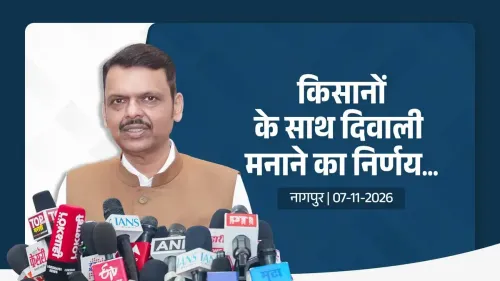
Maharashtra CM Devendra Fadnavis spent Diwali at a Nagpur farmer's home in Lohara Savanga, then announced key drought-relief steps: a borewell ban lifted till December 15, priority funding for stalled Jal Jeevan Mission works, expanded wire-fencing, and direct crop-loss relief for Vidarbha farmers.
Key Takeaways
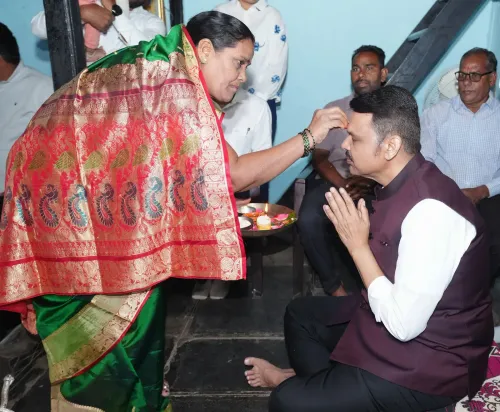
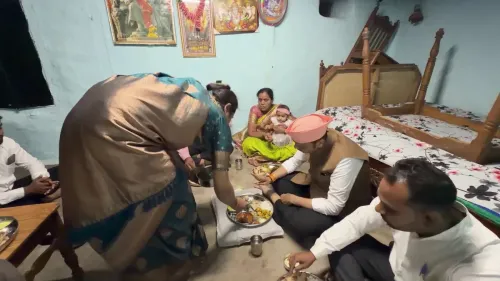
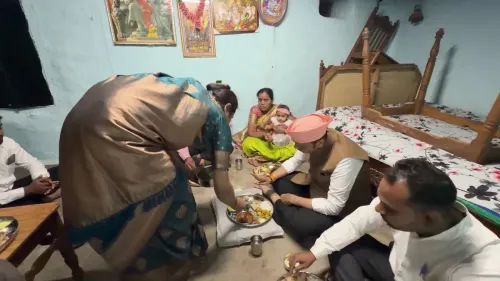
Overnight Diwali stay: CM Fadnavis spent the night at farmer Rambhau and Arunatai Balpande's home in Lohara Savanga, Nagpur district , participating in the bhaubij and aukshan rituals.
Borewell ban lifted: The ban on digging or deepening borewells for agricultural and tree-survival purposes has been temporarily lifted until 15 December 2026 given acute drought conditions.
Jal Jeevan Mission catch-up: Sites where over 75 per cent of water-connection work is complete will receive immediate funds; all remaining sites will be completed in phases.
Wire-fencing expansion: The tar kunpan yojana will be widened, with forest-edge farms given priority to protect crops from wildlife damage.
Direct crop-loss inspection: Fadnavis personally visited fields in Narkhed and Kalmeshwar talukas to assess drought damage and committed to direct farmer relief.
Veterinary clinic review: The District Council CEO was directed to urgently assess the need for new animal clinics across the district.
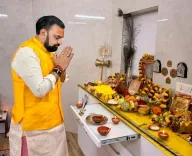
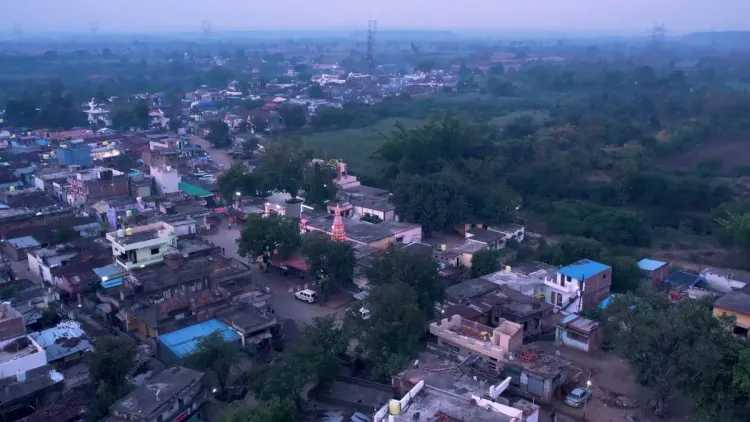
In a move that blurred the line between governance and human connection, Maharashtra Chief Minister Devendra Fadnavis spent Diwali not in a government residence but on the farm of a family in Lohara Savanga village, Nagpur district — waking at dawn for a ritual bath, receiving blessings from women of the household, and then pivoting to announce a clutch of drought-relief measures for Vidarbha's battered farming communities.
Fadnavis stayed overnight at the home of farmers Arunatai Balpande and Rambhau Balpande, participants in one of Maharashtra's oldest folk traditions where a sister performs the bhaubij ritual — anointing and blessing her brother. 'The true joy of Diwali lies in sharing the joys and sorrows of one's own people,' he wrote, describing the village dawn as 'especially refreshing' after the overnight stay. The affection of the villagers, he added, brought 'special happiness and contentment.'
Borewell ban lifted until December 15 to save standing crops
The symbolic warmth gave way to hard policy before the morning was over. With Vidarbha in the grip of acute drought, Fadnavis announced a temporary lifting of the ban on digging borewells — specifically for keeping trees alive and sustaining farm work — valid until 15 December 2026. The relaxation covers both deepening existing borewells and sinking new ones. 'Even though granting permission is difficult, the decision was taken keeping in mind the needs of farmers,' he said. Maharashtra has historically regulated borewell drilling in drought-prone zones to protect groundwater; targeted, time-bound relaxations of this kind have been used in previous acute scarcity cycles.
Jal Jeevan Mission gaps, animal-fodder shortage on the table
Fadnavis met elected local representatives from the taluka before departing and directly addressed two chronic rural pain points: drinking water scarcity and the shortage of fodder for livestock. He assured that villages proactively working to solve these issues would receive 'complete government support.' On the Jal Jeevan Mission — the central programme launched in 2019 to deliver piped tap water to every rural household — he acknowledged that funding shortfalls had left some works incomplete. Sites where more than 75 per cent of work is already done will receive priority funding to reach completion; remaining sites will follow in phases.
Instructions were also issued to the District Council's Chief Executive Officer to urgently review the need for new veterinary clinics across the district. Desilting of water bodies is already under way, with the silt to be used to enrich farmland — a dual-purpose intervention that is both a drought-mitigation and a soil-health measure.
Field visits to Sonegarh Rithi and Kohali reveal crop devastation
Moving beyond Lohara Savanga, Fadnavis visited farmer Dilip Sarode's field at Sonegarh Rithi in Narkhed taluka to personally inspect crop losses caused by drought. He then travelled to Kohali in Kalmeshwar taluka to assess the condition of crops on Baburao Kale's farm. The ground-level inspections were followed by a commitment that the government has already initiated the 'necessary action' for relief and that direct assistance to farmers is being processed. 'In this difficult time, my farmer brothers are not alone,' he said. 'The government stands firmly behind them to help them recover and stand again.'
Wire-fencing scheme to expand for forest-edge farms
Wildlife damage to crops — a persistent and legally complex problem across forest-adjacent Vidarbha farmland — was also addressed. Fadnavis pledged to expand the wire-fencing scheme (tar kunpan yojana), with priority given specifically to farms bordering forest areas. The expansion is framed as a structural solution to a problem that has long forced farmers to choose between protecting their livelihoods and complying with wildlife protection norms.
Cabinet Minister Chandrashekhar Bawankule, MLAs Dr Rajeev Potdar, Dr Ashish Deshmukh, and Charansingh Thakur accompanied the Chief Minister. 'I will always strive to bring joy back to the farmer's face, prosperity to his family, and a new light of hope to his life,' Fadnavis wrote — a closing line that doubles as the governing promise his December 15 deadline will be measured against.
Point of View
But the policy payload he delivered the same morning — a time-bound borewell relaxation, a Jal Jeevan Mission funding push, and a wire-fencing expansion — gives the visit operational weight beyond optics. Vidarbha has been the pressure point of Maharashtra agrarian politics for decades, and each government has sought to visibly 'own' the region's distress; the December 15 borewell deadline now becomes a concrete accountability marker. The bundling of welfare ritual with on-the-spot policy announcements reflects a governing style Fadnavis has consistently deployed since his first term: ground-level visibility as a credibility signal in a region where farmer grievances can quickly become electoral liabilities.
NationPress
8 Nov 2026
Frequently Asked Questions
Why did CM Fadnavis stay at a farmer's home on Diwali?
CM Devendra Fadnavis spent Diwali night at the home of farmers Rambhau and Arunatai Balpande in Lohara Savanga, Nagpur district, to connect directly with rural communities and understand their problems during the ongoing drought.
What is the Maharashtra borewell ban relaxation announced by Fadnavis?
Fadnavis announced that the ban on digging new borewells or deepening existing ones for agricultural and tree-survival purposes has been temporarily lifted until 15 December 2026, given the severity of the current drought in Vidarbha.
What is the status of Jal Jeevan Mission works in Nagpur district?
Some Jal Jeevan Mission works in rural Maharashtra remain incomplete due to funding shortfalls. Fadnavis stated that sites with more than 75 per cent of work done will receive immediate priority funding, with remaining sites to be completed in stages.
What is the wire-fencing scheme Fadnavis mentioned for farmers?
The wire-fencing scheme ( tar kunpan yojana ) is a Maharashtra government programme to protect farmland from wildlife damage; Fadnavis pledged to expand it with priority given to farms bordering forest areas in Vidarbha.
Which areas in Nagpur did CM Fadnavis visit to inspect drought damage?
Fadnavis visited farmer Dilip Sarode's field at Sonegarh Rithi in Narkhed taluka and farmer Baburao Kale's farm at Kohali in Kalmeshwar taluka to personally inspect crop losses caused by the drought.