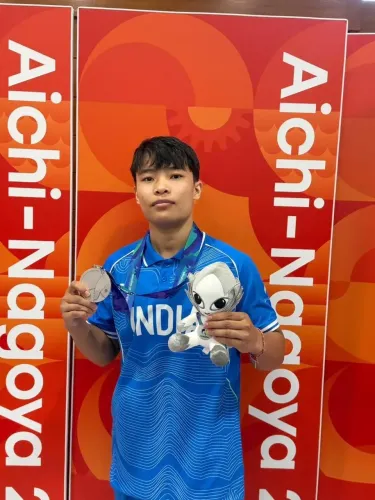
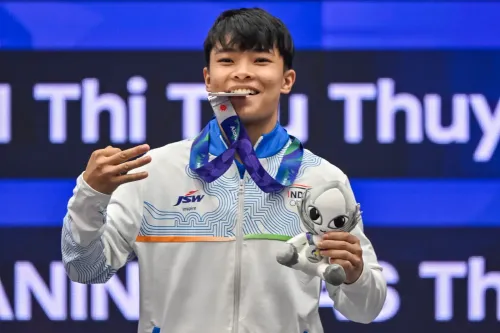
Shekhawat hails Roshbina Devi's third Asian Games medal

Synopsis
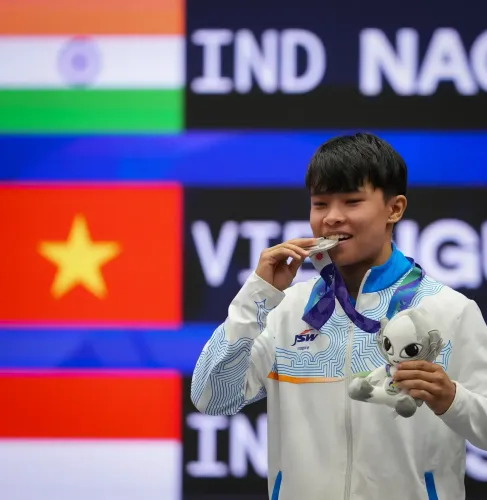
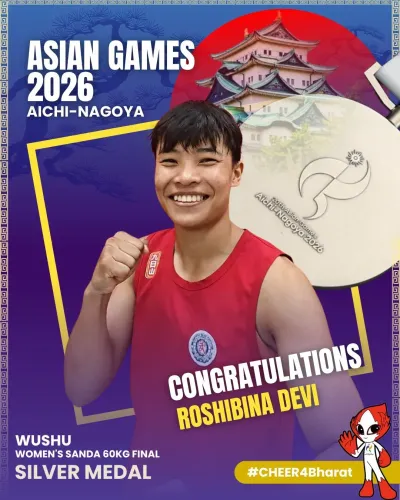
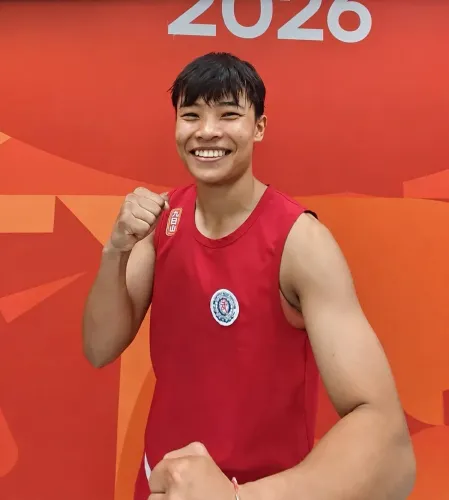
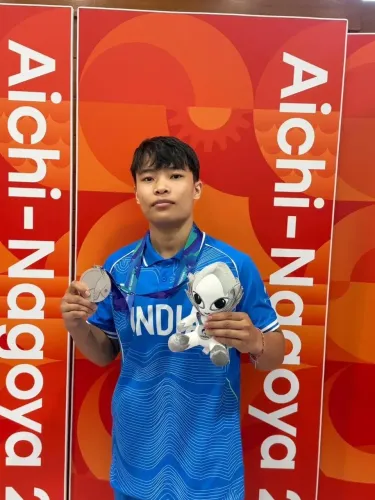
Roshbina Devi claims silver in women's 60 kg wushu Sanda at the 2026 Asian Games, completing a remarkable three-medal haul across the 2018, 2022, and 2026 editions. Union Minister Gajendra Singh Shekhawat praised her as a model of sustained excellence for Indian sport.
Key Takeaways
Roshbina Devi won silver in the women's 60 kg Sanda event at the 2026 Asian Games .
She has now won medals at three consecutive Asian Games : bronze in 2018, silver in 2022, and silver in 2026.
Union Culture and Tourism Minister Gajendra Singh Shekhawat publicly congratulated her on X, calling it proof of 'continuous outstanding performance.' Her three-peat spans eight years of elite continental competition in wushu Sanda.
India has maintained a consistent presence on the wushu podium at successive Asian Games editions.
Three Asian Games, three podium finishes — Roshbina Devi has written her name into Indian wushu history. Union Culture and Tourism Minister Gajendra Singh Shekhawat took to X on Thursday, September 24, 2026, to celebrate her silver medal in the women's 60 kg Sanda event at the 2026 Asian Games, calling her consecutive medals across three editions proof of 'continuous outstanding performance.'
A bronze, a silver, and now silver again
Shekhawat's post lays out the arc with striking clarity: a bronze at the 2018 Asian Games, a silver in 2022, and now a silver once more in 2026. For an athlete competing in wushu Sanda — a full-contact combat discipline that tests striking power, footwork, and ring control — sustaining that level across a span of eight years is no small feat. Selection continuity and consistent training infrastructure in the discipline have clearly held.
Wushu's quiet place in India's Asian Games story
Wushu does not command the loudest headlines, but India's athletes in the sport have quietly accumulated medals at successive Asian Games editions. Roshbina Devi's three-peat now stands as the clearest single-athlete expression of that consistency. Her journey also underlines how repeated exposure to elite international competition — rather than a single breakthrough — shapes a champion's career.
Ministers outside the sports portfolio congratulating individual athletes on social media has become a familiar rhythm of India's major Games cycles, amplifying podium moments to wider audiences and signalling whole-of-government pride in the country's sporting returns.
As India's final medal tally from the 2026 Asian Games continues to take shape, Roshbina Devi's silver adds another chapter to a personal record that now spans nearly a decade of continental competition — a record that will be hard to match inside Indian wushu for years to come.
Point of View
2022, and 2026 is one of the more durable individual narratives in India's Asian Games history, achieved in a discipline that rarely gets marquee coverage. Shekhawat's post is part of a broader pattern of the Modi government using ministerial social-media reach to spotlight non-mainstream sports victories — a soft-power amplification strategy that costs little but meaningfully expands the visibility of athletes outside cricket and athletics. The sustained medal flow in wushu also points to structural continuity in training pathways that outlasted any single policy cycle. Whether India can build similar multi-edition consistency in other combat sports remains the more consequential question for the country's emerging Games infrastructure.
NationPress
24 Sept 2026
Frequently Asked Questions
How many medals has Roshbina Devi won at the Asian Games?
Roshbina Devi has won three medals at the Asian Games: a bronze in 2018, a silver in 2022, and a silver in 2026, all in the women's 60 kg wushu Sanda category.
What is wushu Sanda?
Wushu Sanda is a full-contact combat sport derived from Chinese martial arts. Competitors score points through punches, kicks, and takedowns within a raised ring, and it has been part of the Asian Games programme for several editions.
What did Gajendra Singh Shekhawat say about Roshbina Devi?
Shekhawat congratulated Roshbina Devi on her 2026 Asian Games silver medal, noting that winning medals at three consecutive Asian Games editions is proof of her continuous outstanding performance.
Which state is Roshbina Devi from?
Roshbina Devi is from Manipur, a state that has produced a significant number of India's combat-sport athletes competing at the international level.
When are the 2026 Asian Games being held?
The 2026 Asian Games are ongoing as of September 2026. India's medal tally across all sports, including wushu, is still accumulating.