Owaisi: India belongs to all, not to khaki shorts or lathis
Synopsis
AIMIM president Asaduddin Owaisi posted in Hindi on 1 November 2026, declaring India belongs to all its citizens and not to those in 'khaki shorts' or those who wield lathis — a pointed reference to RSS symbolism and majoritarian enforcement, consistent with his decade-long constitutional critique.
Key Takeaways
Asaduddin Owaisi posted on X on 1 November 2026 in Hindi, asserting India belongs to every citizen, not to ideological organisations or street enforcers.
The phrase 'khaki chaddi' is widely understood as a reference to the RSS , whose volunteers historically wore khaki shorts as their uniform before switching to brown trousers in 2016 .
The 'latth phirane wale' (lathi-wielders) imagery invokes a broader critique of extra-constitutional coercion framed as cultural nationalism.
Owaisi has made near-identical constitutional arguments in Parliament and public addresses from 2014 to 2024 , making this post part of a consistent political identity.
AIMIM has built its national platform around the argument that the Indian state cannot be claimed by any single ideological group.
Responses from BJP and RSS-aligned leaders are likely, and may extend to Parliament if the exchange escalates.
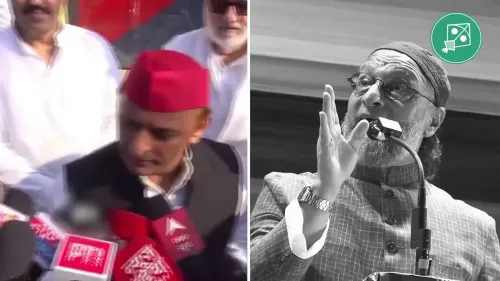
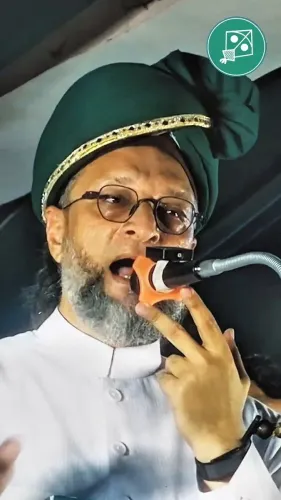
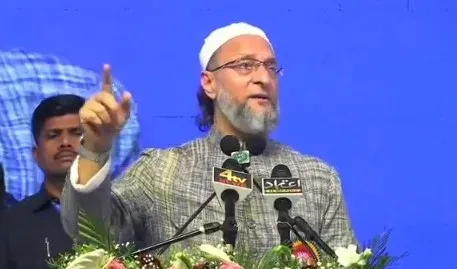
A six-word salvo landed on Sunday, 1 November 2026 — and every syllable was aimed at a recognisable symbol. AIMIM president Asaduddin Owaisi, Lok Sabha MP from Hyderabad, posted in Hindi on X, declaring that India belongs to every citizen — not to those in 'khaki shorts' or those who wield lathis.
The post reads: 'Bharat desh sabka hai, kisi khaki chaddi ya latth phirane wale ka nahi hai' — 'This country belongs to everyone, not to anyone in khaki shorts or those who swing lathis.' The imagery is pointed: 'khaki chaddi' has long been a colloquial, often derisive, reference to the Rashtriya Swayamsevak Sangh (RSS), whose volunteers have traditionally worn khaki shorts as part of their uniform. The 'lathi' reference invokes street-level muscular enforcement — a recurring anxiety in debates over majoritarianism.
A line Owaisi has drawn before — and keeps drawing
This is not a one-off. Across Parliament sessions and public addresses between 2014 and 2024, Owaisi has repeatedly anchored his political identity to one constitutional argument: that the Indian state is not the property of any ideological organisation. The November 2026 post compresses that argument into a single, blunt sentence — the kind built for share, not for debate.
AIMIM, the All India Majlis-e-Ittehadul Muslimeen, has built its national profile largely on this register: confrontational, constitutionally framed, and aimed squarely at what the party describes as Hindutva overreach. Owaisi's social-media presence amplifies that register far beyond his Hyderabad constituency, turning each post into a national intervention.
The symbolism the post is targeting
The RSS retired its iconic khaki shorts as the official uniform in 2016, replacing them with brown trousers — but the 'khaki chaddi' epithet has outlasted the uniform itself, remaining politically loaded shorthand for Hindu-nationalist street organisation. By invoking it alongside lathi-wielders, Owaisi is gesturing at a specific critique: that coercive, extra-constitutional force is being dressed up as cultural patriotism.
The exact trigger for Sunday's post was not confirmed at the time of publication. But the broader context is consistent: India's national debate on secularism, minority rights, and who gets to define the nation's identity has intensified through 2026, with competing claims playing out across legislatures, courts, and social media simultaneously.
What follows from here
Posts of this tenor from Owaisi typically draw sharp responses from BJP and RSS-aligned voices — countercharges of appeasement, or demands for clarification in Parliament. Whether this one escalates to a floor statement or stays a social-media exchange will depend on the political weather in the coming days.
One thing is certain: Owaisi has no intention of softening this argument. He has been making it for over a decade, and he keeps finding new ways to make it impossible to ignore.
Point of View
Which maximises both reach and blowback, the latter being politically useful for AIMIM's base-consolidation. Taken across a decade of identical framing, these interventions are less about changing minds than about staking claim: Owaisi is positioning AIMIM as the loudest, most uncompromising voice insisting that constitutional secularism is non-negotiable. The longer the national debate on identity and belonging stays live, the more durable that position becomes.
NationPress
1 Nov 2026
Frequently Asked Questions
What did Asaduddin Owaisi say in his November 2026 post?
Owaisi wrote in Hindi: 'Bharat desh sabka hai, kisi khaki chaddi ya latth phirane wale ka nahi hai' — meaning India belongs to all its citizens, not to those wearing khaki shorts or those who wield lathis. The post was shared on 1 November 2026 .
Who is Owaisi referring to with 'khaki chaddi'?
'Khaki chaddi' is a colloquial and often derisive reference to the RSS (Rashtriya Swayamsevak Sangh) , whose volunteers wore khaki shorts as part of their traditional uniform before the organisation switched to brown trousers in 2016 .
What is AIMIM's political position on secularism?
AIMIM (All India Majlis-e-Ittehadul Muslimeen) consistently argues that the Indian Constitution guarantees equal citizenship regardless of religion, and that no ideological or religious organisation has ownership over the Indian state. Owaisi has reiterated this position in Parliament multiple times since 2014 .
Has Owaisi made similar statements before?
Yes. Between 2014 and 2024 , Owaisi repeatedly stated in Parliament and public speeches that India belongs to all citizens under the Constitution — not to any single ideological group. The November 2026 post is consistent with this long-standing position.
Is the RSS still associated with khaki shorts?
The RSS officially replaced khaki shorts with brown trousers in 2016 , but the 'khaki chaddi' phrase has persisted in political discourse as a symbolic shorthand for the organisation and its ideological network.