Owaisi Calls Sangh Parivar's Cultural Nationalism Contrary to Indian Nationalism
Synopsis
AIMIM president Asaduddin Owaisi has publicly declared that the Sangh Parivar's 'Cultural Nationalism' — which he equates with Hindutva Nationalism — is contrary to Indian Nationalism, reigniting a foundational ideological debate ahead of the monsoon parliamentary session.
Key Takeaways
Asaduddin Owaisi , AIMIM president and Hyderabad MP, posted on 2 July 2026 that the Sangh Parivar's Cultural Nationalism is contrary to Indian Nationalism.
He explicitly equated the Sangh Parivar's 'Cultural Nationalism' with Hindutva Nationalism , framing it as an ongoing ideological pattern.
The RSS , founded in 1925 , is the ideological core of the Sangh Parivar and has long advocated Hindu cultural consolidation as central to Indian nationhood.
Vinayak Damodar Savarkar's 1923 articulation of Hindutva explicitly distinguished it from territorial or civic Indian nationalism.
The Indian Constitution (1950) enshrined secularism and composite nationalism — the framework Owaisi invokes against cultural nationalism.
AIMIM , established in 1958 in Hyderabad , has consistently contested majoritarian cultural policies as incompatible with constitutional pluralism.
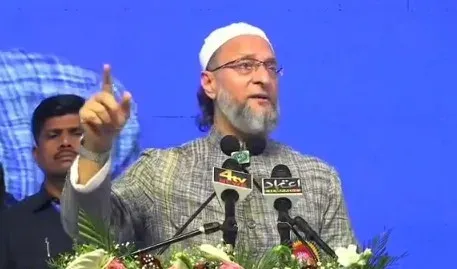
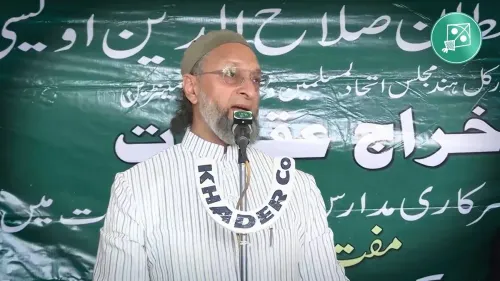
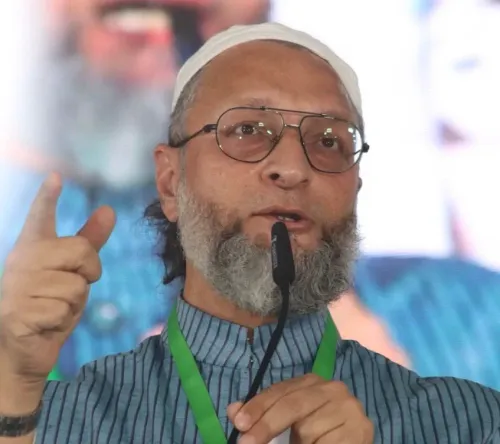
AIMIM president Asaduddin Owaisi on Thursday, 2 July 2026, sharply criticised the Sangh Parivar, asserting that its brand of 'Cultural Nationalism' — which he identified as Hindutva Nationalism — stands in direct opposition to the idea of Indian Nationalism. The Hyderabad MP posted the remark on X, framing it as 'another example' of an ideological pattern he attributes to the broader Hindu nationalist ecosystem.
Context
Owaisi wrote: 'This is another example of Sangh Parivar 'Cultural Nationalism ie Hindutva Nationalism' which is contrary to Indian Nationalism.' While the specific incident he was responding to was not identified in the post itself, the statement reflects a long-held position of AIMIM — that the Rashtriya Swayamsevak Sangh (RSS) and its affiliated organisations promote a version of nationhood rooted in Hindu cultural identity that excludes religious minorities.
The Sangh Parivar is an umbrella of Hindu nationalist groups, with the RSS — founded in 1925 — at its ideological core. The Bharatiya Janata Party (BJP), the political arm of this ecosystem, has governed at the national level since 2014 and has consistently framed several of its cultural and social policies within a Hindutva-informed framework.
Policy Backdrop
The ideological fault line Owaisi invokes has deep historical roots. Vinayak Damodar Savarkar articulated the concept of Hindutva in his 1923 work Essentials of Hindutva, explicitly distinguishing it from a territorial or civic definition of Indian nationhood. Critics of this framework, including minority-rights advocates and secular opposition parties, argue it subordinates India's constitutional pluralism to a majoritarian cultural identity.
The Indian Constitution, adopted in 1950, enshrined secularism and composite nationalism as foundational state principles. AIMIM, established in 1958 in Hyderabad, has consistently anchored its political identity in the defence of these constitutional values against what it describes as majoritarian overreach. Owaisi has been one of the most vocal parliamentary voices on this front.
Stakeholders and Impact
Owaisi's remark directly concerns Muslim minorities and other religious communities who have raised concerns about the practical implications of cultural nationalism policies on civic equality. Secular opposition parties have at various points echoed similar arguments, contending that the conflation of Hindu cultural identity with Indian national identity marginalises citizens who do not fit that cultural mould.
For the Sangh Parivar and the BJP, cultural nationalism is presented not as exclusionary but as a civilisational affirmation — a distinction the two sides have debated in Parliament, courts, and public discourse for decades. Owaisi's post adds to a recurring cycle of charge and counter-charge that intensifies around legislative sessions and contentious cultural events.
What's Next
Responses from BJP spokespersons are likely in the coming hours, given the directness of Owaisi's challenge. With the monsoon session of Parliament approaching, debates on constitutional values, cultural policy, and minority rights are expected to feature prominently. Owaisi's post signals that AIMIM intends to keep the ideological contest between Hindutva nationalism and secular composite nationalism at the centre of political discourse — a contestation that has defined Indian politics since independence and shows no sign of resolution.
Point of View
' he frames Hindutva cultural nationalism not as an aberration but as a systemic pattern, a framing designed to sustain minority-community political mobilisation. The timing, ahead of a monsoon parliamentary session, suggests a deliberate attempt to set the agenda for legislative debates on constitutional values and cultural policy. Whether the BJP responds substantively or dismisses the remark as routine opposition rhetoric will itself be a signal of how the ruling establishment wishes to engage the nationalism debate in the current political moment.
NationPress
1 Oct 2026
Frequently Asked Questions
What did Owaisi say about Sangh Parivar's cultural nationalism?
Owaisi stated that the Sangh Parivar's 'Cultural Nationalism ie Hindutva Nationalism' is contrary to Indian Nationalism, posting the remark on X on 2 July 2026.
What is the difference between Hindutva nationalism and Indian nationalism?
Hindutva nationalism, as articulated by Savarkar in 1923, roots national identity in Hindu cultural heritage, whereas Indian nationalism — as reflected in the 1950 Constitution — is based on secular, civic, and composite principles that encompass all religious communities.
What is the Sangh Parivar?
The Sangh Parivar is an umbrella of Hindu nationalist organisations anchored by the RSS, which was founded in 1925, and includes the BJP as its political arm.
Why does AIMIM oppose Hindutva cultural nationalism?
AIMIM, founded in 1958 to represent Muslim political interests, argues that Hindutva cultural nationalism is exclusionary and incompatible with the secular and pluralist framework of the Indian Constitution.
What is the significance of Owaisi's statement ahead of the monsoon session?
The statement is seen as an attempt to place the ideological debate between Hindutva nationalism and constitutional secularism at the centre of parliamentary discourse during the upcoming monsoon session.