Owaisi Slams Govt Over Russians Recruiting Indians, Sailors Incident

Synopsis
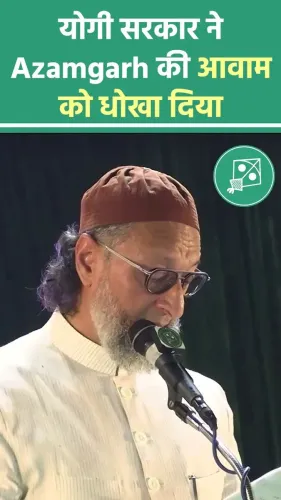
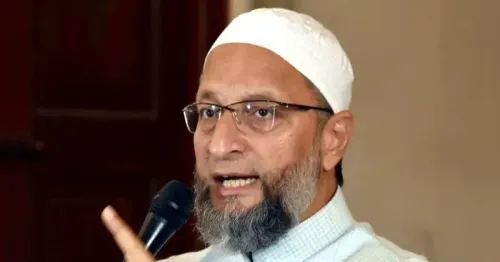
AIMIM president Asaduddin Owaisi on June 11, 2026, accused the government of historic weakness, pointing to Indians dying in Russian service, alleged suppression of Galwan Valley depictions in cinema, and a fresh incident involving Indian sailors in international waters.
Key Takeaways
Owaisi asked: 'Has India had a weaker government in its history?' in a direct attack on the central government's foreign policy record.
He cited the continued recruitment of Indian nationals as soldiers by Russia , with some killed, and said the government was 'helpless.' He alleged the government does not allow films to name China or depict the Galwan Valley clash of June 2020 .
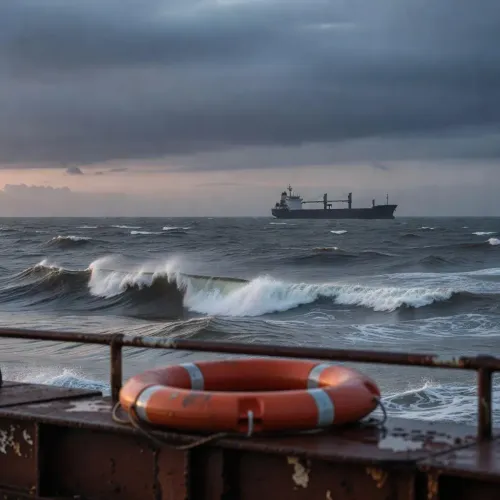
He referenced a fresh, unspecified incident involving Indian sailors in international waters as a third example of government failure.
The post, ending with 'JAI HIND,' framed the critique as patriotic concern over India's standing and the safety of its citizens abroad.
Opposition pressure in Parliament on citizen safety abroad is expected to intensify in the wake of the post.
AIMIM president Asaduddin Owaisi on Thursday, June 11, 2026, sharply attacked the central government over what he described as a pattern of foreign-policy weakness, citing the continued recruitment of Indian nationals as soldiers by Russia, alleged censorship around the Galwan Valley clash with China, and a fresh incident involving Indian sailors in international waters.
Context
Owaisi, replying to his own earlier post, posed a pointed question: 'Has India had a weaker government in its history?' He listed three specific grievances in succession — Indian recruits dying in Russia's military operations, the government's alleged reluctance to allow films that name China or depict the Galwan battle, and an unspecified but recent incident affecting Indian merchant navy sailors in international waters. He closed with 'JAI HIND,' signalling that his critique was framed as patriotic concern rather than partisan point-scoring.
The Hyderabad MP has consistently used his parliamentary platform and social media presence to question the government's handling of citizen safety abroad and its posture toward both Russia and China. Thursday's post consolidates those threads into a single, blunt indictment.
Policy Backdrop
Reports of Indian nationals — many allegedly misled about the nature of the work — being recruited into support or combat roles in the Russia-Ukraine conflict have drawn periodic attention in Parliament. The Ministry of External Affairs has previously acknowledged some cases and said it raised the matter with Moscow, though critics have argued the response was slow and inadequate.
The Galwan Valley clash of June 2020 — in which Indian Army soldiers and People's Liberation Army troops fought hand-to-hand, resulting in Indian fatalities — remains a sensitive subject. Owaisi's claim that the government discourages cinematic depictions of the battle reflects a broader debate about how the state manages public memory of the episode. India-Russia ties, meanwhile, stretch back decades through defence procurement and energy cooperation, a partnership that successive governments have carefully maintained even as New Delhi navigated Western pressure following Russia's 2022 invasion of Ukraine.
Stakeholders and Impact
At the centre of Owaisi's criticism are two distinct groups of vulnerable Indian nationals: young men, often from economically marginal backgrounds, who have been recruited — sometimes under false pretences — into overseas military or paramilitary roles; and Indian merchant navy sailors, whose safety in international waters depends on diplomatic resolve. Both groups have limited recourse when the state is perceived as unwilling or unable to intervene forcefully.
Opposition parties and civil society groups have repeatedly demanded a clearer government accounting of how many Indian citizens have been recruited by foreign militaries, how many have been killed or injured, and what specific diplomatic steps have been taken. The sailors' incident referenced in the post adds fresh urgency to those demands, though the precise details of that episode remain unverified at this stage.
What's Next
Parliamentary questions on citizen safety abroad are expected to intensify, particularly if the sailors' incident gains wider public attention. Any new bilateral mechanism between India and Russia specifically addressing the recruitment of Indian nationals would be closely watched. Owaisi's post is likely to be cited in opposition coordination ahead of the next session of Parliament, where the government will face pressure to provide a detailed account of both the sailors' case and the broader Russia recruitment issue. How New Delhi responds — or chooses not to — will test its stated commitment to protecting Indian nationals wherever they are.
Point of View
Galwan memory management, and the sailors' incident — into a single narrative of state incapacity, a framing designed to be difficult for the government to rebut piecemeal. The 'JAI HIND' sign-off is a calculated rhetorical move, pre-empting any nationalist counter-attack by wrapping the critique in patriotic language. This fits a broader pattern in which opposition voices have found more traction on citizen-safety-abroad issues than on conventional foreign-policy debates, precisely because the human cost is tangible and personal. The sailors' incident, if it gains traction, could become the sharpest test yet of whether the government's diplomatic bandwidth with Moscow extends to protecting ordinary Indian workers.
NationPress
26 Oct 2026
Frequently Asked Questions
Why is Owaisi criticising the government over Russia?
Owaisi says the government has been 'helpless' to stop Russia from recruiting Indian nationals as soldiers who are then killed, a situation he describes as evidence of historic governmental weakness.
What is the Galwan Valley incident Owaisi mentioned?
The Galwan Valley clash occurred in June 2020 when Indian Army soldiers and Chinese PLA troops clashed in a deadly hand-to-hand confrontation in Ladakh , resulting in Indian fatalities. Owaisi alleges the government discourages films from depicting or naming this battle.
What happened to Indian sailors in international waters?
Owaisi referenced an incident involving Indian sailors in international waters as a third example of government failure, though the precise details of this episode have not been independently verified.
Has the Indian government responded to Indians being recruited by Russia?
The Ministry of External Affairs has previously acknowledged cases of Indian nationals being recruited into roles connected to the Russia-Ukraine conflict and said the matter was raised with Moscow , but critics including Owaisi argue the response has been insufficient.
What is AIMIM and who is Asaduddin Owaisi?
Asaduddin Owaisi is the president of the All India Majlis-e-Ittehadul Muslimeen (AIMIM) and the sitting Lok Sabha MP from Hyderabad , known for his vocal positions on national security, minority rights, and foreign policy.