Owaisi Slams Trump, Netanyahu, Questions Govt on Indian Deaths
Synopsis
AIMIM president Asaduddin Owaisi on June 13, 2026, attacked Donald Trump and Benjamin Netanyahu over a global crisis and questioned the Modi government's silence on reported deaths of Indian nationals, highlighting tensions in India's foreign policy stance.
Key Takeaways
Asaduddin Owaisi publicly criticised Donald Trump and Benjamin Netanyahu on June 13, 2026 over what he called a global crisis.
Owaisi simultaneously questioned the central government's silence on reported deaths of Indian nationals abroad.
India has expanded defence and technology cooperation with Israel since 2014 while formally backing Palestinian statehood in multilateral forums.
AIMIM has consistently criticised the BJP-led government's foreign policy alignment with Washington and Tel Aviv as undermining India's non-aligned tradition.
The Ministry of External Affairs had not issued a public statement on Indian casualties at the time of Owaisi's post.
Parliamentary scrutiny is expected to intensify during the monsoon session on India's response to the crisis.
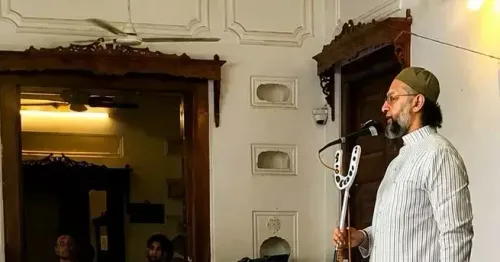
AIMIM president Asaduddin Owaisi on Saturday, June 13, 2026, publicly attacked US President Donald Trump and Israeli Prime Minister Benjamin Netanyahu over what he described as a global crisis, while simultaneously pressing the central government to account for its silence on reported deaths of Indian nationals abroad.
Context
Owaisi, the Lok Sabha MP from Hyderabad, directed his criticism at both Washington and Tel Aviv, linking their conduct to a broader international crisis. In the same breath, he turned the lens on New Delhi, questioning why the Modi government had remained publicly silent on the deaths of Indian citizens caught in the crossfire of escalating global tensions.
The dual thrust of the statement — targeting foreign leaders while holding the domestic government accountable — is consistent with Owaisi's established pattern of using international crises to scrutinise India's foreign policy posture and its treatment of Indian expatriates and workers in conflict-affected regions.
Policy Backdrop
India has steadily deepened its strategic relationship with Israel since establishing a full embassy in 1992. Under the BJP-led government from 2014 onwards, defence, technology, and intelligence cooperation with Israel expanded significantly, even as New Delhi maintained formal rhetorical support for Palestinian statehood in multilateral forums.
This dual track has drawn persistent criticism from opposition voices, particularly those representing constituencies with large Muslim populations. Owaisi and AIMIM have repeatedly argued that India's growing alignment with Washington and Tel Aviv compromises its traditional non-aligned foreign policy credentials and leaves vulnerable Indian communities without adequate diplomatic protection.
The Ministry of External Affairs has historically been measured in its public responses during Middle East escalations, citing diplomatic sensitivities and ongoing consular processes when Indian nationals are affected.
Stakeholders and Impact
The most directly affected group is India's large expatriate community, particularly workers and professionals stationed across the Middle East, who face heightened risk when regional conflicts intensify. Their families — many based in Kerala, Telangana, Andhra Pradesh, and Uttar Pradesh — look to the government for swift consular action and transparent communication on casualties.
AIMIM, which holds seats in the Lok Sabha and several state assemblies, positions itself as a primary political voice for India's Muslim community. Owaisi's statement is likely to resonate with that constituency, which has watched events in conflict zones with acute concern. Opposition parties more broadly are expected to use any confirmed Indian casualties to demand a parliamentary statement from the External Affairs Ministry.
On the international dimension, criticism of Trump and Netanyahu by an Indian parliamentarian adds to a growing chorus of voices from the Global South questioning the conduct of US and Israeli leadership during the current crisis.
What's Next
Attention will now turn to the Ministry of External Affairs and whether it issues a formal statement on the status of Indian nationals caught in the crisis zone. The upcoming monsoon session of Parliament is expected to see sharp exchanges on India's foreign policy alignments, with opposition members likely to raise the issue of Indian casualties on the floor of the Lok Sabha.
Should the government continue to maintain public silence, Owaisi and allied opposition figures are positioned to escalate pressure through parliamentary questions and adjournment motions, keeping the issue in the national spotlight through the legislative calendar.
Point of View
The political cost of government silence rises sharply. This episode signals that foreign policy, long considered the BJP's strong suit, may face sustained opposition pressure through the monsoon legislative session.
NationPress
20 Sept 2026
Frequently Asked Questions
Why did Owaisi criticise Trump and Netanyahu?
Owaisi criticised Donald Trump and Benjamin Netanyahu over what he described as a global crisis, holding them responsible for its escalation. He has consistently questioned US and Israeli conduct during international conflicts, particularly when Indian nationals or Muslim communities are affected.
What did Owaisi say about Indian deaths abroad?
Owaisi questioned why the central government had remained silent on reported deaths of Indian nationals abroad amid the ongoing global crisis, demanding accountability from New Delhi on its consular response.
What is India's official position on the Israel-Palestine conflict?
India formally supports a two-state solution and Palestinian statehood in multilateral forums, but has simultaneously deepened defence and technology ties with Israel since 2014 under the BJP-led government .
What is AIMIM's stance on India's foreign policy toward Israel?
AIMIM and its president Asaduddin Owaisi have repeatedly argued that India's growing alignment with Israel and the United States undermines the country's non-aligned foreign policy tradition and leaves vulnerable Indian communities without adequate protection.
What parliamentary action is expected after Owaisi's statement?
Opposition members, including Owaisi , are expected to raise the issue of Indian casualties and government silence through parliamentary questions and adjournment motions during the upcoming monsoon session of Parliament .