Owaisi Questions Selfie Videos as Students Die by Suicide Over Paper Leaks

Synopsis
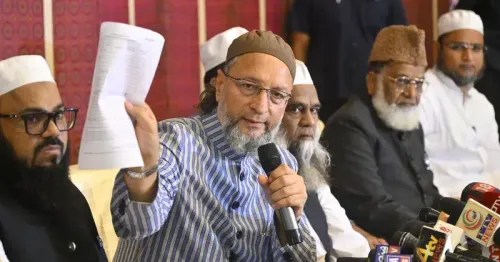
AIMIM president Asaduddin Owaisi on 29 July 2026 questioned whether government selfie videos serve students who died by suicide, linking the optics to the Anti-Paper Leak Bill and demanding accountability beyond punitive legislation.
Key Takeaways
Asaduddin Owaisi , AIMIM president and Hyderabad MP, posted on 29 July 2026 questioning whether selfie videos can substitute for lives lost to exam-related suicide.
His post directly references the Anti-Paper Leak Bill , challenging the government's communication strategy around it.
The Public Examinations (Prevention of Unfair Means) Act, 2024 prescribes up to 10 years' imprisonment and heavy fines for exam malpractice.
Recurrent paper-leak scandals since 2021 have been linked to student suicides and widespread protests across India.
Opposition voices argue punitive law alone does not address exam-related mental-health pressures or structural reform of the examination system.
Follow-up measures — including counselling mandates and independent exam oversight — remain pending in the legislative pipeline.
Student suicides linked to exam stress and paper-leak scandals have haunted India's competitive examination system for years — and AIMIM president Asaduddin Owaisi is demanding answers on Wednesday, 29 July 2026. In a sharp post on X, the Hyderabad Lok Sabha MP raised a pointed question: will selfie videos from officials bring back students who have died by suicide?
Owaisi's post links the optics of government communication — selfie-style video messaging — to the Anti-Paper Leak Bill, drawing a stark contrast between political imagery and the lives lost in the crisis it was meant to address. The question is rhetorical, but the grief behind it is real.
A Law Born from Scandal — and Student Deaths
The Public Examinations (Prevention of Unfair Means) Act, 2024 was Parliament's answer to a wave of paper-leak scandals that rocked national entrance tests from 2021 onwards. The law prescribes up to 10 years' imprisonment and heavy fines for exam malpractice. It was framed as a decisive break from a cycle that had seen question papers for major tests circulate on messaging apps before exam day, robbing millions of aspirants of a fair shot.
But punitive law and political optics are two different things. Recurrent leaks have driven students — many of them from modest families who spent years and savings preparing — to despair. Suicides linked to exam stress and the collapse of meritocratic trust have been documented across multiple cycles. Owaisi's post forces that human cost back into the frame.
The Gap Between Legislation and Mental-Health Reality
Opposition voices, including Owaisi's, have consistently argued that criminalising paper leaks addresses supply without touching demand — the crushing pressure placed on young aspirants by a system where a single exam can determine a lifetime's trajectory. Competitive exam aspirants and their families have called for counselling infrastructure, exam-stress mitigation guidelines from bodies like UGC and AICTE, and structural reform of the examination architecture itself.
None of that is delivered by a penal statute alone. And none of it is captured in a selfie video.
The next parliamentary session is expected to surface demands for follow-up measures — counselling mandates, whistleblower protections for exam staff, and independent oversight of question-paper logistics. Whether those demands translate into legislation or remain in the opposition's brief is the live question Owaisi is prodding the government to answer.
A law exists. Students are still dying. The selfie can wait.
Point of View
He targets the gap between government communication and governance outcomes, a line of attack that resonates with aspirant-class voters who feel abandoned by the examination system. The broader pattern here is significant: every major paper-leak cycle since 2021 has produced a penal response without a mental-health or structural response, leaving the opposition with a renewable grievance. If Parliament does not act on counselling infrastructure and exam-oversight reform in the next session, expect this critique to sharpen ahead of state elections in Telangana and Maharashtra.
NationPress
27 Oct 2026
Frequently Asked Questions
What did Asaduddin Owaisi say about the Anti-Paper Leak Bill?
On 29 July 2026, Owaisi posted on X asking whether selfie videos from officials can bring back students who died by suicide, directly linking the question to the Anti-Paper Leak Bill and challenging the government's response to the exam-crisis.
What is the Anti-Paper Leak Bill in India?
The Public Examinations (Prevention of Unfair Means) Act, 2024 is India's central law against exam malpractice, prescribing up to 10 years' imprisonment and heavy fines for paper leaks and related offences in national competitive examinations.
Have students died by suicide due to paper leaks in India?
Yes. Recurrent paper-leak scandals in national entrance tests since 2021 have been linked to student suicides and mass protests, as aspirants lost years of preparation and trust in the examination system.
What does Owaisi's AIMIM stand for in education issues?
AIMIM, led by Owaisi, has consistently advocated for minority education access, exam fairness, and student welfare, frequently raising concerns about systemic failures in competitive examinations in Parliament.
What reforms are being demanded beyond the paper-leak law?
Opposition leaders and student groups are demanding counselling infrastructure, exam-stress mitigation guidelines from UGC and AICTE, whistleblower protections for exam staff, and independent oversight of question-paper logistics — measures the 2024 Act does not address.