CM Shivakumar Meets Navakarnataka Honorarium Workers' Delegation
Synopsis
The Navakarnataka MRW/VRW/URW Honorarium Workers' Association delegation met Chief Minister D.K. Shivakumar at his residence-office Krishna on 27 October 2026, submitting a memorandum of demands with senior bureaucrats from Finance and Welfare departments present.
Key Takeaways
The Navakarnataka MRW/VRW/URW Honorarium Workers' Association met CM D.K.
Shivakumar at Krishna on 27 October 2026 .
The delegation submitted a formal memorandum of 'various demands' to the Chief Minister.
Association founder Ambaji P.
Meti , state president Fakeergouda Patil , and convener Anil K.
Gowda led the delegation.
Senior officials present included Finance Department Secretary Abhiram Shankar , Women and Child Welfare Secretary Dr.
Shamla Iqbal , and Disabled Welfare Director Mahesh Babu .
The specific demands in the memorandum have not been made public; follow-up is expected in the next state budget or cabinet decisions.
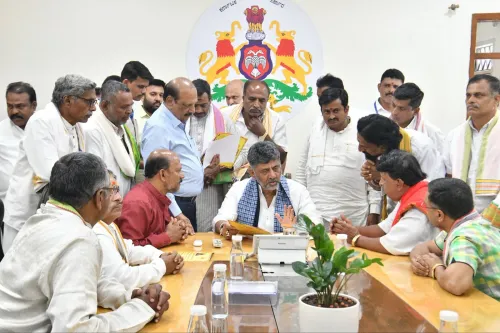
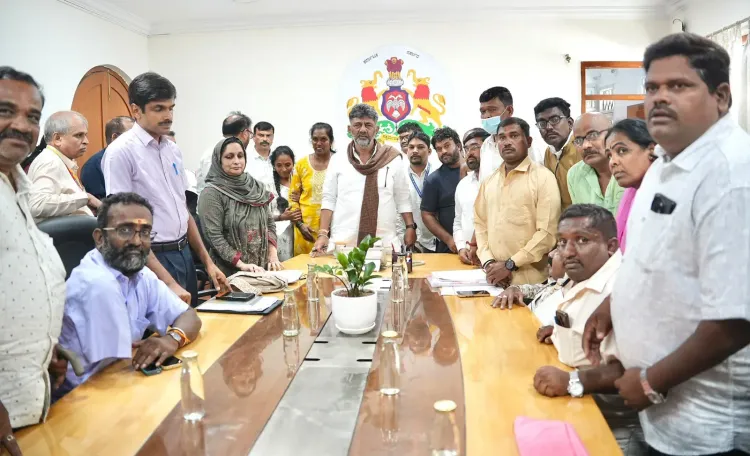
A delegation of grassroots welfare workers walked into Krishna, the official residence-office of Chief Minister D.K. Shivakumar, on Tuesday, 27 October 2026, carrying a memorandum that speaks to the unfinished business of Karnataka's social-sector workforce — the honorarium workers who keep the state's welfare machinery running at its most granular level.
The delegation represented the Navakarnataka MRW/VRW/URW Honorarium Workers' Association, an umbrella body of workers deployed under the Multi-purpose Rural Worker (MRW), Village Resource Worker (VRW), and Urban Resource Worker (URW) categories across Karnataka. They submitted a formal memorandum to the Chief Minister listing their demands — the specific content of which is yet to be made public.
Who stood in that room at Krishna
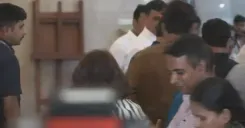
The meeting drew together a notable cross-section of state machinery. Ambaji P. Meti, the association's founder, led the delegation alongside Fakeergouda Patil, the state president, and Anil K. Gowda, the organisation's convener. Critically, the government's response was signalled by the presence of senior bureaucrats: Dr. Shamla Iqbal, Secretary of the Women and Child Welfare and Disabled Welfare Departments; Abhiram Shankar, Secretary of the Finance Department; and Mahesh Babu, Director of the Disabled Welfare Department.
The Finance Department secretary's presence is telling. When the finance apparatus sits in a meeting with welfare-sector workers raising demands, the subtext is clear — service conditions or honorarium structures are likely at the heart of the petition.
The long arc of Karnataka's honorarium worker question
MRW, VRW, and URW workers occupy a peculiar, often precarious space in the Karnataka government's workforce architecture. They are not full government employees, yet they are the front-line agents of the state's rural and urban welfare delivery. Periodic demands for honorarium revision, regularisation, or improved service conditions have long characterised their relationship with successive state governments.
Karnataka administrations across political lines have held such administrative meetings as a standard interface with organised welfare-sector workers — acknowledging their role while formal policy decisions wait for budget cycles or cabinet deliberations. The next state budget and any upcoming cabinet decisions on honorarium structures will be the moment of truth for the demands placed before CM Shivakumar today.
For thousands of honorarium workers across the state, the answer to their memorandum may well be written into Karnataka's next fiscal calendar.
Point of View
Engaging these associations keeps a numerically significant, geographically dispersed constituency of welfare workers on side ahead of any budget cycle. Watch whether this meeting translates into a concrete budgetary line or remains a goodwill gesture.
NationPress
27 Oct 2026
Frequently Asked Questions
Who are MRW, VRW and URW workers in Karnataka?
MRW (Multi-purpose Rural Workers), VRW (Village Resource Workers), and URW (Urban Resource Workers) are front-line honorarium workers deployed by the Karnataka government for rural and urban welfare delivery. They are not full government employees but receive a fixed honorarium for their services.
What is the Navakarnataka Honorarium Workers' Association?
The Navakarnataka MRW/VRW/URW Honorarium Workers' Association is an organised body representing honorarium workers across these three categories in Karnataka. It was founded by Ambaji P. Meti and currently has Fakeergouda Patil as its state president.
What demands did the association submit to CM Shivakumar?
The association submitted a formal memorandum of 'various demands' to Chief Minister D.K. Shivakumar on 27 October 2026. The specific contents of the memorandum have not been officially disclosed.
Where did the meeting between CM Shivakumar and the delegation take place?
The meeting took place at Krishna , the official residence-office of Karnataka Chief Minister D.K. Shivakumar, in Bengaluru.
What happens next after the memorandum was submitted?
Possible follow-up action could include references to the workers' demands in Karnataka's next state budget or formal cabinet decisions on honorarium structures. The presence of the Finance Department Secretary at the meeting suggests fiscal considerations are already in play.