Karnataka CM Sets Up Special Commission for Adivasi, Nomadic Communities
Synopsis
The Karnataka government under Chief Minister DK Shivakumar has announced a special commission for Adivasi and nomadic communities, aiming to address longstanding gaps in education, healthcare, housing, and employment through a dedicated institutional mechanism.
Key Takeaways
The Karnataka government has decided to constitute a special commission for Adivasi and nomadic communities.
The commission's stated focus areas include education, nutrition, healthcare, housing, drinking water, roads, electricity, skill development, and employment .
The announcement was made by the Chief Minister's Office of Karnataka on 13 August 2026 .
Both Adivasi (tribal) and nomadic communities are explicitly covered — the latter a group that often falls outside standard welfare frameworks.
Key details — commission membership, terms of reference, and budget — are yet to be made public.
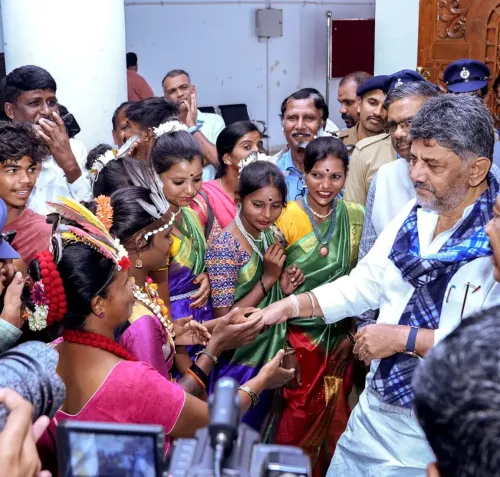
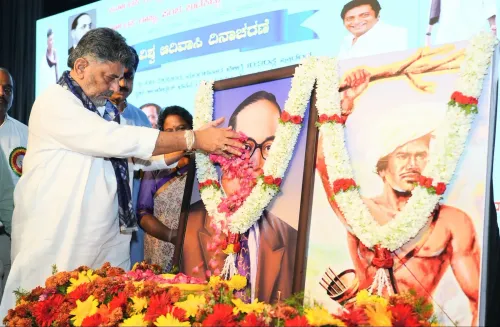
For decades, Karnataka's Adivasi and nomadic communities have navigated the edges of the state's development story — present in its forests and margins, absent from its schools, hospitals, and job markets. That gap is now squarely in the government's crosshairs. The Chief Minister's Office of Karnataka announced on Thursday, 13 August 2026 that the government, led by Chief Minister DK Shivakumar, has decided to constitute a special commission dedicated to the development, rights protection, and social justice of Adivasi and nomadic communities across the state.
The post, shared in Kannada, states plainly that these communities continue to face 'social, educational, and economic challenges' even today. The government's stated aim is to ensure they receive quality education, nutritious food, healthcare, housing, drinking water, roads, and electricity — and that young people from these communities gain access to skill development and employment opportunities.
What the Commission Is Meant to Fix
Karnataka already operates a Tribal Welfare Department and has participated in centrally-driven frameworks, including the Tribal Sub-Plan and the landmark Scheduled Tribes and Other Traditional Forest Dwellers (Recognition of Forest Rights) Act, 2006. But dedicated commissions of this kind signal that the state believes existing machinery has not been enough. Across India, states have periodically created such bodies when persistent gaps in tribal welfare — particularly in education outcomes, health access, and livelihood security — resist routine departmental fixes. The logic is institutional: a commission can cut across departments, call for accountability, and surface ground-level failures that a single welfare department cannot. Whether this one will have teeth depends on details the government has yet to release — its terms of reference, membership, and budgetary backing.Nomadic Communities: The Harder-to-Reach Half
The explicit inclusion of alemari samudayagalu (nomadic communities) is significant. Denotified and nomadic tribes — many of them historically branded as 'criminal' under colonial-era law — often fall through the cracks of welfare architecture designed around fixed addresses and documented identities. Reaching them requires a fundamentally different administrative approach. The government's commitment to 'equal opportunities' for both Adivasi and nomadic groups suggests the commission will need to grapple with this harder logistical reality. The terms of reference, commission composition, and any associated budget line are the immediate things to watch — likely to surface in the next assembly session or state budget cycle. A commission without a clear mandate and ring-fenced funds risks becoming another paper institution. The communities waiting on its work cannot afford that.Point of View
Rather than routing welfare through the existing Tribal Welfare Department, signals that the Shivakumar government views the current machinery as structurally insufficient for reaching Karnataka's most marginalised communities. The explicit inclusion of nomadic groups — historically undercounted and underserved — is a meaningful policy signal, though commissions without binding mandates and budgetary teeth frequently stall. This move fits a broader Congress pattern of institutional gestures toward social justice constituencies ahead of political cycles; the real test will be the commission's independence, composition, and whether it produces enforceable recommendations rather than advisory reports.
NationPress
28 Sept 2026
Frequently Asked Questions
What is the special commission announced by Karnataka for Adivasi communities?
The Karnataka government has announced a special commission to address the social, educational, and economic challenges faced by Adivasi (tribal) and nomadic communities in the state, with a focus on education, healthcare, housing, skill development, and employment.
Who leads the Karnataka government that announced this commission?
The commission was announced by the government led by Chief Minister DK Shivakumar , a senior Congress leader in Karnataka.
What benefits will the commission provide to Adivasi communities in Karnataka?
The government aims to ensure quality education, nutritious food, healthcare, housing, drinking water, roads, electricity, and skill and employment opportunities for Adivasi and nomadic communities through this commission.
Are nomadic communities included in Karnataka's new tribal commission?
Yes, the commission explicitly covers both Adivasi (tribal) and nomadic communities, recognising that the latter often face additional barriers in accessing welfare schemes due to their mobile way of life.
What existing tribal welfare frameworks does Karnataka already have?
Karnataka operates a Tribal Welfare Department and has participated in central schemes including the Tribal Sub-Plan. The national Forest Rights Act of 2006 also provides a legal framework for tribal land and resource rights.