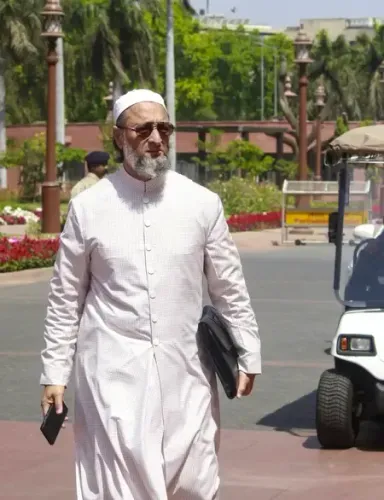
Owaisi Accuses Israel of War Crimes, Warns India's Allies
Synopsis
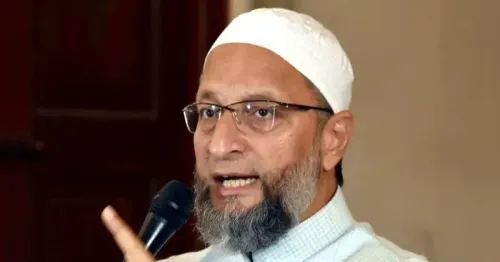
AIMIM president Asaduddin Owaisi on June 24, 2026, accused Israel of deliberately killing children, imposing famine, and ethnically cleansing Palestinians, warning that nations backing Israel will face consequences. The statement renews pressure on India's dual-track foreign policy of ties with Israel alongside rhetorical support for Palestine.
Key Takeaways
Asaduddin Owaisi on June 24, 2026 accused Israel of deliberately killing thousands of children and imposing famine on Palestinian civilians.
He warned that nations 'shamelessly' standing with Israel 'will come to regret it,' in an implicit signal toward India 's foreign policy alignment.
India recognised Palestinian statehood in 1988 and has voted for Palestinian positions at the UN , while simultaneously deepening defence and technology ties with Israel .
The BJP-led government elevated India-Israel relations to a strategic partnership in 2017 , a move AIMIM has long criticised as a break from non-aligned tradition.
India 's voting record on future UNGA and UNHRC resolutions on Gaza will be a key indicator of how New Delhi navigates this pressure.
AIMIM president Asaduddin Owaisi on Wednesday, June 24, 2026, accused Israel of deliberately killing thousands of children, imposing famine on civilians, and ethnically cleansing large parts of Palestine — and warned that nations standing with Israel would 'come to regret it.'
Context
In a post on X, Owaisi wrote: 'Israel has deliberately killed thousands of children, imposed famine on a civilian population, and ethnically cleansed large parts of Palestine. Israel will have to answer for these crimes. If not today, then soon. Those who have chosen to shamelessly stand with Israel will come to regret it.'
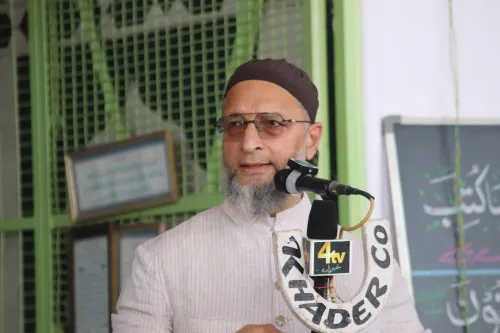
The statement is among the sharpest yet from the Hyderabad MP, who has consistently criticised Israeli military operations in Palestinian territories and called on India to distance itself from Tel Aviv. The post carries an attached video, though its contents have not been independently detailed in available information.
Policy Backdrop
India recognised Palestinian statehood in 1988 and has voted in favour of Palestinian positions at the United Nations, including the 2012 UNGA resolution 67/19 granting Palestine non-member observer state status. At the same time, successive Indian governments have deepened bilateral ties with Israel across defence, agriculture, and technology sectors.
The BJP-led government elevated the relationship to a 'strategic partnership' during Prime Minister Benjamin Netanyahu's 2017 visit to New Delhi, even as it maintained rhetorical support for a two-state solution. This dual-track approach has drawn sustained criticism from opposition parties, particularly AIMIM, which has framed India's tilt toward Israel as a departure from its traditional non-aligned posture.
Stakeholders and Impact
Owaisi's remarks carry domestic political weight, particularly among Indian Muslim voters for whom the Palestinian cause holds deep moral and religious significance. AIMIM, which Owaisi has led since 2008, has consistently used the Palestine issue to highlight what it describes as the ruling establishment's selective silence on Muslim suffering globally.
Foreign policy commentators note that statements of this kind place pressure on the Indian government to publicly clarify its position on the Gaza conflict at multilateral forums. India's vote on any forthcoming UNGA or UNHRC resolutions related to Gaza will be watched closely by both domestic constituencies and international observers.
What's Next
The international legal and diplomatic reckoning Owaisi alludes to — accountability for alleged war crimes — points to ongoing proceedings at institutions such as the International Court of Justice and the International Criminal Court, where cases relating to the Gaza conflict have been active. Whether India aligns itself more clearly with one side in those forums, or maintains its balancing act, will define its foreign policy posture in the months ahead.
As pressure mounts globally on governments to take explicit positions on the conflict, Owaisi's warning that those who 'stand with Israel' will face political consequences signals that the issue will remain a live fault line in Indian domestic politics well into the next electoral cycle.
Point of View
' he is speaking to Indian Muslim voters while also framing India's strategic partnership with Israel as a liability. This fits a long-standing AIMIM pattern of deploying international Muslim causes as domestic political mobilisers. The broader arc here is India's increasingly difficult balancing act — deepening security and economic ties with Israel while voting for Palestinian rights at the UN — a contradiction that is becoming harder to sustain as the Gaza conflict intensifies global scrutiny.
NationPress
23 Sept 2026
Frequently Asked Questions
What did Asaduddin Owaisi say about Israel on June 24 2026?
Owaisi posted on X accusing Israel of deliberately killing thousands of children, imposing famine on civilians, and ethnically cleansing large parts of Palestine, and warned that nations backing Israel will come to regret it.
What is India's official position on the Israel-Palestine conflict?
India has a dual-track policy: it recognised Palestinian statehood in 1988 and has supported Palestinian positions at the UN, while also building a strategic partnership with Israel in defence, agriculture, and technology since the 1990s.
Why does Owaisi frequently criticise Israel?
As AIMIM president and Lok Sabha MP from Hyderabad, Owaisi has consistently advocated for Palestinian rights and criticised what he describes as the Indian government's tilt toward Israel, framing it as a departure from India's non-aligned tradition.
What is AIMIM's stance on India-Israel relations?
AIMIM has long opposed the deepening of India-Israel ties, arguing that India's strategic partnership with Israel contradicts its historical support for Palestinian statehood and its non-aligned foreign policy heritage.
Could India face pressure to change its UN voting on Gaza?
Foreign policy analysts note that India's future votes at the UNGA and UNHRC on Gaza-related resolutions will be closely watched, as domestic political pressure from opposition parties like AIMIM intensifies alongside global scrutiny of the conflict.