CM Samrat Choudhary marks Vande Mataram's 151st anniversary
Synopsis
Bihar Chief Minister Samrat Choudhary marked the 151st anniversary of Vande Mataram on November 7, 2026, calling the national song 'the living voice of India's soul' and extending greetings to citizens across the country.
Key Takeaways
Bihar CM Samrat Choudhary posted on X on November 7, 2026 to mark the 151st anniversary of Vande Mataram.
He described the national song as 'the living voice of India's soul' ( bharat ki aatma ke jeevant swar ).
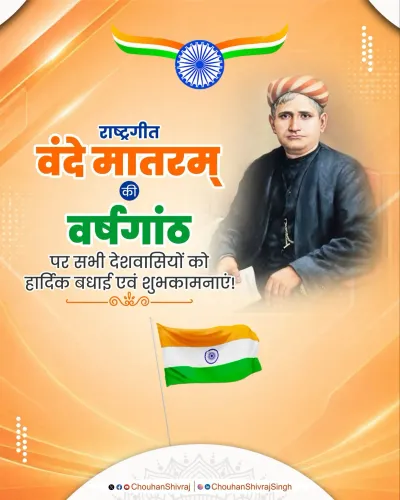
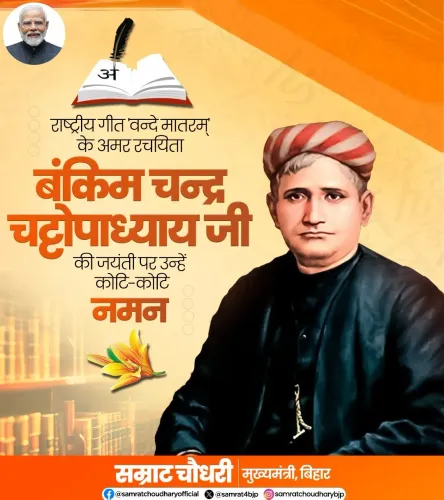
Vande Mataram was composed by Bankim Chandra Chatterjee in the 1870s and published in his novel Anandamath .
The Constituent Assembly declared it India's national song in 1950 .
The post aligns with a recurring BJP practice of publicly commemorating national symbols and freedom-struggle milestones.
One hundred and fifty-one years after Bankim Chandra Chatterjee first gave India its most stirring cultural battle cry, Bihar Chief Minister Samrat Choudhary has joined the nation in honouring the milestone — calling Vande Mataram 'bharat ki aatma ke jeevant swar' (the living voice of India's soul).
Posting on X on Saturday, November 7, 2026, the Chief Minister extended greetings on the 151st anniversary of the national song, using the hashtag #VandeMataram. His message: 'Congratulations to all of you on the 151st anniversary of Vande Mataram, the national song — the living voice of India's soul.'
From a Bengali novel to a national anthem of resistance
Vande Mataram's journey to becoming India's national song is one of the more remarkable arcs in the country's cultural history. Composed by Bankim Chandra Chatterjee in the 1870s and originally published as part of his Bengali novel Anandamath, the song became a rallying cry for the independence movement in the late 19th and early 20th centuries. Its opening words — Vande Mataram, meaning 'I bow to thee, Mother' — were chanted at protests, printed on pamphlets, and sung at the gates of history. The Constituent Assembly of India formally declared it the national song in 1950, placing it alongside the national anthem Jana Gana Mana as a co-equal expression of the republic's identity.BJP's pattern of marking national-symbol anniversaries
Chief Minister Choudhary's post fits a well-established pattern within the BJP: senior leaders regularly issue public commemorations of national symbols, freedom-struggle milestones, and cultural heritage moments. These posts serve a dual function — they mark genuine historical anniversaries while reinforcing the party's positioning as the custodian of India's civilisational identity. For Bihar, a state with deep roots in the independence movement, such commemorations also carry local resonance. State-level cultural events and school programmes marking the anniversary are expected across Bihar and other states, as the occasion draws renewed public attention to the song's legacy.Point of View
Vande Mataram sits at a threshold milestone, lending the commemoration slightly more weight than a typical annual post. For a Chief Minister of Bihar, invoking the song's legacy also speaks to a state that produced many freedom fighters who chanted it. The broader pattern signals that cultural-heritage communication remains a central pillar of BJP's political identity, especially ahead of any electoral cycle.
NationPress
7 Nov 2026
Frequently Asked Questions
What is the 151st anniversary of Vande Mataram about?
The 151st anniversary marks approximately 151 years since Bankim Chandra Chatterjee composed Vande Mataram in the 1870s. The song became a symbol of India's independence movement and was declared the national song in 1950.
Who is Samrat Choudhary?
Samrat Choudhary is the Chief Minister of Bihar and a senior leader of the Bharatiya Janata Party (BJP).
What does Vande Mataram mean?
Vande Mataram is a Sanskrit phrase meaning 'I bow to thee, Mother,' addressed to the motherland India. It was composed by Bankim Chandra Chatterjee and originally appeared in his Bengali novel Anandamath.
When was Vande Mataram declared India's national song?
The Constituent Assembly of India declared Vande Mataram the national song in 1950, alongside Jana Gana Mana as the national anthem.
Why do BJP leaders post about Vande Mataram?
BJP leaders regularly commemorate national symbols and freedom-struggle milestones as part of the party's broader cultural-nationalist messaging, positioning the party as a custodian of India's civilisational heritage.