CM Samrat Choudhary hails full Vande Mataram in Parliament

Synopsis
Bihar Chief Minister Samrat Choudhary hailed what he called a historic first — the complete rendition of Vande Mataram in Parliament — on 13 August 2026, framing it as a golden chapter of national pride on the eve of Independence Day.
Key Takeaways
Bihar CM Samrat Choudhary posted on 13 August 2026 marking what he described as the first-ever complete singing of Vande Mataram in Parliament.
He called it a 'golden chapter in parliamentary history' and a tribute to freedom fighters and national unity.
Vande Mataram was adopted as India's national song by the Constituent Assembly in 1950 .
The event occurred on the eve of Independence Day, 14 August 2026 , amplifying its symbolic weight.
The move aligns with the BJP's sustained emphasis on cultural nationalism and national symbols in official settings since 2014 .
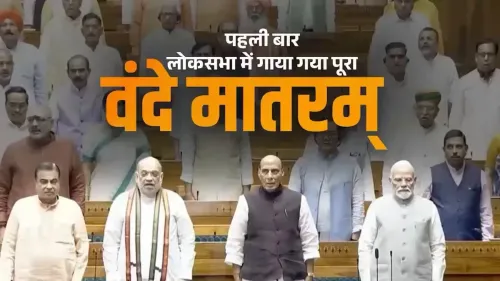
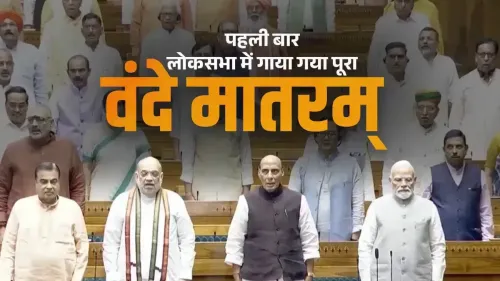
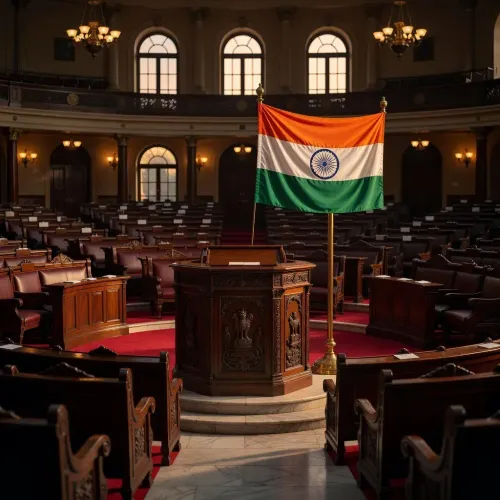
For the first time in the history of India's Parliament, the complete verses of Vande Mataram — the national song that stirred a freedom movement — rang through the supreme house of Indian democracy. Bihar Chief Minister Samrat Choudhary marked the moment on 13 August 2026, calling it a golden chapter in parliamentary history.
In his post, Choudhary wrote: 'आज संसद के इतिहास में राष्ट्रगौरव का एक स्वर्णिम अध्याय जुड़ गया' — 'Today, a golden chapter of national pride has been added to the history of Parliament.' He described the moment not merely as the singing of a song, but as an expression of reverence for the motherland, a tribute to the sacrifices of freedom fighters, and an affirmation of India's unity and integrity.
Vande Mataram's long road to Parliament's full rendition
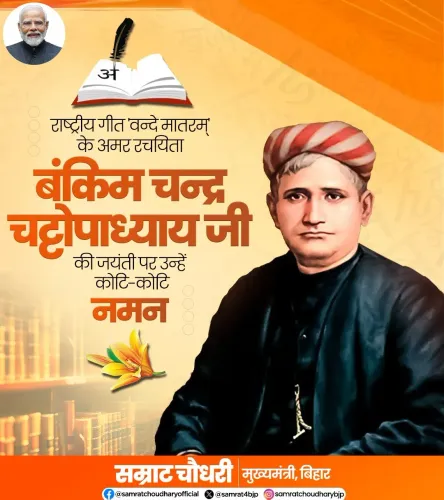
Vande Mataram, composed by Bankim Chandra Chattopadhyay, was adopted as India's national song by the Constituent Assembly in 1950, the same year the Constitution came into force. Its first two stanzas hold official status, and it has been sung at countless public and state occasions over the decades. Yet, according to Choudhary's post, the complete rendition had never before echoed inside Parliament's chambers — making this, if the claim holds, a genuinely singular moment in the legislature's over seven-decade history.Cultural nationalism and the BJP's parliamentary messaging
The timing — a day before Independence Day on 14 August — carries obvious resonance. Since 2014, BJP leaders have consistently used parliamentary settings and official proceedings to foreground national symbols, cultural identity, and what the party frames as civilisational pride. Choudhary's framing follows that pattern precisely: the act of singing is elevated into an assertion of nationhood, connecting the present moment to the sacrifices of the independence era. For Choudhary, Bihar's Chief Minister and a senior BJP figure, the post also reinforces his alignment with the party's broader cultural-nationalist messaging at the national level — a signal that resonates strongly in a state with deep historical ties to India's freedom struggle. With Independence Day just hours away, the complete singing of Vande Mataram in Parliament is set to become one of the defining images of the 2026 commemorations — and a benchmark future sessions will be measured against.Point of View
As framed by Choudhary, is less a spontaneous cultural act and more a deliberate piece of symbolic statecraft — placing a cultural-nationalist milestone on record the day before Independence Day. It fits a well-established BJP playbook of using parliamentary occasions to embed national symbols into institutional memory, a strategy that has deepened since 2014. For Choudhary personally, amplifying a moment of national cultural assertion reinforces his standing within the party's central ideological current, even from his base in Patna. The broader question it raises is whether Parliament will now formalise such renditions as protocol — turning a one-time moment into a permanent feature of the legislature's ceremonial life.
NationPress
27 Sept 2026
Frequently Asked Questions
Was Vande Mataram sung in full in Parliament for the first time in 2026?
Bihar Chief Minister Samrat Choudhary's post on 13 August 2026 claims it was the first time the complete Vande Mataram was sung in Parliament, though this specific claim cannot be independently verified from historical records predating 2025.
What is Vande Mataram and why is it significant?
Vande Mataram is India's national song, composed by Bankim Chandra Chattopadhyay and adopted by the Constituent Assembly in 1950. It played a central role in the independence movement and remains a powerful symbol of patriotism.
Who is Samrat Choudhary?
Samrat Choudhary is the Chief Minister of Bihar and a senior leader of the Bharatiya Janata Party (BJP).
Why did the full singing of Vande Mataram happen on 13 August 2026?
The event fell on the eve of Independence Day (14 August), a timing that amplified its patriotic and symbolic significance, consistent with BJP-led commemorative practices around national occasions.
What is the difference between India's national anthem and national song?
India's national anthem is 'Jana Gana Mana', while 'Vande Mataram' holds the status of national song. Both were accorded equal honour by the Constituent Assembly, but 'Jana Gana Mana' is played at official state functions.