CM Samrat Choudhary hails Vande Mataram bill as historic
Synopsis
Bihar CM Samrat Choudhary has welcomed Parliament's passage of the National Respect Disrespect Prevention (Amendment) Bill, 2026, which grants Vande Mataram the same legal protection as the national anthem — closing a seven-decade statutory gap.
Key Takeaways
Bihar CM Samrat Choudhary praised the passage of the 'National Respect Disrespect Prevention (Amendment) Bill, 2026' in Parliament.
The bill grants Vande Mataram the same legal protection against disrespect currently afforded to the national anthem under the Prevention of Insults to National Honour Act, 1971 .
Vande Mataram has been India's national song since 1950 , but unlike the national anthem, it lacked equivalent statutory protection for over 75 years.
CM Choudhary credited Prime Minister Narendra Modi 's government for the amendment, calling it a 'new chapter in the honour of national identity.' Enforcement rules and penalty mechanisms will be finalised after Presidential assent and official notification of the amendment.
A song that once moved a nation to revolt against colonial rule now stands on equal legal footing with the national anthem. Bihar Chief Minister Samrat Choudhary on Thursday, July 30, 2026, welcomed Parliament's passage of the 'National Respect Disrespect Prevention (Amendment) Bill, 2026', calling it a landmark step that strengthens India's cultural heritage and national identity.
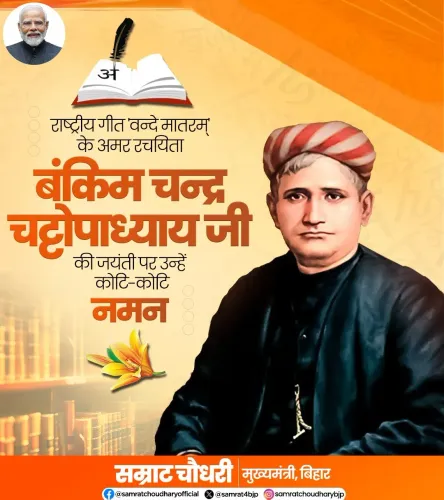
Writing on X, CM Choudhary declared: 'Vande Mataram kevl ek rashtriya geet nahin' — 'Vande Mataram is not merely a national song, but an immortal symbol of the inspiration and national spirit of India's freedom struggle.' He credited Prime Minister Narendra Modi's leadership for writing what he called 'a new chapter in the honour of national identity' by extending legal protection to Vande Mataram on par with the national anthem.
From freedom-era rallying cry to constitutional equal
The roots of this moment run deep. Vande Mataram, composed by Bankim Chandra Chattopadhyay, became the battle cry of India's independence movement — chanted in protest marches, whispered in prison cells, and sung at the moment of freedom. When the Constituent Assembly convened in 1950, it adopted the song as India's national song alongside Jana Gana Mana as the national anthem, but the two symbols were never treated as legal equals.
That asymmetry persisted for over seven decades. The Prevention of Insults to National Honour Act, 1971, established legal safeguards against disrespect to the national flag, anthem, and Constitution — but Vande Mataram sat outside that protective ring. The 2026 amendment closes that gap, placing the national song within the same statutory framework that guards the anthem.
What the amendment changes — and what comes next
By bringing Vande Mataram under the ambit of the national honour law, the amendment makes deliberate disrespect to the song a cognisable offence, mirroring existing penalties for insults to the national anthem. The move formalises a status the song has held in public sentiment for well over a century but never in statute.
The specifics of enforcement — rules, penalties, and the precise definition of 'disrespect' — will crystallise once the bill receives Presidential assent and the government notifies the implementing regulations. Those details will determine how broadly or narrowly the law is applied in practice.
CM Choudhary's endorsement signals strong NDA solidarity behind the measure, framing it not as a legal technicality but as a generational statement — one he says will 'strengthen patriotic sentiment in coming generations.' Whether that sentiment translates into a durable cultural consensus will be the real test of this legislation's legacy.
Point of View
The bill hands the ruling coalition a politically resonant win ahead of state election cycles. CM Choudhary's swift, effusive endorsement also underscores how senior NDA leaders are using cultural-legislative moments to consolidate their base in states like Bihar, where identity and patriotism remain potent electoral currencies. The real policy test, however, lies in the enforcement rules: how 'disrespect' is defined will determine whether the law becomes a measured cultural safeguard or a contested instrument.
NationPress
13 Sept 2026
Frequently Asked Questions
What is the National Respect Disrespect Prevention Amendment Bill 2026?
It is a parliamentary amendment that extends the legal protections of the Prevention of Insults to National Honour Act, 1971, to cover Vande Mataram, placing the national song on equal statutory footing with the national anthem.
What did Bihar CM Samrat Choudhary say about the Vande Mataram bill?
CM Choudhary called the bill's passage a 'historic step' that strengthens India's cultural heritage, crediting PM Modi's government for writing a 'new chapter in national identity' by granting Vande Mataram legal protection equal to the national anthem.
What is the difference between India's national anthem and national song?
Jana Gana Mana is India's national anthem, adopted in 1950, and has long carried statutory protection. Vande Mataram is the national song, also adopted in 1950, but until the 2026 amendment it did not enjoy the same legal safeguards against disrespect.
What law previously protected India's national symbols from disrespect?
The Prevention of Insults to National Honour Act, 1971, protected the national flag, national anthem, and the Constitution from deliberate disrespect, but did not explicitly cover the national song Vande Mataram.
When will the Vande Mataram protection law come into effect?
The amendment will come into effect after it receives Presidential assent and the government notifies the implementing rules, which will also detail the specific enforcement mechanisms and penalties.