CM Sai Hails Vande Mataram's Full Rendition in Parliament
Synopsis
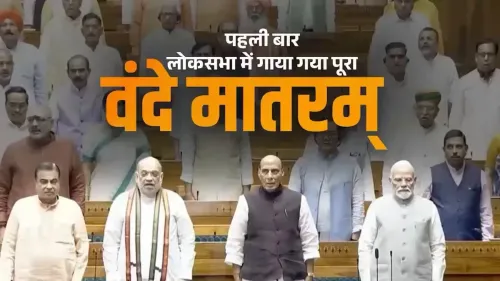
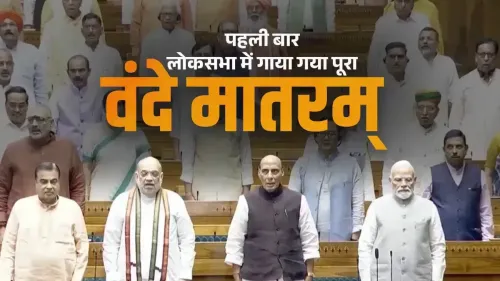
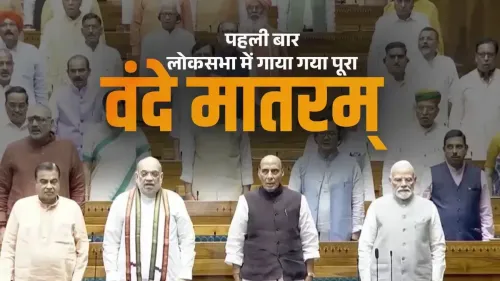
On the eve of Independence Day 2026, Chhattisgarh CM Vishnu Deo Sai celebrated the complete rendition of Vande Mataram in Parliament, calling it a living encounter with India's national consciousness and linking the 1882 song's revolutionary legacy to 140 crore Indians today.
Key Takeaways
Chhattisgarh CM Vishnu Deo Sai posted on 13 August 2026 , hailing a full rendition of Vande Mataram in the Indian Parliament on the eve of Independence Day.
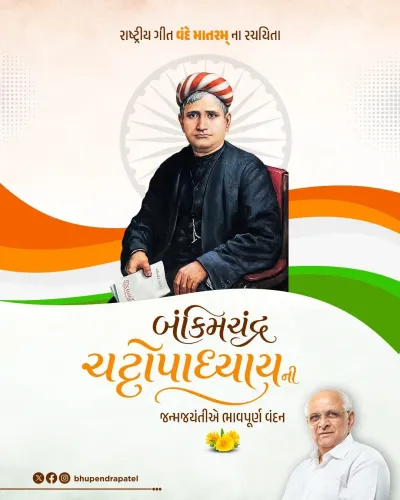
Vande Mataram was composed by Bankim Chandra Chatterjee in 1882 as part of the novel Anandamath and became a rallying cry of India's freedom movement.
India's Constituent Assembly designated Vande Mataram the National Song in 1950 , distinct from but equal in sentiment to the National Anthem.
The #VandeMataram150 hashtag marks the song's approximate 150-year milestone since composition, with commemorative events expected across Parliament and state assemblies.
CM Sai described the song as 'the heartbeat of patriotism in the hearts of 140 crore Indians ,' framing the parliamentary rendition as a renewal of national consciousness.
A song that once moved millions to defy an empire rang through the halls of India's highest democratic institution on 13 August 2026 — the day before Independence Day. Chhattisgarh Chief Minister Vishnu Deo Sai marked the occasion with a stirring post on X, calling the complete rendition of 'Vande Mataram' in Parliament a living encounter with the nation's soul.
Writing in Hindi, CM Sai described the moment as one where 'the voice that has lived in India's heart for centuries echoed through Parliament.' He framed Vande Mataram not merely as a patriotic song but as a pledge — the resolve of freedom fighters to offer everything for Maa Bharati, Mother India. 'This voice,' he wrote, 'is the honour of our soil, the identity of our self-respect, and the heartbeat of patriotism in the hearts of 140 crore Indians.'
From Bankim's Novel to Parliament's Central Hall
Vande Mataram was born in 1882, embedded in Bankim Chandra Chatterjee's novel Anandamath. What began as literary verse became the battle cry of the independence movement — sung at rallies, whispered in prison cells, and banned at various points by colonial authorities precisely because of its galvanising power. When India's Constituent Assembly convened in 1950, it accorded the song the status of National Song, second in official standing only to Jana Gana Mana as the National Anthem, but equal in emotional weight for millions. The #VandeMataram150 hashtag anchoring CM Sai's post signals the broader commemorative arc — the song is approaching roughly 150 years since its composition, and political and cultural institutions across India are marking the milestone. A full parliamentary rendition on the eve of Independence Day carries unmistakable symbolic weight: the legislature that inherited the republic the freedom fighters built, singing the song that fuelled their sacrifice.Why the Eve of Independence Day Matters
The timing is deliberate. August 14 sits at the hinge between memory and celebration — the night of Partition's anguish and the dawn of freedom. A parliamentary singing of Vande Mataram on this date collapses that distance, connecting the republic's founding struggle directly to its living institutions. For CM Sai and the BJP, invoking the song's revolutionary lineage is also a reminder that national symbols are not museum pieces — they are, as he put it, a 'punah sakshatkaar' (renewed encounter) with national consciousness. The kicker writes itself in the song's own words: Vande Mataram — I bow to thee, Mother. One hundred and forty crore voices, one sentiment.Point of View
Amplified by CM Sai's post, fits a well-established BJP pattern of reclaiming freedom-movement symbols as living cultural touchstones rather than archival relics. The #VandeMataram150 framing is strategically timed — attaching a milestone anniversary to a high-visibility institutional moment maximises emotional resonance. For the ruling party, invoking the song's anti-colonial revolutionary energy in Parliament also implicitly positions the legislature as the legitimate heir to that struggle. The broader signal: national symbols will continue to feature prominently in BJP political communication as India approaches its centenary of independence in 2047.
NationPress
28 Sept 2026
Frequently Asked Questions
What is Vande Mataram and why is it significant?
Vande Mataram is India's National Song, composed by Bankim Chandra Chatterjee in 1882 in his novel Anandamath . It became a powerful rallying cry during the independence movement and was designated the National Song by the Constituent Assembly in 1950 .
What happened in Parliament on 13 August 2026 regarding Vande Mataram?
According to CM Vishnu Deo Sai's post, the complete rendition of Vande Mataram was performed in Parliament on 13 August 2026 , the eve of Independence Day, as part of commemorations linked to the song's 150th anniversary.
What is the #VandeMataram150 hashtag about?
The #VandeMataram150 hashtag marks the approximate 150th anniversary of Vande Mataram , which was composed around 1882 . Political and cultural institutions are using the milestone to hold commemorative events.
What did Chhattisgarh CM Vishnu Deo Sai say about Vande Mataram?
CM Vishnu Deo Sai called the parliamentary rendition 'the honour of our soil, the identity of our self-respect, and the heartbeat of patriotism in the hearts of 140 crore Indians ,' describing it as a renewed encounter with national consciousness.
What is the difference between India's National Anthem and National Song?
India's National Anthem is Jana Gana Mana , adopted in 1950 . Vande Mataram is the National Song, also recognised in 1950 by the Constituent Assembly. The anthem has a prescribed protocol for singing; the National Song carries equal emotional weight but different official status.