CM Samrat Choudhary Hails 'Pralay' Missile Test as Defence Milestone
Synopsis
Bihar Chief Minister Samrat Choudhary praised the successful test of DRDO's Pralay quasi-ballistic missile on November 6, 2026, calling it a landmark in India's indigenous defence capability and congratulating DRDO scientists and the armed forces.
Key Takeaways
Bihar Chief Minister Samrat Choudhary publicly congratulated DRDO , Indian scientists, and the armed forces on the successful Pralay missile test on November 6, 2026 .
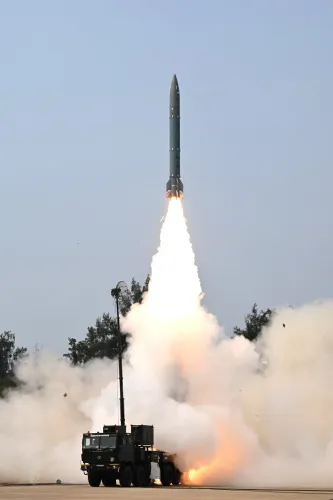
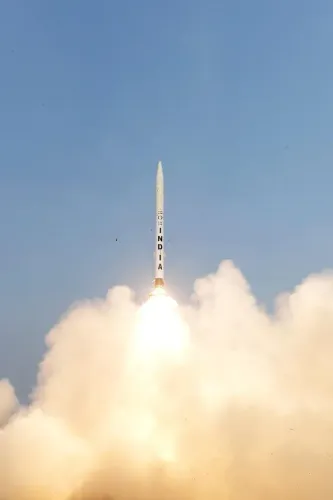
Pralay is a short-range, surface-to-surface quasi-ballistic missile designed for high-precision tactical strikes, developed entirely by DRDO.
The missile was first successfully tested in December 2021 from the Integrated Test Range, Odisha ; subsequent trials have continued the induction programme.
Pralay is a key pillar of India's Atmanirbhar Bharat defence indigenisation drive, launched in May 2020 , alongside Akash, BrahMos, and Agni systems.
CM Choudhary described the achievement as evidence of India's growing scientific expertise and technological self-reliance in the defence sector.
The next critical phase is formal Army induction timelines and Ministry of Defence-sanctioned user trials for Pralay.
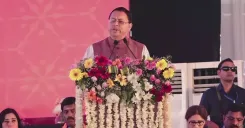
A missile built entirely on Indian soil, by Indian scientists, just cleared another critical test — and the country's political leadership is taking note. Bihar Chief Minister Samrat Choudhary on Friday, November 6, 2026, congratulated DRDO, India's armed forces, and the scientists behind the successful test of the 'Pralay' surface-to-surface quasi-ballistic missile, calling it a defining marker of the nation's growing strategic muscle.
Posting on X in Hindi, CM Choudhary wrote: 'रक्षा क्षेत्र में भारत की सामरिक शक्ति को नई मजबूती!' — 'New strength to India's strategic power in the defence sector!' He described the successful test as proof of India's rising defence capabilities, scientific expertise, and technological self-reliance, adding heartfelt congratulations to every karmayogi (dedicated worker) connected to the mission.
What Makes Pralay a Different Kind of Missile
Pralay is a short-range, surface-to-surface quasi-ballistic missile developed by the Defence Research and Development Organisation (DRDO) for high-precision tactical strikes. Its quasi-ballistic flight path — lower and more manoeuvrable than a conventional ballistic arc — makes it significantly harder to intercept, giving India a sharper tactical edge in a contested theatre.
DRDO first successfully tested Pralay in December 2021 from the Integrated Test Range in Odisha, marking the opening chapter of what has since been an expanding test-and-induction programme. Each successive trial refines the system closer to full operational readiness for Army units.
Atmanirbhar Bharat's Defence Bet Paying Off
Pralay does not exist in isolation. It is one node in a deliberately constructed web of indigenous missile capability — sitting alongside Akash, BrahMos, and the Agni family — all products of DRDO's sustained investment in homegrown platforms. The accelerant for all of it was the Atmanirbhar Bharat Abhiyan, launched in May 2020, which set an explicit national goal of ending India's historic dependence on imported defence hardware.
The numbers tell the story: India has steadily climbed global rankings for indigenous defence production, shifting billions in procurement spend toward domestic manufacturers and research agencies. Pralay's continued testing is a live demonstration that the bet is paying off.
DRDO Scientists at the Centre of the Moment
CM Choudhary's post is notable for where it places the credit — not on a programme or a ministry, but on the people: the scientists, the soldiers, the technicians. That framing reflects a broader political consensus across India's parties that DRDO's workforce deserves public recognition, particularly as geopolitical pressures on India's northern and western borders keep the need for credible tactical deterrence firmly in the headlines.
The next milestone to watch: formal induction timelines for Pralay into Army units and any follow-on user trials announced by the Ministry of Defence. When a weapon moves from test range to regiment, the strategic calculus shifts from potential to reality.
Point of View
Making each test politically significant beyond ceremonial congratulations. The post also quietly reinforces the Atmanirbhar Bharat narrative as a governance achievement, linking a BJP-governed state's voice to a central defence policy win. With Army induction still pending, political endorsements like this one help sustain public and institutional momentum behind the programme.
NationPress
6 Nov 2026
Frequently Asked Questions
What is the Pralay missile?
Pralay is a surface-to-surface quasi-ballistic missile developed by India's DRDO for short-range, high-precision tactical strikes. Its manoeuvrable flight path makes it harder to intercept than conventional ballistic missiles.
When was Pralay first tested?
DRDO conducted the first successful test of the Pralay missile in December 2021 from the Integrated Test Range in Odisha .
Why did Bihar CM Samrat Choudhary comment on the Pralay missile test?
CM Samrat Choudhary posted congratulations on November 6, 2026 to DRDO, the armed forces, and all scientists involved, calling the test a proof of India's technological self-reliance and a step toward stronger national security.
What is Atmanirbhar Bharat's role in India's missile programme?
The Atmanirbhar Bharat Abhiyan, launched in May 2020, set a national goal of reducing defence import dependence. It accelerated funding and policy support for indigenous systems like Pralay, Akash, and BrahMos.
Will Pralay missile be inducted into the Indian Army?
Pralay is being developed for Army induction. Formal timelines and user trials are yet to be officially announced by the Ministry of Defence, making those announcements the key next milestone to watch.