Rajnath Singh: DRDO tests Pralay missile off Odisha coast
Synopsis
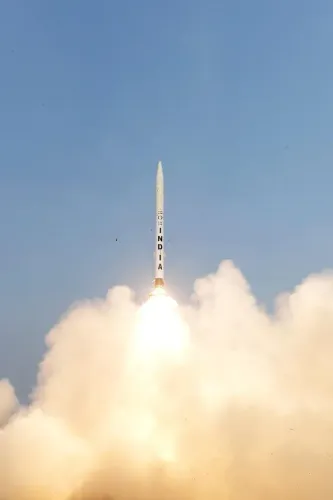
DRDO flight-tested the indigenous Pralay quasi-ballistic missile off the Odisha coast on 5 November 2026, successfully meeting all user evaluation trial objectives. Defence Minister Rajnath Singh called it a significant milestone in India's drive toward self-reliant defence capabilities.
Key Takeaways
DRDO conducted a flight test of the indigenously developed Pralay missile off the Odisha coast on 5 November 2026 at 11:10 hrs .
The trial was a user evaluation test — the final validation stage before potential Army induction — and met all stipulated objectives.
Performance was validated by range instruments including radar, telemetry, and electro-optical tracking systems.
Pralay is a quasi-ballistic surface-to-surface missile designed for precision tactical strike, with the Indian Army as the intended end-user.
The programme traces back to Pralay's first developmental flight test in December 2021 , with successive user trials running since 2022.
The test advances India's Atmanirbhar Bharat defence agenda of reducing dependence on imported tactical strike systems.
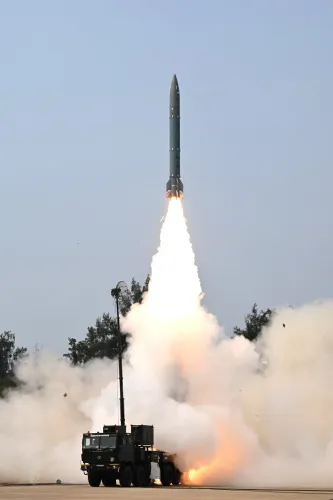
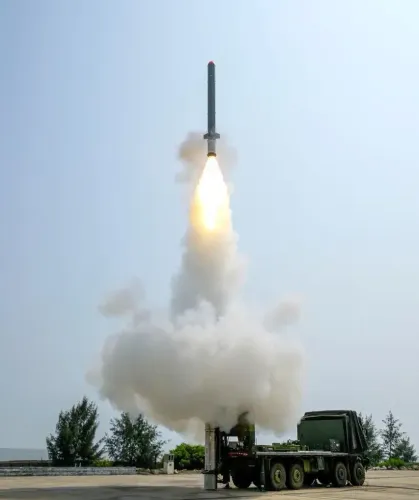
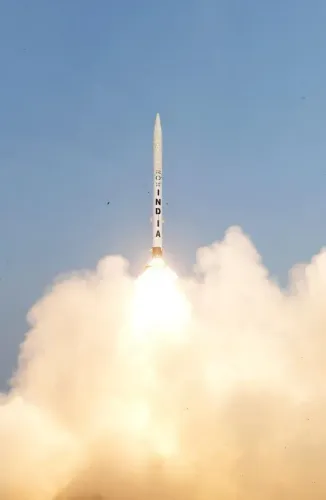
A quasi-ballistic missile streaked off the Odisha coast at 11:10 hrs on Thursday, 5 November 2026 — and when the data came in, every stipulated objective had been met. Union Defence Minister Rajnath Singh announced that DRDO successfully conducted a flight test of the indigenously developed Pralay missile as part of user evaluation trials, calling it 'another significant milestone in strengthening India's indigenous defence capabilities.'
What the Pralay is — and why this test counts
The Pralay is a surface-to-surface, quasi-ballistic missile designed for tactical battlefield precision-strike roles. Unlike traditional ballistic missiles that follow a fixed arc, Pralay's quasi-ballistic trajectory allows it to manoeuvre in flight, making it harder to intercept. The Indian Army is the intended end-user, looking for a quick-reaction, precision system capable of neutralising high-value targets at operational depths.
The missile completed its first developmental flight test in December 2021 from the same Odisha coastline — almost certainly the Integrated Test Range at Chandipur, India's primary shore-based launch facility. DRDO has run successive user evaluation trials since 2022, each one narrowing the gap between laboratory performance and battlefield readiness. Today's trial sits at that final, critical stage: putting the system through its paces the way a soldier, not a scientist, would use it.
User evaluation: the last mile before induction
User evaluation trials are qualitatively different from development tests. Where early flights prove a concept works, user trials prove the weapon works reliably, repeatedly, and under conditions the armed forces will actually impose. Validation through 'range instruments' — radar, telemetry stations, electro-optical trackers — means every phase of the flight was independently measured, not just observed. Meeting 'all stipulated objectives' in this context is as close to a formal pass as a missile gets before an induction decision lands on the Defence Ministry's desk.
Atmanirbhar Bharat's sharp edge
The Pralay programme is a textbook example of the Atmanirbhar Bharat defence production push — the government's drive to slash import dependence and build a domestic military-industrial base. India has historically been among the world's largest arms importers, and tactical surface-to-surface missile capability was long sourced or derived from foreign platforms. A homegrown system validated through rigorous user trials changes that calculus.
DRDO, the country's primary defence research agency, has anchored successive quick-reaction precision-strike programmes within this framework. Each successful trial adds to an operational portfolio that defence planners can actually draw on — not aspirational projects, but fielded, tested weapons. With user evaluation now ticked off, the next moves — production orders, formal Army induction, or forward deployment decisions — will determine whether Pralay shifts from milestone to mainstay.
India's battlefield precision-strike capability just took a measurable step forward. The question now is how fast that step becomes a stride.
Point of View
Specifically in the tactical precision-strike domain where India has historically relied on external sources. With user trials cleared, the pressure now shifts to production capacity and procurement timelines, testing whether the industrial ecosystem behind DRDO can match the pace set in the laboratory. A formal induction announcement would mark a concrete, measurable payoff for a defence-indigenisation push that critics have often called aspirational rather than operational.
NationPress
6 Nov 2026
Frequently Asked Questions
What is the Pralay missile?
Pralay is an indigenously developed Indian quasi-ballistic surface-to-surface missile designed for tactical precision strikes. Its manoeuvrable flight trajectory makes it harder to intercept than conventional ballistic missiles, and the Indian Army is its intended end-user.
What happened in the Pralay missile test on 5 November 2026?
DRDO conducted a flight test of the Pralay missile off the Odisha coast at 11:10 hrs on 5 November 2026. The test was part of user evaluation trials and successfully met all stipulated objectives, as confirmed by data from range instruments.
What is a user evaluation trial for a missile?
A user evaluation trial is the final validation stage where the intended military user — in this case the Indian Army — tests the missile under realistic operational conditions. It follows developmental tests and is a key step before a formal induction decision is made.
Where are India's missile tests conducted?
Most Indian missile flight tests, including those of the Pralay, are conducted from the Integrated Test Range located at Chandipur on the Odisha coast, which is India's primary shore-based missile launch and tracking facility.
When did Pralay's first flight test take place?
The Pralay missile completed its first developmental flight test in December 2021 from the Odisha coast. DRDO has conducted successive user evaluation trials since 2022, culminating in the latest successful test in November 2026.