DRDO successfully tests LRLACM long-range cruise missile off Odisha coast
Synopsis
DRDO has flight-tested the LRLACM — India's indigenously built long-range land attack cruise missile — off the Odisha coast, validating all mission objectives. Coming just two days after three back-to-back BMD and anti-ship missile tests, this marks one of India's most concentrated stretches of strategic missile testing and signals a sharp push toward self-reliant precision-strike capability.
Key Takeaways
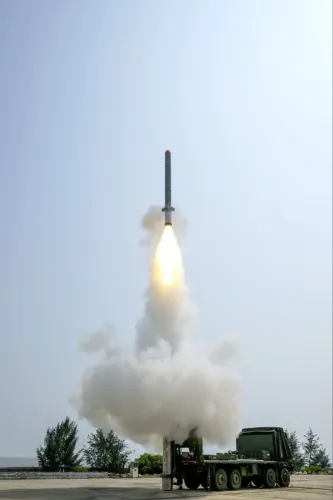
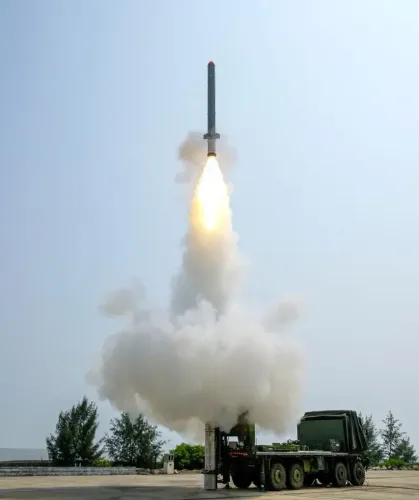
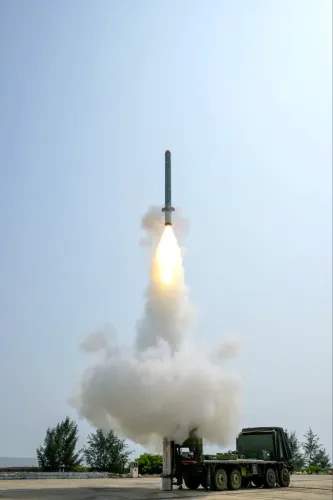
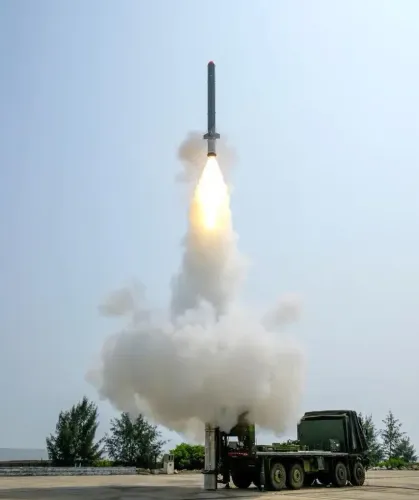
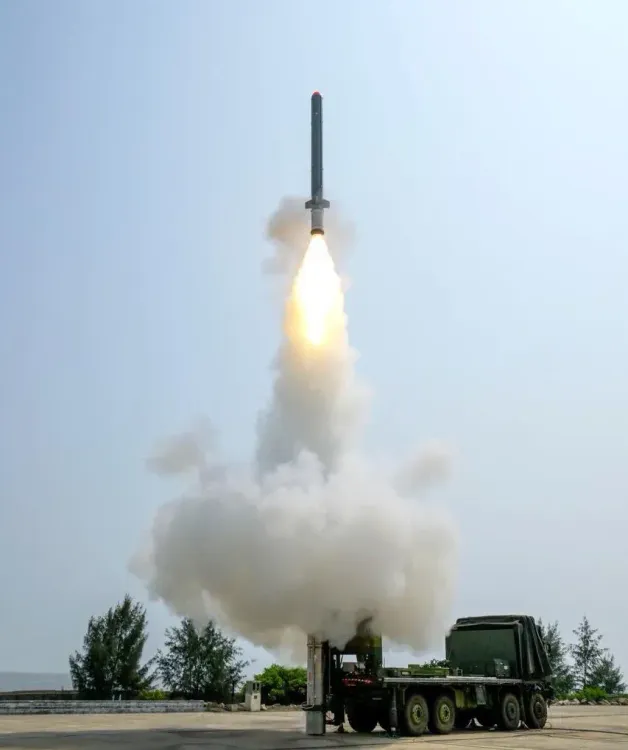
DRDO successfully flight-tested the Long Range Land Attack Cruise Missile (LRLACM) on 15 June from Dr APJ Abdul Kalam Island , Odisha.
All test objectives were met, as confirmed by tracking instruments at Integrated Test Range, Chandipur .
The missile is fully indigenously developed; Aeronautical Development Establishment (ADE), Bengaluru is the nodal laboratory.
Indian Navy and Indian Air Force user representatives witnessed the launch alongside DRDO Chairman Rajesh Kumar Singh .
The test follows three consecutive DRDO missile tests two days earlier covering ballistic missile defence and anti-ship warfare .
Defence Minister Rajnath Singh congratulated the DRDO team and industry partners on the successful test.
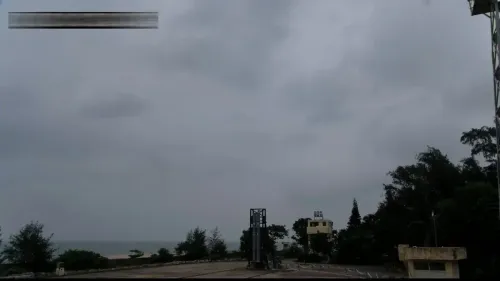
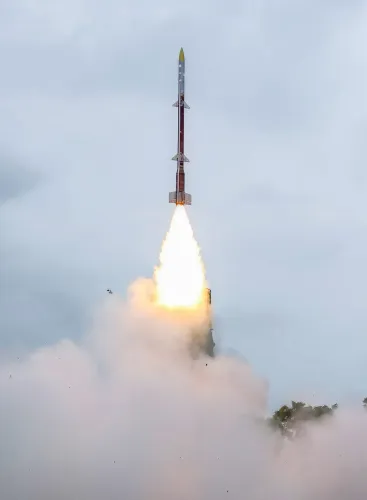
The Defence Research and Development Organisation (DRDO) on Monday, 15 June conducted a successful flight test of the indigenously developed Long Range Land Attack Cruise Missile (LRLACM) from Dr APJ Abdul Kalam Island off the coast of Odisha, marking a significant advance in India's long-range precision strike capability. The test validated all mission objectives, according to an official statement from the Ministry of Defence.
Test Objectives and Performance
'All the test objectives were fully met, as per the data captured by various tracking instruments deployed by Integrated Test Range, Chandipur,' the Ministry of Defence stated. The missile demonstrated critical technologies across its flight envelope, confirming the system's readiness for further development and eventual induction.
The launch was monitored by senior officials including Defence Secretary and Secretary, Department of Defence (R&D), and DRDO Chairman Rajesh Kumar Singh, alongside user representatives from the Indian Navy and the Indian Air Force.
Indigenous Development and Key Stakeholders
The LRLACM is entirely indigenously developed, with all sub-systems built by various DRDO laboratories and Indian industry partners. Aeronautical Development Establishment (ADE), Bengaluru, serves as the nodal laboratory for the programme. The successful test reinforces the Aatmanirbhar Bharat initiative and strengthens India's domestic defence manufacturing ecosystem.
Defence Minister Rajnath Singh congratulated the entire DRDO team and industry partners, commending the efforts of all personnel involved in achieving the milestone.
Context: A Week of Back-to-Back Missile Tests
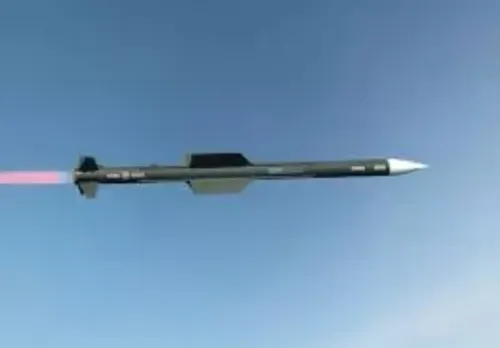
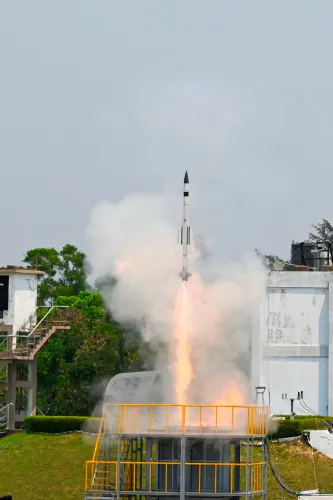
The LRLACM test follows three consecutive missile tests conducted by DRDO just two days prior, which demonstrated India's capabilities in ballistic missile defence (BMD) and anti-ship warfare. On that occasion, Defence Minister Singh had said the tests would place India 'in the elite group of nations with Ballistic Missile Defence Capabilities to engage Ballistic Missiles, including Intercontinental Ballistic Missiles.' He also noted the maiden flight test of the Naval Anti-Ship Missile-Medium Range, which demonstrated anti-ship defence at medium range.
Notably, this cluster of tests within a single week signals a deliberate acceleration in DRDO's test calendar — a pattern analysts have linked to India's evolving strategic threat environment.
Strategic Significance
Long-range land attack cruise missiles are a cornerstone of modern deterrence architecture, enabling precision strikes deep into adversary territory without deploying manned aircraft. India's indigenous development of such a system reduces dependence on foreign suppliers and gives the armed forces a platform that can be customised to national operational requirements. With both the Indian Navy and Indian Air Force represented at the test, the LRLACM is expected to be a dual-service asset upon induction.
Further tests and integration milestones are anticipated as the programme moves toward operational clearance.
Point of View
Culminating in the LRLACM, suggests India is deliberately accelerating its strategic deterrence signalling at a time of heightened regional tension. The indigenisation angle is real, but the harder question is timeline to induction: DRDO has a mixed record on moving from successful flight tests to operational deployment at scale. The dual-service interest from the Navy and Air Force is a positive signal for eventual absorption, but inter-service procurement timelines in India have historically stretched well beyond initial projections. The strategic intent is clear; the execution clock starts now.
NationPress
14 Sept 2026
Frequently Asked Questions
What is the LRLACM tested by DRDO?
The Long Range Land Attack Cruise Missile (LRLACM) is an indigenously developed cruise missile designed to strike land targets at long range with precision. All its sub-systems were developed by DRDO laboratories and Indian industry partners, with Aeronautical Development Establishment, Bengaluru, as the nodal laboratory.
Where was the LRLACM flight test conducted?
The flight test was conducted from Dr APJ Abdul Kalam Island off the coast of Odisha on 15 June. Tracking data was captured by instruments deployed at Integrated Test Range, Chandipur.
Did the LRLACM test meet its objectives?
Yes. According to the Ministry of Defence, all test objectives were fully met, validating critical technologies and demonstrating India's long-range precision strike capability.
Which services will use the LRLACM?
Both the Indian Navy and the Indian Air Force had user representatives present at the test, indicating the LRLACM is being developed as a dual-service platform for eventual induction into both branches.
How does this test fit into India's broader missile programme?
The LRLACM test came two days after DRDO conducted three consecutive tests covering ballistic missile defence and anti-ship warfare. Together, these tests represent one of India's most intensive stretches of strategic missile testing and advance the Aatmanirbhar Bharat goal of defence self-reliance.