CM Dhami Hails DRDO's LRLACM Cruise Missile Test Success
Synopsis
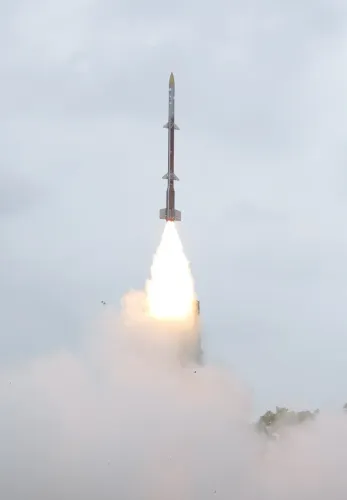
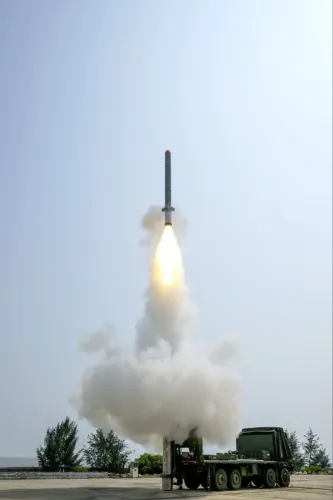
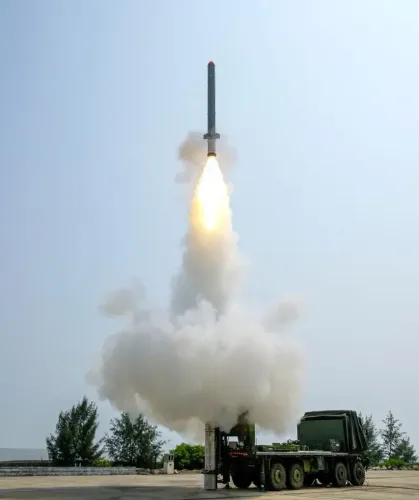
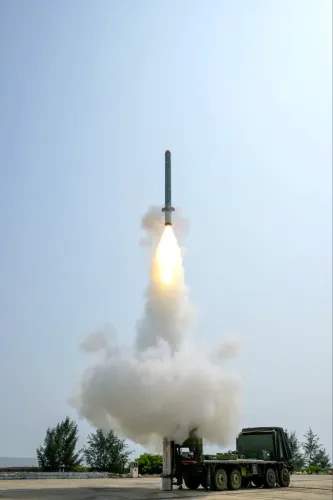
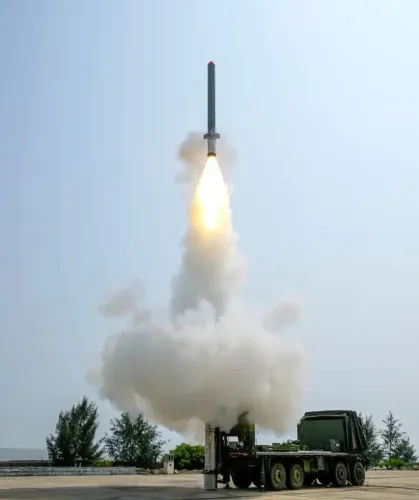
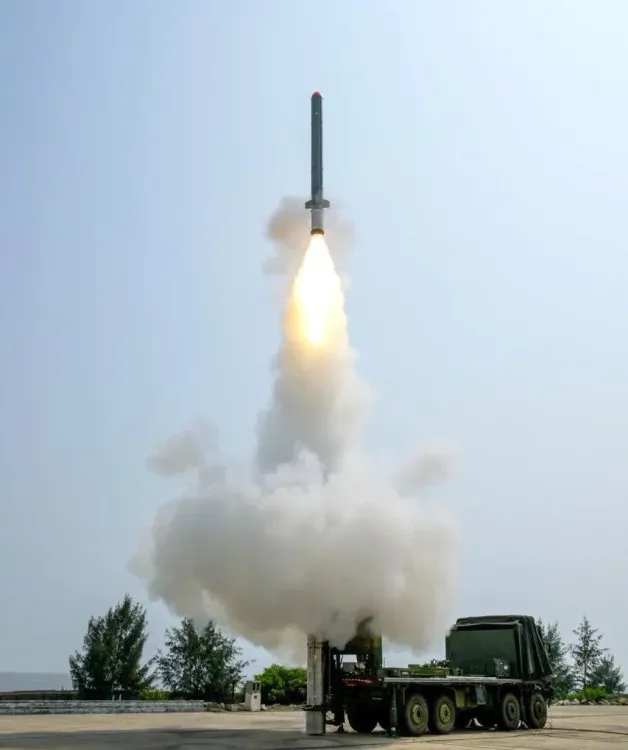
India successfully flight-tested the indigenously developed Long Range Land Attack Cruise Missile (LRLACM) from Dr. APJ Abdul Kalam Island in Odisha. Uttarakhand CM Pushkar Singh Dhami hailed the achievement as a historic milestone in India's defence capability, crediting DRDO scientists and PM Modi's Aatmanirbhar Bharat vision.
Key Takeaways
DRDO successfully conducted a flight test of the indigenously developed Long Range Land Attack Cruise Missile (LRLACM) from Dr.
APJ Abdul Kalam Island , Odisha.
Uttarakhand CM Pushkar Singh Dhami congratulated DRDO scientists, engineers, and all project personnel for the achievement on 15 June 2026 .
The LRLACM is a subsonic, land-attack cruise missile developed entirely within India, building on technology from earlier programmes such as the Nirbhay cruise missile.
The test aligns with the Aatmanirbhar Bharat Abhiyan launched in May 2020 , which set targets for domestic defence production and introduced negative import lists.
India aims to achieve 70–75 per cent indigenous defence production by 2027–28 , with the LRLACM programme forming part of that broader strategic push.
The next milestones to watch are further user trials and a formal induction timeline for the LRLACM into the Indian Army or Indian Navy .
Uttarakhand Chief Minister Pushkar Singh Dhami on Monday, 15 June 2026 congratulated DRDO scientists and engineers after India successfully conducted a flight test of the indigenously developed Long Range Land Attack Cruise Missile (LRLACM) from Dr. APJ Abdul Kalam Island off the coast of Odisha.
Posting on X, CM Dhami described the test as a historic milestone in India's defence capability. In his post, originally in Hindi, he wrote: 'DRDO ne Odisha sthit Dr. APJ Abdul Kalam Dweep se swadeshi roop se viksit Long Range Land Attack Cruise Missile (LRLACM) ka safal udaan parikshan kar Bharat ki raksha shakti mein ek aur aitihasik uplabdhi jodi hai' — meaning, 'DRDO has added yet another historic achievement to India's defence strength by successfully flight-testing the indigenously developed LRLACM from Dr. APJ Abdul Kalam Island in Odisha.'
Context
The LRLACM is a subsonic, land-attack cruise missile developed entirely within India under the aegis of DRDO, the country's premier defence research and development organisation established in 1958. The missile is designed for extended-range precision strikes against land targets, significantly expanding India's indigenous long-range strike arsenal. The test was conducted at the Integrated Test Range on Dr. APJ Abdul Kalam Island — formerly known as Wheeler Island — which serves as India's primary facility for missile launch trials.
CM Dhami extended 'heartfelt congratulations' to all DRDO scientists, engineers, and every individual associated with the project, saying their 'relentless hard work, dedication, and spirit of innovation have made the nation proud.'
Policy Backdrop
The successful test is the latest milestone in a sustained push for defence indigenisation that gained formal policy momentum with the launch of the Aatmanirbhar Bharat Abhiyan in May 2020. The campaign set explicit targets for domestic defence production and introduced negative import lists — categories of weapons and platforms that must be sourced from within India. CM Dhami directly invoked this framework, stating that under the 'visionary leadership' of Prime Minister Narendra Modi, India's scientific and technological capabilities have found 'new direction and new momentum,' and that indigenisation in the defence sector has received 'unprecedented impetus.'
The LRLACM programme builds on technology lineage from earlier DRDO cruise missile efforts, including the Nirbhay subsonic cruise missile, which underwent multiple flight tests between 2013 and 2020. The Defence Procurement Procedure 2020 further mandated higher indigenous content in capital acquisitions, creating a policy environment that incentivised programmes like the LRLACM. India has publicly stated an objective of achieving 70–75 per cent indigenous defence production by 2027–28.
Stakeholders and Impact
The primary beneficiaries of a successful LRLACM induction would be the Indian Army and Indian Navy, which have long sought a domestically produced, long-range land-attack cruise missile to reduce dependence on imported platforms. DRDO scientists and engineers — the direct recipients of CM Dhami's congratulations — represent the core technical workforce that has driven the programme forward. Domestic defence manufacturers and the wider Make in India defence industrial base also stand to gain from the programme's success, as production contracts for an inducted system would flow through Indian industry.
The achievement carries broader strategic significance. India has conducted a series of successful indigenous missile trials since 2014, progressively moving from short- and medium-range systems toward longer-range cruise and hypersonic platforms, reflecting a deliberate policy of building strategic autonomy in precision-strike capabilities.
What's Next
Attention will now turn to whether DRDO announces further developmental or user trials for the LRLACM in the coming months, and the timeline for formal induction of the system into the armed forces. If inducted, the missile would mark a significant addition to India's long-range precision strike capability and reinforce the government's stated goal of a 'strong, self-reliant, and secure India' — a phrase CM Dhami used explicitly in his post. The pace of follow-on tests and any announcement of production orders will be closely watched as indicators of how quickly the system moves from developmental success to operational readiness.
Point of View
Reinforcing the party's 'strong India' narrative ahead of any electoral cycle. The explicit invocation of PM Modi's 'visionary leadership' and the Aatmanirbhar Bharat framework signals a coordinated messaging effort to credit the central government's policy architecture for DRDO's technical success. The LRLACM test itself fits into a decade-long pattern of India systematically closing capability gaps in long-range precision strike — a domain previously dominated by imported platforms. If the missile progresses swiftly to induction, it will substantiate the government's indigenisation targets and lend further credibility to the 2027–28 production goals.
NationPress
15 Sept 2026
Frequently Asked Questions
What is the LRLACM missile tested by DRDO?
The Long Range Land Attack Cruise Missile (LRLACM) is an indigenously developed subsonic cruise missile designed for precision strikes against land targets at extended ranges. It is developed by DRDO and represents a significant step up from earlier Indian cruise missile programmes such as the Nirbhay .
Where was the LRLACM test conducted?
The flight test was conducted from Dr. APJ Abdul Kalam Island — formerly Wheeler Island — off the coast of Odisha , which houses India's Integrated Test Range and is the country's primary facility for missile launch trials.
Why did Uttarakhand CM Dhami comment on a national defence test?
CM Pushkar Singh Dhami is a senior BJP leader who regularly comments on national security and self-reliance milestones. His post congratulates DRDO scientists and frames the achievement within PM Modi 's Aatmanirbhar Bharat policy, reflecting the party's broader communication strategy on defence indigenisation.
What is Aatmanirbhar Bharat and how does it relate to the LRLACM?
Aatmanirbhar Bharat Abhiyan is a self-reliance campaign launched in May 2020 that includes explicit targets for domestic defence production and negative import lists barring foreign procurement of certain weapon categories. The LRLACM programme is a direct product of this policy environment, which mandated higher indigenous content in defence acquisitions.
When will LRLACM be inducted into the Indian armed forces?
No official induction timeline has been announced. The next steps are expected to include additional developmental or user trials before the Indian Army or Indian Navy formally adopts the system. Analysts will watch for further test announcements from DRDO in the coming months.