CM Majhi Hails Kusha Missile Test as Aatmanirbhar Milestone
Synopsis
Odisha Chief Minister Mohan Charan Majhi hailed the successful maiden flight test of DRDO's long-range surface-to-air missile 'Kusha' from APJ Abdul Kalam Island on 24 July 2026, calling it a landmark moment for India's indigenous air defence capabilities and the Aatmanirbhar Bharat vision.
Key Takeaways
The long-range surface-to-air missile 'Kusha' completed its maiden flight test on 24 July 2026 .
The test was conducted from APJ Abdul Kalam Island off the coast of Odisha , India's primary missile testing facility.
DRDO — the Defence Research and Development Organisation — led the development of the Kusha system.
CM Majhi linked the test to the Aatmanirbhar Bharat initiative, underscoring the indigenisation policy driving the programme.
India's indigenous missile development effort dates to the Integrated Guided Missile Development Programme of 1983 .
Further development phases and user trials are expected before the Kusha system can be inducted into armed forces service.
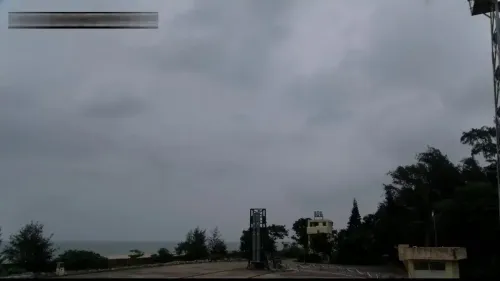
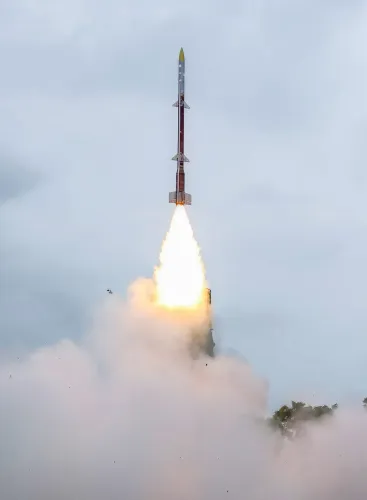
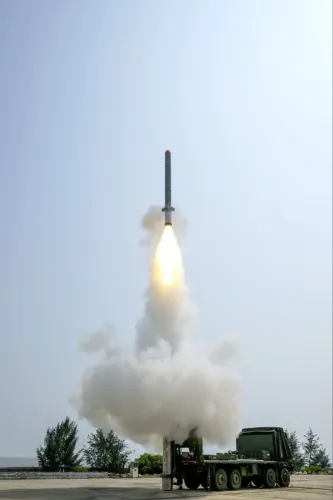
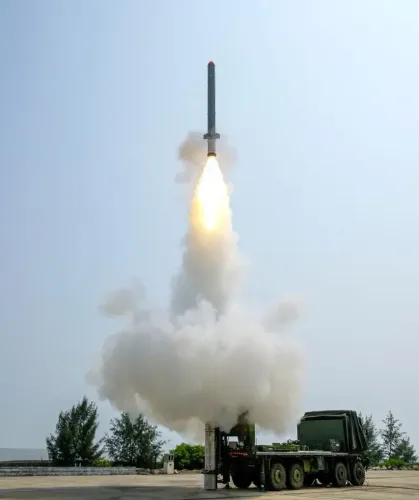
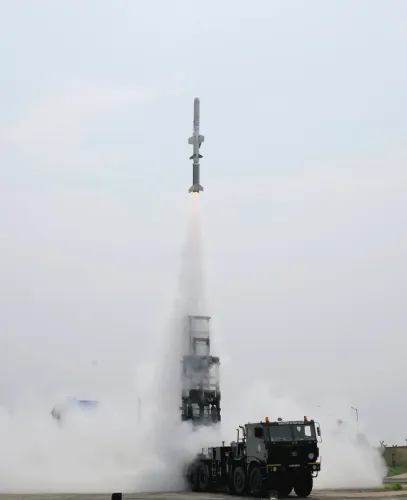
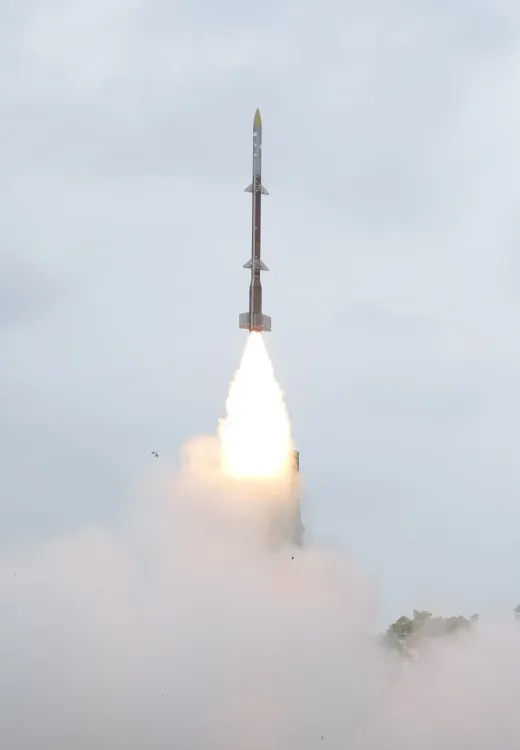
Odisha Chief Minister Mohan Charan Majhi on Friday, 24 July 2026 congratulated DRDO and all stakeholders on the successful maiden flight test of the long-range surface-to-air missile 'Kusha', launched from APJ Abdul Kalam Island off the coast of Odisha, calling it a significant milestone in India's air defence journey.
Context
The Kusha missile system completed its maiden flight test from APJ Abdul Kalam Island, the dedicated missile testing facility situated off the Odisha coast. The island, formerly known as Wheeler Island, has served as DRDO's primary launch site for missile trials over several decades. CM Majhi expressed pride in Odisha's contribution to the nation's defence infrastructure, stating that the test 'marks another significant milestone in strengthening India's air defence capabilities.'
In his post, Majhi specifically acknowledged DRDO — the Defence Research and Development Organisation — as the lead agency behind the development, alongside all stakeholders involved in bringing the system to this stage.
Policy Backdrop
India's pursuit of indigenous long-range surface-to-air missile systems traces back to the Integrated Guided Missile Development Programme, launched in 1983, which laid the foundation for domestic missile development across multiple categories. The Kusha programme represents a continuation of that decades-long effort toward strategic autonomy in air defence.
The Aatmanirbhar Bharat initiative, announced in May 2020, gave fresh political and policy momentum to indigenisation across the defence sector, prioritising reduced dependence on imported weapons platforms. A successful long-range surface-to-air missile test directly advances this goal by demonstrating a domestic alternative to foreign air defence systems.
Stakeholders and Impact
The Indian Armed Forces stand as the primary end-user of the Kusha system, which is designed to intercept aerial threats at long range — a capability with direct implications for national security and territorial air defence. DRDO scientists and engineers who have worked across development phases are the immediate stakeholders of this milestone.
Odisha holds a distinct role in India's defence testing ecosystem. APJ Abdul Kalam Island has hosted successive missile trials, making the state a critical node in the national defence infrastructure. CM Majhi's statement reflects both institutional pride and a recognition of Odisha's strategic geography in enabling these programmes.
What's Next
A maiden flight test marks the beginning, not the end, of a missile system's journey to operational readiness. The Kusha programme is expected to proceed through further development phases and user trials before any formal induction into armed forces service can be considered.
The test reinforces India's broader trajectory of building a self-reliant defence industrial base. As DRDO advances the system through subsequent evaluation stages, the outcome will be closely watched as a measure of India's capacity to field indigenous long-range air defence at scale.
Point of View
And CM Majhi's prompt acknowledgement signals the BJP's consistent effort to tie state-level identity to national security achievements. For Odisha, whose coastline hosts India's most active missile test range, the endorsement reinforces the state's strategic value within the Union's defence architecture. The test also arrives at a moment when India is actively seeking to reduce dependence on imported air defence platforms, giving the Kusha programme both military and diplomatic weight. Whether the system moves swiftly through user trials will be a key indicator of how effectively the Aatmanirbhar Bharat framework is translating into deployable capability.
NationPress
23 Oct 2026
Frequently Asked Questions
What is the Kusha missile?
Kusha is a long-range surface-to-air missile developed by India's Defence Research and Development Organisation (DRDO) designed to intercept aerial threats at extended ranges. It successfully completed its maiden flight test on 24 July 2026.
Where was the Kusha missile tested?
The Kusha missile was tested from APJ Abdul Kalam Island, a dedicated missile testing facility off the coast of Odisha, formerly known as Wheeler Island.
What is Aatmanirbhar Bharat and how does it relate to the Kusha missile?
Aatmanirbhar Bharat is a national self-reliance initiative launched in May 2020 that emphasises indigenisation of defence production. The Kusha missile, developed entirely by DRDO, is a direct outcome of this push to reduce India's dependence on imported weapons systems.
What did Odisha CM Mohan Majhi say about the Kusha missile test?
CM Mohan Charan Majhi congratulated DRDO and all stakeholders on the successful maiden flight test, calling it 'a significant milestone in strengthening India's air defence capabilities' and expressed pride in Odisha's contribution to national defence.
What happens after the Kusha missile maiden flight test?
A maiden flight test is the first stage of a missile's evaluation process. The Kusha system is expected to undergo further development phases and user trials by the Indian Armed Forces before it can be formally inducted into service.