Rajnath Singh hails DRDO's maiden Kusha missile test
Synopsis
DRDO successfully test-fired the Kusha Long-Range Surface-to-Air Missile from APJ Abdul Kalam Island off Odisha on 23 July 2026. Defence Minister Rajnath Singh called it a milestone in Indian defence R&D, saying the achievement places India among a handful of nations with indigenous LRSAM capability.
Key Takeaways
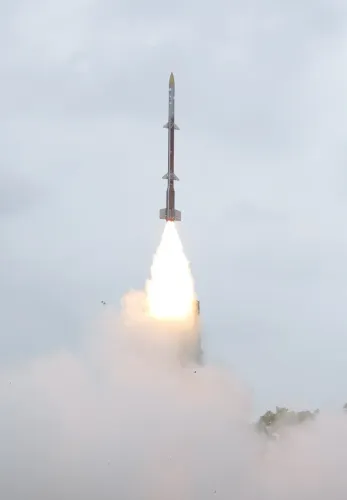
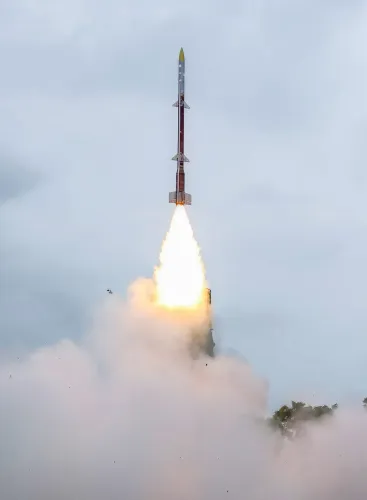
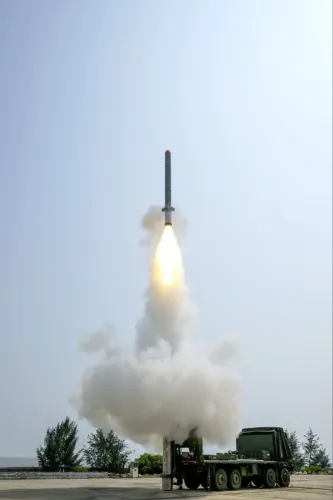
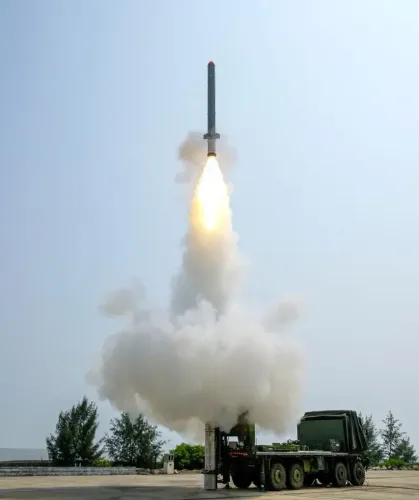
DRDO conducted the maiden flight test of the Long-Range Surface-to-Air Missile Kusha on 23 July 2026 from APJ Abdul Kalam Island , Odisha .
The Kusha system is designed to neutralise fighter jets, missiles, UAVs and large aircraft across a wide range and altitude envelope.
Defence Minister Rajnath Singh said the capability is possessed by 'only a handful of nations' globally.
The achievement is expected to eliminate India's import dependency for long-range surface-to-air missile systems.
The test aligns with the Atmanirbhar Bharat defence indigenisation drive formalised under the Defence Procurement Policy 2020 .
Further developmental trials and user validation by the armed services will follow before any induction decision.
Union Defence Minister Rajnath Singh on Thursday, 23 July 2026, congratulated DRDO after India successfully conducted the maiden flight test of the Long-Range Surface-to-Air Missile (LRSAM) Kusha from APJ Abdul Kalam Island off the coast of Odisha, marking what he called 'an important milestone in Indian defence R&D.'
What happened
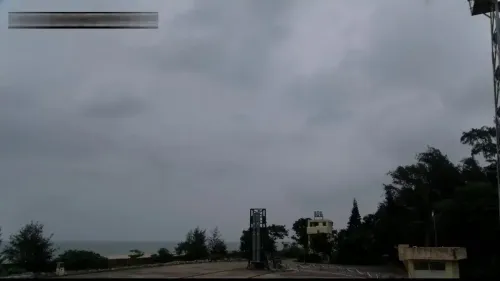
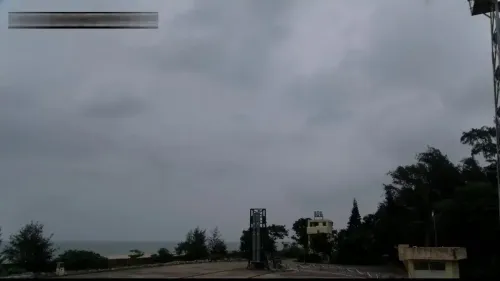
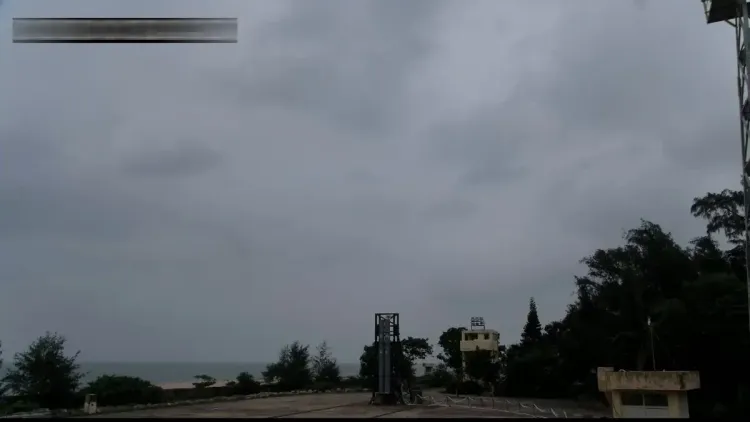
The Defence Research and Development Organisation (DRDO) carried out the first-ever flight trial of the Kusha missile system from the Integrated Test Range at APJ Abdul Kalam Island. The island, formerly known as Wheeler Island, is DRDO's primary coastal facility for missile and weapons-system trials in eastern India.
Posting on X, Rajnath Singh described the missile as capable of 'neutralising a wide variety of aerial threats including fighter jets, missiles, UAVs and large enemy aircraft within a wide range and altitude envelope.' He extended congratulations to DRDO and 'other stakeholders for this achievement.'
Context
India has long sought to develop an indigenous long-range surface-to-air missile system to reduce dependence on imported platforms. DRDO had earlier developed the Akash medium-range surface-to-air missile, which was inducted into the Indian Air Force and the Indian Army through the 2000s and 2010s. The Kusha programme represents the next step — targeting longer ranges and higher-altitude threats that Akash was not designed to address.
The Integrated Guided Missile Development Programme (IGMDP), launched in 1983, laid the foundational infrastructure and scientific expertise that successive missile projects, including Kusha, have built upon. The Defence Procurement Policy 2020 further codified the government's intent to prioritise indigenously designed, developed and produced systems across all categories.
Policy backdrop
The Kusha test fits squarely within the Atmanirbhar Bharat (self-reliant India) framework that the government has pushed aggressively in the defence sector since 2020. Rajnath Singh underscored this dimension directly, stating that the achievement 'will also eliminate the import dependency for such systems and signifies a giant leap in air defence capability of the nation.'
As Defence Minister, Rajnath Singh has overseen a series of indigenisation milestones, including expanded positive indigenisation lists that bar imports of specified defence equipment. A domestically developed long-range surface-to-air system reduces India's strategic exposure in a category where, as the minister noted, 'only a handful of nations' possess the capability.
Stakeholders and impact
The primary beneficiaries of a successful Kusha induction would be the Indian Air Force and the Indian Army, both of which operate layered air defence networks. A proven indigenous LRSAM would give the services a domestically sourced option at the high end of the air defence envelope, complementing shorter-range systems already in inventory.
DRDO scientists and the wider defence-industrial ecosystem — including public-sector undertakings and private-sector partners involved in the programme — stand to benefit from the credibility a successful maiden test confers. Future production orders, if the system clears user validation trials, would flow through India's domestic defence manufacturing base.
What's next
A maiden flight test is the first step in a multi-stage developmental and user-trial process. DRDO will need to conduct further developmental trials to validate performance across the full range and altitude envelope before the system is handed over for service evaluation. Any formal induction timeline would typically be announced through defence budget allocations or parliamentary disclosures in subsequent years.
The successful test strengthens India's negotiating position in defence diplomacy and signals to regional adversaries that the country's indigenous air defence capability is advancing. Sustained funding and inter-agency coordination will be critical to translating this milestone into an operational system within the armed forces.
Point of View
Moving from the medium-range Akash to a system designed to intercept threats at much greater distances and altitudes. For Rajnath Singh, the announcement reinforces a consistent political narrative around defence self-reliance that has been central to the BJP-led government's identity since 2014. The geopolitical subtext is equally important: a credible domestic LRSAM reduces India's dependence on foreign suppliers in a threat environment shaped by evolving aerial and missile capabilities in the region. Whether the political momentum translates into accelerated induction timelines will be the real test of this milestone's strategic significance.
NationPress
22 Oct 2026
Frequently Asked Questions
What is the Kusha missile?
Kusha is an indigenously developed Long-Range Surface-to-Air Missile (LRSAM) built by DRDO , designed to intercept a wide variety of aerial threats including fighter jets, missiles, UAVs and large aircraft across a wide range and altitude envelope.
Where was the Kusha missile tested?
The maiden flight test was conducted from APJ Abdul Kalam Island (formerly Wheeler Island), DRDO 's Integrated Test Range off the coast of Odisha , on 23 July 2026 .
How does Kusha differ from the Akash missile?
The Akash is a medium-range surface-to-air missile already inducted into the Indian armed forces, while Kusha is designed to operate at longer ranges and higher altitudes, filling a gap in India's layered air defence architecture.
Which countries have long-range surface-to-air missile capability?
Defence Minister Rajnath Singh noted that the capability to develop long-range surface-to-air missile systems is 'possessed only by a handful of nations,' placing India in a select group with this indigenous achievement.
What happens after the maiden flight test of Kusha?
A maiden test is the first stage of a longer process. DRDO will conduct further developmental trials, followed by user validation tests by the Indian Air Force and Indian Army , before any formal induction or production decision is made.