CM Majhi Hails LRLACM Cruise Missile Test from Odisha
Synopsis
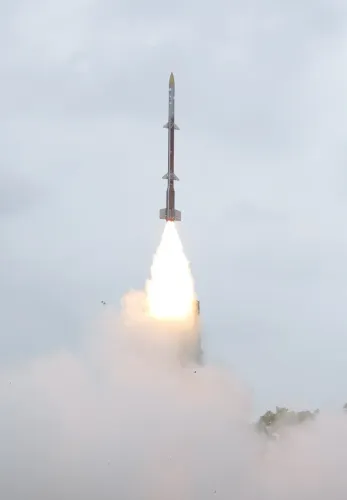
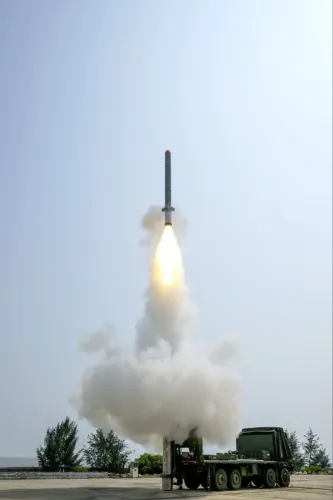
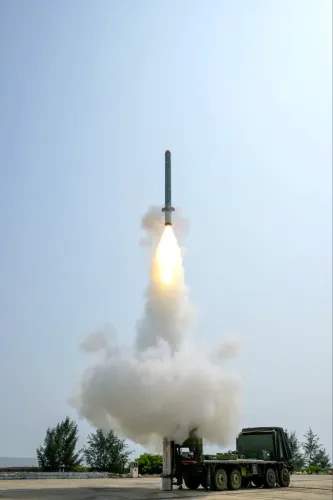
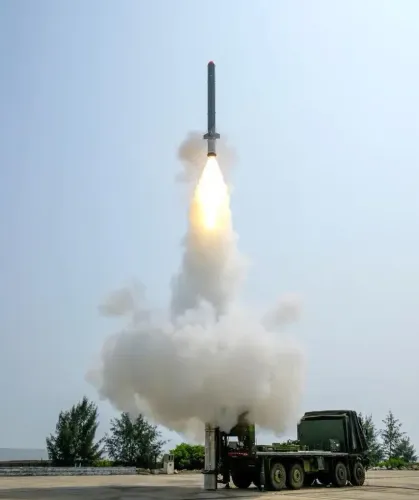
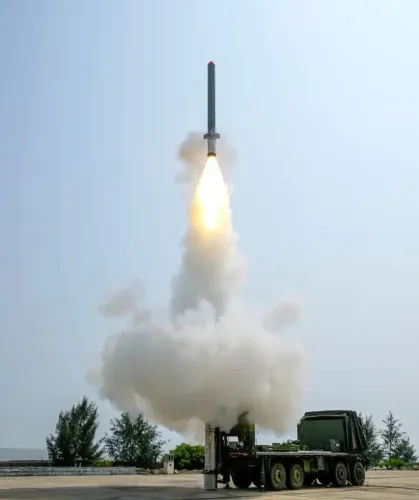
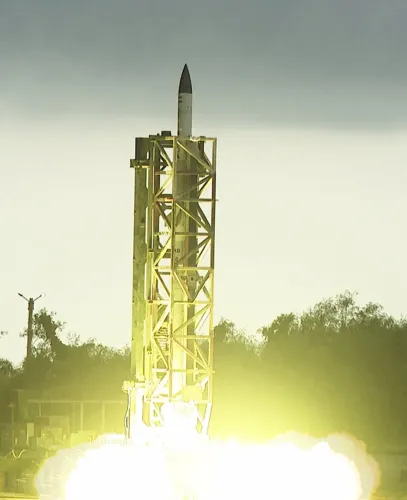
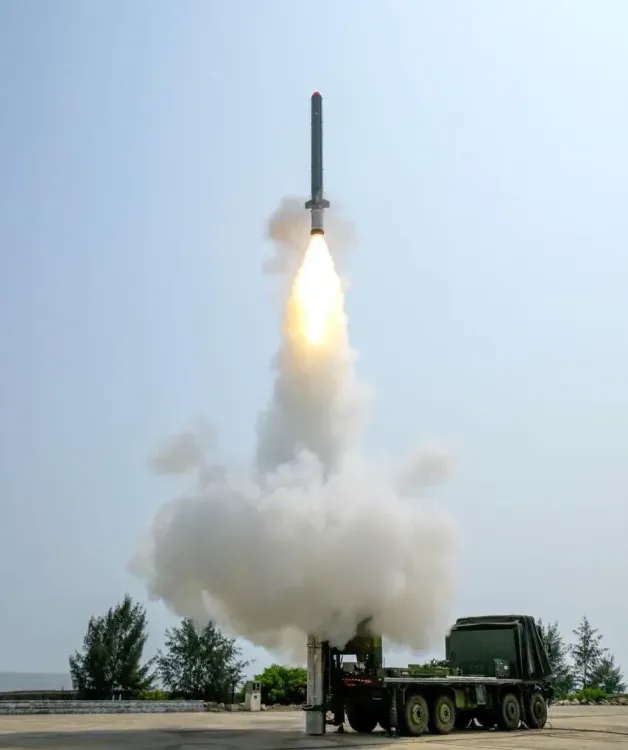
Odisha Chief Minister Mohan Charan Majhi congratulated DRDO on 16 June 2026 after a successful flight test of the Long Range Land Attack Cruise Missile from Dr. APJ Abdul Kalam Island, calling it a milestone in India's indigenous defence capabilities.
Key Takeaways
Odisha CM Mohan Charan Majhi congratulated DRDO on the successful flight test of the LRLACM on 16 June 2026 .
The test was conducted from Dr.
APJ Abdul Kalam Island , Odisha's premier missile testing range in the Bay of Bengal .
The LRLACM is an indigenous precision land-attack cruise missile building on technologies from the Nirbhay cruise missile programme.
The development aligns with the Atmanirbhar Bharat initiative to reduce India's dependence on imported defence platforms.
India's missile programme traces its lineage to the Integrated Guided Missile Development Programme launched in 1983 .
Further user trials and armed forces induction timelines are the next milestones to watch.
Odisha Chief Minister Mohan Charan Majhi on Tuesday, 16 June 2026, congratulated DRDO and all stakeholders on the successful flight test of the Long Range Land Attack Cruise Missile (LRLACM), conducted from Dr. APJ Abdul Kalam Island off the Odisha coast. The Chief Minister described the test as a significant achievement that underscores India's growing prowess in indigenous defence technology.
Context
In his post, CM Majhi wrote: 'This significant achievement underscores India's growing prowess in indigenous defence technology and marks another milestone in strengthening the nation's strategic capabilities.' The statement reflects the political significance attached to defence milestones tested on Odisha's shores, where the Dr. APJ Abdul Kalam Island — formerly known as Wheeler Island — has served as India's premier missile testing range since the 1990s.
The island, situated in the Bay of Bengal, has hosted hundreds of missile trials over three decades, making it central to India's strategic deterrence programme. Its association with the late President and missile scientist Dr. APJ Abdul Kalam lends symbolic weight to every test conducted there.
Policy Backdrop
The LRLACM is an indigenous precision land-attack cruise missile developed by DRDO to fill a critical gap in India's long-range conventional strike capability. Its development builds on technologies demonstrated during the Nirbhay subsonic cruise missile programme, which conducted a series of flight tests between 2017 and 2021 and validated core propulsion, navigation and guidance systems.
India's cruise missile ambitions trace back to the Integrated Guided Missile Development Programme (IGMDP) launched in 1983, which produced the Agni and Prithvi families of ballistic missiles before the focus shifted to more manoeuvrable, terrain-hugging cruise variants. The LRLACM represents the next generation of that lineage — optimised for precision strike at extended ranges against hardened targets.
The test also aligns with the Atmanirbhar Bharat initiative, under which successive governments have pushed DRDO and the domestic defence industry to reduce reliance on imported weapons platforms and build credible, self-reliant deterrence across domains.
Stakeholders and Impact
DRDO scientists and engineers who designed and tested the system stand as the primary stakeholders in this milestone. Successful flight validation is a prerequisite before the Indian Army or Indian Air Force can begin user trials leading to eventual induction into service.
For Odisha, the island range is not merely a technical facility — it is a source of regional pride and economic activity, supporting a network of scientists, technicians and support personnel. CM Majhi's congratulatory message signals the state government's continued support for the facility's operations and its role in national security.
What's Next
Following a successful flight test, the standard pathway involves data analysis, iterative refinement and multiple additional trials before the system is cleared for user evaluation by the armed forces. Integration with existing command-and-control and logistics networks will be a critical step before operational deployment.
India's expanding cruise missile inventory — covering land, sea and air-launched variants — is expected to provide the armed forces with layered, multi-domain precision strike options. The LRLACM's induction timeline will depend on the pace of further trials and formal service requirements being met, but Tuesday's test marks a concrete step forward in that trajectory.
Point of View
Reinforcing the BJP's 'strong on defence' political messaging at the state level. The LRLACM test fits into a broader arc of India accelerating indigenous weapons development — a policy strand that carries bipartisan appeal but is most actively championed by the current dispensation through the Atmanirbhar Bharat framework. For Odisha, hosting the country's primary missile range gives the state a unique stake in national defence milestones, and Majhi's prompt response signals an intent to claim a share of that strategic prestige. The real political and strategic significance will crystallise only when induction timelines are confirmed and the system enters active service.
NationPress
15 Sept 2026
Frequently Asked Questions
What is the LRLACM missile India tested in June 2026?
The LRLACM, or Long Range Land Attack Cruise Missile, is an indigenous precision strike weapon developed by DRDO designed to engage hardened land targets at extended ranges. Its flight test was conducted from Dr. APJ Abdul Kalam Island, Odisha, on 16 June 2026.
Where is Dr. APJ Abdul Kalam Island located?
Dr. APJ Abdul Kalam Island is located off the coast of Odisha in the Bay of Bengal. Formerly known as Wheeler Island, it has been India's primary missile testing range since the 1990s and was renamed in honour of the late President and missile scientist.
What did Odisha CM Mohan Charan Majhi say about the LRLACM test?
CM Majhi posted on X congratulating DRDO and all stakeholders, calling the test 'a significant achievement' that 'underscores India's growing prowess in indigenous defence technology' and 'marks another milestone in strengthening the nation's strategic capabilities.'
How does the LRLACM relate to India's Nirbhay cruise missile?
The LRLACM builds on core technologies — propulsion, navigation and guidance — validated during DRDO's Nirbhay subsonic cruise missile test series between 2017 and 2021, representing a longer-range, more advanced evolution of that programme.
What happens after a successful LRLACM flight test?
A successful flight test triggers data analysis and iterative refinements, followed by multiple additional trials before the Indian Army or Air Force conducts user evaluations. Formal induction into service depends on those trials meeting operational requirements.