CM Bhajan Lal hails LRLACM test as Atmanirbhar Bharat win
Synopsis
Rajasthan Chief Minister Bhajan Lal Sharma praised the successful test of the indigenously built Long Range Land Attack Cruise Missile from Odisha on June 15, 2026, calling it a symbol of Atmanirbhar Bharat and congratulating DRDO scientists and citizens.
Key Takeaways
The Long Range Land Attack Cruise Missile (LRLACM) was successfully tested from Dr.
APJ Abdul Kalam Island , Odisha , on June 15, 2026 .
Rajasthan CM Bhajan Lal Sharma described the missile as built entirely on indigenous technology.
The test was framed as a milestone of PM Modi 's Atmanirbhar Bharat programme, launched in May 2020 .
DRDO 's missile development lineage dates to the Integrated Guided Missile Development Programme of 1983 .
The missile is intended to enhance the strike capability of India's armed forces.
Next steps include further trials, user evaluation, and potential induction into the armed forces.
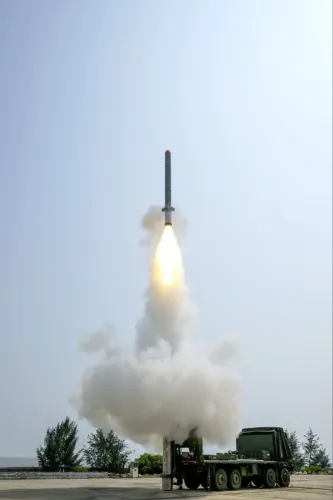
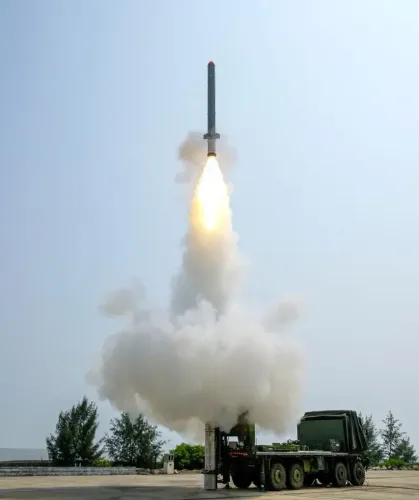
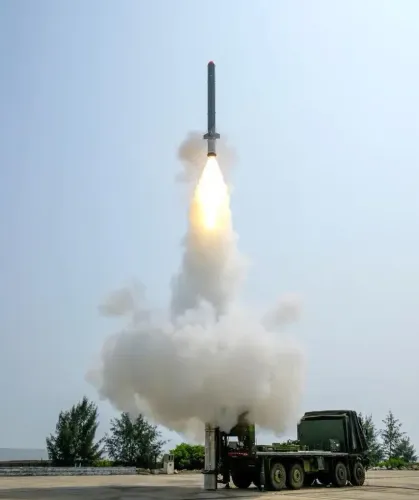
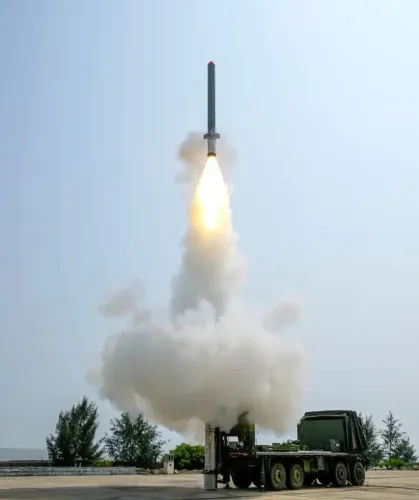
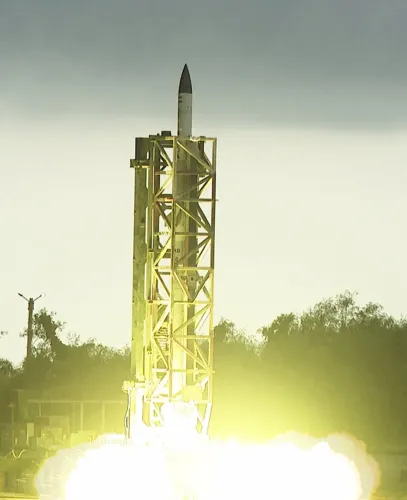
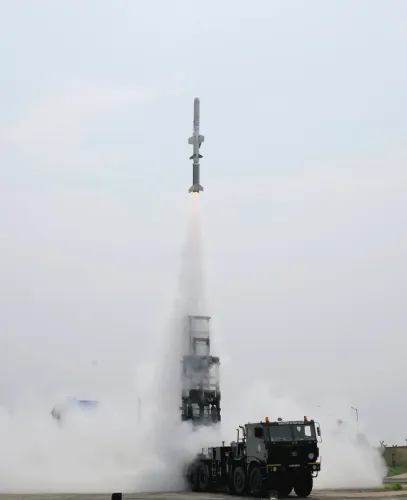
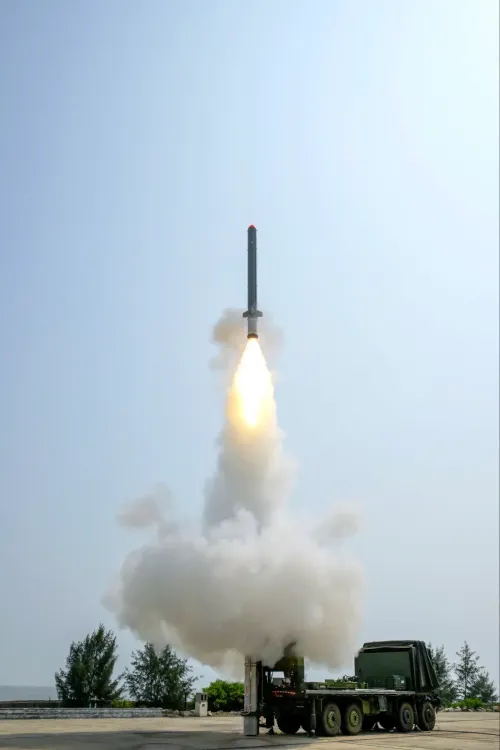
Rajasthan Chief Minister Bhajan Lal Sharma on Monday, June 15, 2026, congratulated DRDO scientists and the nation following the successful test of the Long Range Land Attack Cruise Missile (LRLACM) from Dr. APJ Abdul Kalam Island off the coast of Odisha, calling it a symbol of India's growing self-reliance in defence.
Context
Sharma's post, written in Hindi, described the test as 'aatmanirbhar Bharat ki badhti saamarthya ka prateek' — 'a symbol of the growing capability of self-reliant India.' He noted that the missile, built entirely on indigenous technology, will take the strike capability of India's armed forces to 'new heights.'
The LRLACM was flight-tested from Dr. APJ Abdul Kalam Island, the dedicated missile testing range off the Odisha coast, which has served as the primary validation site for India's long-range missile programmes. The island was renamed in honour of the former President and missile scientist.
Policy Backdrop
Prime Minister Narendra Modi launched the Atmanirbhar Bharat Abhiyan in May 2020, with defence indigenisation as a central pillar. The programme introduced positive indigenisation lists that progressively restricted imports of defence items, compelling domestic development and production.
DRDO, India's primary defence research agency, has been the institutional engine behind this push. Its missile portfolio traces back to the Integrated Guided Missile Development Programme launched in 1983, which established India's foundational expertise in ballistic and cruise missile systems. The subsonic cruise missile lineage, developed under the Nirbhay programme, recorded its first successful flight in 2017.
Sharma credited Modi's 'visionary leadership' for enabling the country to 'establish new dimensions in the defence sector every day,' framing the test as a direct outcome of that policy direction.
Stakeholders and Impact
The successful test has direct implications for India's three armed services, which are the eventual users of the LRLACM system. A domestically developed long-range land attack cruise missile would reduce dependence on imported equivalents and expand the military's precision strike options.
DRDO scientists and the broader domestic defence manufacturing ecosystem — including private sector partners who increasingly participate in indigenisation programmes — stand as the primary beneficiaries of the milestone. Rajasthan, which hosts several defence production units, is among the states with a stake in the expanding domestic defence industrial base.
Sharma extended 'heartfelt congratulations' — 'hardik badhai' — to DRDO scientists and 'all citizens of the country,' signalling the political importance the ruling BJP attaches to such defence milestones as national achievements.
What's Next
Following a successful test flight, the standard trajectory for a system like the LRLACM involves further developmental trials, user evaluation by the armed forces, and eventual induction decisions linked to defence procurement planning. Budget allocations and production orders would follow if user trials are cleared.
India's accelerating pace of indigenous missile tests, combined with the government's stated goal of raising domestic defence production to Rs 3 lakh crore, suggests the LRLACM milestone will be cited in future policy communications as evidence of the Atmanirbhar Bharat programme's tangible results.
Point of View
Sharma reinforces the BJP's effort to associate regional leaders with national security achievements, broadening the political dividend beyond the Centre. The framing of the test as a product of Modi's 'visionary leadership' is consistent with a deliberate pattern of attributing defence breakthroughs to political direction rather than institutional effort alone. Whether the LRLACM proceeds swiftly to induction will be the real test of whether the milestone translates into operational capability.
NationPress
14 Sept 2026
Frequently Asked Questions
What is the LRLACM missile tested by India?
The LRLACM, or Long Range Land Attack Cruise Missile, is an indigenously developed cruise missile built by DRDO designed to enhance the precision strike capability of India's armed forces over long distances.
Where was the LRLACM tested?
The missile was tested from Dr. APJ Abdul Kalam Island off the coast of Odisha, India's primary long-range missile testing range.
What is Atmanirbhar Bharat in defence?
Atmanirbhar Bharat is a self-reliance programme launched by PM Modi in May 2020 that includes specific defence indigenisation goals, such as positive indigenisation lists that restrict imports and push domestic development of weapons and systems.
Why did Rajasthan CM Bhajan Lal Sharma comment on the LRLACM test?
As a BJP leader and state chief minister, Sharma congratulated DRDO scientists and citizens on the test, aligning with the party's broader effort to celebrate indigenous defence milestones as achievements of the Atmanirbhar Bharat initiative.
What happens after a successful LRLACM test?
Following a successful test flight, the system typically undergoes further developmental trials and user evaluation by the armed forces before induction decisions and procurement orders are finalised.